Honest Barbera wines deserve respect


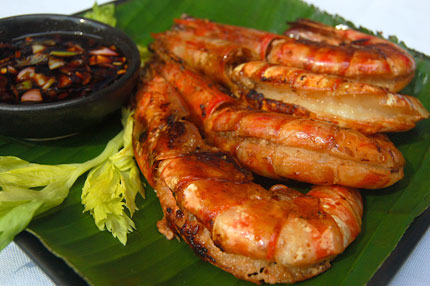
Fragrant roasted shrimp with self-made sauce --
Image of article Honest Barbera wines deserve respect
I love Barbera wines, not because they are the most beautiful, famous or prized wines in the world, but because the better examples have a unique and charming personality.
There's also a refreshing honesty about them, a term now used in the wine world to refer to a wine that offers exactly what you would expect for the price, region and variety. Perhaps because of its more famous and prestigious Piedmont cousins Barolo, often called the king of Italian wines, and Barbaresco, popularly referred to as the queen of Italian wines, people tend to look down on this workhorse grape of Piedmont.
Recently an entertaining elderly Italian winemaker, who proudly proclaimed he now spends more time drinking wine than making it, told me that while Barbaresco makes a perfect wife, Barbera is only suitable as a mistress. I didn't pursue the matter further with him, but his statement is indicative of the lack of respect for Barbera.
Also not helping the grape's reputation was a scandal in 1985 when some Piedmont producers added methanol to Barbera wines killing 30 people and causing numerous others to lose their sight.
I often describe Barbera as a wine of three styles, the first a diluted, overly acidic wine made by producers who only care about maximizing yield. These are the wines that have resulted in Barbera having a bad rap. The second style is a traditional light to medium-body wine with good fruitiness and freshness.
Recently, more producers are making a new style of low-yield, concentrated wines that are aged longer in oak. There is much to like about the latter two styles while the high-yield Barberas are at best barely drinkable cheap party wines and at worst suitable for the trash bin.
Traditionally, because it ripens about two weeks before the Nebbiolo grape even when it's denied ideal exposure to the sun, growers in Piedmont would select lesser vineyards to grow Barbera and the best vineyards for Nebbiolo. In the 1980s and 1990s, in part inspired by the success of the Super Tuscans wines, some producers decided to plant Barbera in some of their best vineyards resulting in the new more concentrated Barbera style.
These wines are often fermented and aged in small French oak that helps give them greater substance and complexity as well as making them more age-worthy. Sometimes referred to as new-age, or Super-Barberas, these wines have been winning acclaim from wine writers and judges.
There's more good news about Barbera. When it comes to food and wine pairings, Barbera is one of the most versatile wines in the world. The lighter style of Barbera wines is quite suitable for meals that combine seafood and meat.
The light to medium body and fruity nature of this style of Barbera wines complements rather than overwhelms the seafood while the acidity awakens and highlights the natural sweetness and freshness of the seafood.
At the same time the gentle tannins in the wine will work well with white or red meat dishes. So the next time you have a Chinese meal when seafood and meats are served at the same time choose a Barbera. Remember to first chill the wine as the ideal serving temperature of traditional-style Barberas is about 15 degrees Celsius. Southeast Asian dishes also tend to match well with these wines.
Recently I enjoyed a Barbera at an Indonesian restaurant with two flavorful seafood dishes, the dried onion roasted fish with homemade sauce and fragrant roasted shrimp with self-made sauce. Several of the spices used in the dishes were alcohol soluble so the wine actually mitigated sensations of spiciness in the palate while highlighting the freshness.