Hooray for syrah


 Syrah, the wine that beat allcomers at the Royal Easter Show and is likely to do the same at other wine shows over the next few months, is not about to take from pinot noir the mantle of New Zealand's most distinguished red.
Or, for that matter, dent the reputation of our Bordeaux-style reds.
What it could do though, and already has to some extent, is become even more sought-after than both in a world that is not exactly awash with a variety that finds its spiritual home in France's Rhone Valley and a home away from home in Australia, where they call it shiraz.
And that is not the only point of difference. In Australia's warmer climate, syrah/shiraz tends often to be quite jammy. The syrah we produce in New Zealand's naturally cooler climate, mostly in Hawke's Bay and also on Waiheke Island, is more elegant, more European, food friendly and some of it longer-lived. Let's not run away with the idea it's something new or that it requires cool sites. Syrah has been growing in New Zealand for more than 100 years, much of it in the early days in areas that were too cool.
To ripen, and to ripen evenly, it requires warm sites, and stony dry soils to curb the vigour of the vines.
Which is one of the reasons Stonecroft founder Dr Alan Limmer, who was instrumental in establishing the warm, dry and stony Gimblett Gravels as a winemaking area in Hawke's Bay, "rescued" cuttings of some of the original vines and planted an experimental row of syrah in 1984.
It was his consistently good syrahs - he called them "New Zealand wines in the mould of the French" – that largely encouraged others to follow suit.
Plantings of syrah increased from a measly 25-odd hectares in 2000 to more than 121ha today. Many of these involved the use of the so-called "Limmer" clone, and most were on the Gimblett Gravels.
It is these vines and others like them on Waiheke Island that have excited all the interest, producing wines with a lovely floral nose, plenty of rich ripe blackcurrant and plums and a shake of black pepper; wines that in competition have kicked Australia's butt, creating even greater interest and excitement.
Why then will they not be the next big thing?
Because we do not and probably never will produce enough to satisfy the interest in this Rhone red, which has grown exponentially both here and overseas over recent years.
Which makes it, nevertheless, another very important addition to a quite extraordinary portfolio of quality New Zealand wines.
For the record, the champion wine at the Royal Easter show was Villa Maria's 2009 Reserve Hawke's Bay Syrah (about $59), a powerful, perfumed and brooding beauty seasoned with black and white pepper.
Other gold medal-winning syrahs, none of which come cheaply:
Villa Maria 2009 Cellar Selection Syrah (about $32)
A little brother to the reserve and one of the best examples available of a Hawke's Bay syrah at this price.
Church Road 2008 Reserve Hawke's Bay Syrah (about $37)
A rich and complex wine that presses all the right varietal buttons and offers as a bonus toast and chocolate.
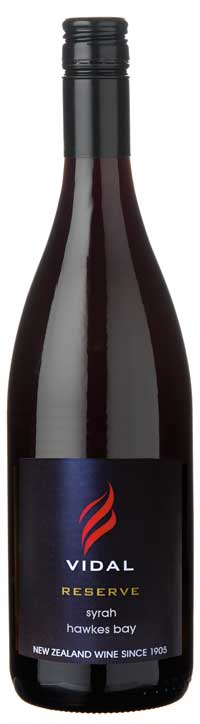
Vidal Reserve 2007 Hawke's Bay Syrah (about $59)
A typically ripe and powerful example of this wine, with trademark concentrated plum and pepper flavours. Good drinking now.
Villa Maria 2007 Reserve Hawke's Bay Syrah (about $56)
An interesting and appealing mix of flowers, berries and spices is mirrored on the palate of this mouthfilling wine.
Mudbrick 2009 Shepherds Point Vineyard Syrah (about $42)
Another fragrant but more elegant wine laced with liquorice and spice from this consistent Waiheke Island vineyard.
Note: In total Villa Maria won a remarkable 17 gold medals at the Royal Easter Show.