Controversy froths up over B.C. ‘virtual winery’


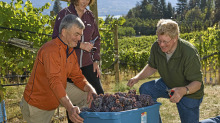 Do you care more about the land or the brand when buying a bottle of wine? It’s a relevant question because very often the two are not one and the same.
The distinction is being drawn into sharp relief in British Columbia, where some established producers are crying foul over the emergence of so-called virtual wineries.
Under the virtual-winery model, a person with no vineyard or equipment uses an existing winery to crush and ferment purchased grapes, then bottles the results under his or her own label. It’s a sort of commercial analogue to the U-brew cuvée your neighbour keeps laying on you at dinner parties, but with a big difference – it’s usually pressed from top-quality local grapes and sold at ultrapremium prices.
The controversy, so far mostly confined to private complaints to provincial liquor inspectors, frothed up like a vat of fermenting merlot recently on a blog called Cherries and Clay. It centres on the launch last month of Okanagan Crush Pad, a new winery that makes its own brand but also has been set up to serve individuals who want to realize their dreams without having to obtain a winery licence.
Opponents say the model invites unfair competition, giving urban dabblers a fast track into an industry where others have been forced to sink small fortunes into land, barrels, buildings and meticulous inventory control to satisfy tortuous provincial policies surrounding the manufacture and sale of alcohol.
“Winery owners have to fill out forms, paperwork, submitting taxes to federal and provincial authorities, getting audited by excise people – it goes on and on,” says Richard Roskell, who co-owns Marichel Vineyard and Winery with his wife, Elisabeth Roskell, in Naramata, B.C., in the heart of the Okanagan Valley. “Once you create a category that’s on the margins, in the grey area, that doesn’t have to go through those hoops and whistles, it creates a different playing field.”
But Okanagan Crush Pad says there’s nothing grey about it. The company, home to an in-house brand called Haywire, plans to assume all responsibility for wines it’s contracted to make. To comply with liquor laws, the venture will take ownership of the juice under its winery licence, as required, track volumes and submit relevant documentation to the province. Unlicensed clients using its custom-crush facility will in effect become profit-sharing partners, reaping a fee for designing labels and promoting the product. Cellar operations will be led by Okanagan Crush Pad winemaker Michael Bartier and consultant Alberto Antonini, both industry veterans.
“All wine produced will be under the channels of the Liquor Act and Liquor Distribution Act,” says Christine Coletta, a long-time marketing consultant to the wine industry, who owns Okanagan Crush Pad with husband Steve Lornie. Ms. Coletta says she has consulted with lawyers and is “100-per-cent confident that we will be following all the regulations.”
To most consumers, the kerfuffle might seem like a case of sour grapes, a knee-jerk attempt to stifle competition. But there’s a solid basis to some of the concerns.
Decades ago, the British Columbia Liquor Distribution Branch – the monopoly agency that controls the distribution and sale of alcohol – introduced a so-called land-based winery model. Under that scenario, to do business with the BCLDB, winemakers must own at least two acres of planted vineyard land. They also must make and bottle everything on the property.
The policy was in part seen as a way to spur agri-tourism and promote stability within the budding sector, which it did. Today there are more than 200 wineries in the province, all with considerable investments in land, buildings and equipment.