Liquor store owners staggered by wine bill


Concerned about impact, fairness of grocery sales
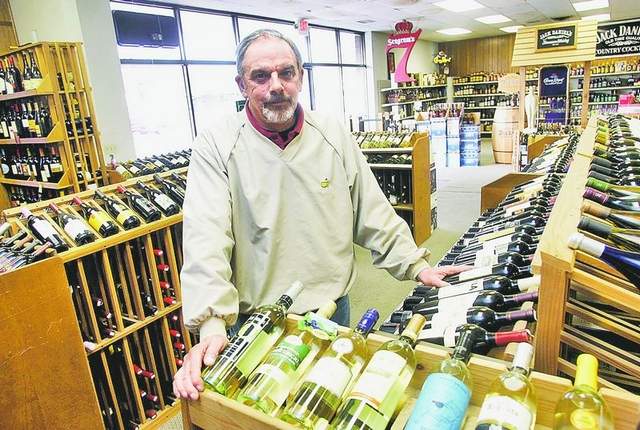
MacGregorÕs Wine & Liquors owner Steve Tambornini stands in his store on Memorial Boulevard in Murfreesboro. / John A. Gillis/DNJ
MURFREESBORO — Unlike most of his fellow 563 liquor store owners in the state, Steve Tambornini is not necessarily against the sale of wine in grocery and convenience stores — although it could very well adversely impact his business.
"I am somewhat of a progressive," the owner of MacGregor's Wine & Liquors on Memorial Boulevard said, "so I choose to say it would be good for the consumer to have wine in the grocery stores.
" ... Wine in grocery stores and liquor stores co-exist in many communities in other states."
For the fourth straight year, Tennessee lawmakers are considering a bill that would allow the sale of wine in grocery and convenience stores. And a recent poll conducted at MTSU revealed that 69 percent of Tennesseans favor the sale of wine in grocery and convenience stores.
Thrice, the matter has died at the committee level. But this year's bill, sponsored by Sen. Bill Ketron, R-Murfreesboro, has picked up steam.
That does little to impress Tambornini, who estimates around 40 percent of his sales comes from wine. He has found more questions than answers for the bill that is currently navigating through committee testimony this week.
"As of this date, I have yet to see a comprehensive plan put forward that tells me exactly what's going to happen," Tambornini said. "And that bothers me more than anything. It's just throwing stuff at a wall and seeing what happens.
"From that standpoint as a business person, how can I plan ahead a year, two years, five years, and have any idea what I am going to be dealing with?"
Supporters of the bill say allowing Tennessee groceries and convenience stores to sell wine would generate at least $14 million in annual tax revenue. Detractors aren't so convinced about the projected windfall and offer that any financial bump comes at the risk of increased underage drinking.
"I don't see it as necessary," said Ted Robinson, whose family owns Murfreesboro Wine & Spirits on Church Street. He said around half of his business is through wine sales.
"Eventually, it will be bad for Tennessee based on tax collections history," he added. "And common sense says the more availability, the more issues you have with underage consumption.
" ... No matter how you feel about liquor laws in Tennessee, every dime that is generated by wine and liquor sales stays in Tennessee. From retailer to distributor, we are all Tennesseans."
Multiple closures?
There is a general consensus among liquor store owners, who by current law can only own one liquor store at a time, that many of the 563 outlets statewide would be forced out of business by the new law.
"I think it will cause a lot of us mom and pop operations to close," said Linda Wilson, manager of City Limits Liquor & Wine in Florence. "We can't compete with the chain stores that buy a thousand cases at a time and we can't. Their prices would be way lower than ours."
One possible tweak of the bill would be to delay the sale of wine in grocery and convenience stores by two years. Another is to allow liquor stores to sell beer and other items they can't sell under current laws that restrict sales to just liquor and wine.
"It would be a good thing, sure," Wilson said of selling beer, "but just about every liquor store has a convenience store adjacent to it or right around the corner that also sells beer.
"And like the chain grocery stores, they often buy beer in massive quantities, too, so there would most likely be a pricing issue there as well."
When Robinson's family opened their business 13 years ago, they did so under current state liquor laws. And he said the business has been built around the sale of wine.
"We knew what we could sell and not sell," he said. "And we said, 'OK, that's fine.' We can operate inside those parameters. But there is no way you can make your numbers work if we sell beer and cork screws and stemware and cheese and whatever else they offer to help make up for our loss in wine sales."
And like Tambornini, many liquor store owners are taking a wait-and-see attitude to learn what the eventual plan would be.
"The question liquor stores have will be is whether this is an unfair advantage for grocery stores," he said. "Even though the pipeline will be filled and lots of money generated in the short term, I am not sure the tax revenue increase projections are realistic."