Chefs bravely match wines, delicious dishes


It’s so easy to, slide, er, slurp into it with the old stand-bys, the favorites, the beloved go-to wines we always end up ordering. We know more or less how they’ll taste and exactly what they’ll be good with, and so we turn to them, time and time again.
When was the last time you sashayed up to a sommelier and said, "Serve me anything – surprise me!"
There are literally hundreds of alternative wines out there, all waiting for daring souls. It’s time to put down the chardonnay and hold on for a wild ride. It’s time to drink bravely!
SWIRL GIRL CHALLENGE:
To explore alternative varietals and the foods that best complement them, prepared by some of the top chefs in the county.
We gave each chef a bottle of the chosen wine and asked him to prepare a dish that would work best with the wine. We returned a week later, hungry and thirsty and very curious.
CHALLENGE ONE
THE WINE: 2007 Titus Cabernet Franc
THE CHEF: Zach Bell, chef de cuisine at Café Boulud, Palm Beach
THE DISH: Lamb Loin with Caramelized Turnip Puree, Braised Red Cabbage, Blackberry and ‘Root Beer Spice’
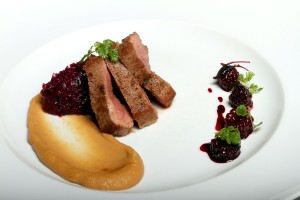
Lamb loin with caramelized turnip puree, braised red cabbage, blackberry and root beer spice prepared by Chef Zach Bell of Cafe Boulud. (Libby Volgyes/The Palm Beach Post)
We started our challenge at one of our favorite restaurants, Café Boulud, in the hands of the very capable and James Beard Award finalist Chef Zach Bell. We brought him a 2007 Titus Cabernet Franc, a wine that I’d first fallen for while sipping in the shade in Titus’ vineyards in Napa last summer. I knew the wine would be a hit.
What I didn’t know was just how high Bell was going to set the bar.
Bell tried the wine with Boulud sommelier Mariya Kovacheva and together they extracted the flavor profile of dark berries, cocoa and an earthy component of leather and tobacco.
He created a tender, succulent boneless lamb loin with a caramelized turnip puree and braised red cabbage. It paired with the dish as if they were long-lost lovers. The earthy turnip played off the earthiness of the cabernet and brought out the hints of leather and tobacco. The cabbage, braised the cabbage in duck fat, brought out a very meaty flavor profile that stood up well to the size of the wine.
"What I most enjoyed was the beautiful, deep, ripe-berry notes, lingering spice, bit of leather and tobacco. The high alcohol content forced me to go big and bold with the heaviness of the dish, while being careful not to upset the balance of the gentle flavors within such a big wine," Bell explains. "I matched the structure and earthiness of the wine. The berry, spice and tobacco notes were lightly matched with the cabbage, berries and my ‘secret no longer’ root beer spice blend."
Indeed, his "secret" root beer spices played with the baking-spice notes in the wine. It was like a marriage, only you know this one won’t end in divorce!
THE POUR: Cabernet franc is one of the five grapes that can create a Bordeaux blend yet lately the New World is helping it stand on its own. Similar to a cabernet sauvignon only a little lighter, softer and more elegant, it’s a sexy wine that still has firm enough tannins to stand up to heartier dishes.
- Libby Volgyes,
Swirl Girl "Sweet"
CHALLENGE TWO
THE WINE:
2009 J.V. Fleury Cotes du Rhone Blanc
THE CHEF: Charles Soo, chef-owner at Talay Thai, Palm Beach Gardens
THE DISH: Local Cobia with Spicy Long Beans and Red Curry Sauce
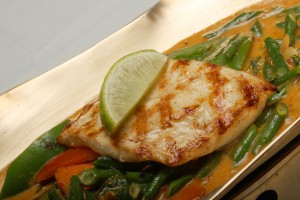
Local cobia with spicy long beans and red curry sauce, prepared by Chef Charles Soo of Talay Thai. (Libby Volgyes/The Palm Beach Post)
Next on the menu was a trip up north to Talay Thai, my favorite Thai restaurant in Palm Beach County. I’d dropped off a bottle of the 2009 J.V. Fleury Cotes du Rhone blanc, made from 100 percent viognier, for chef/owner Charlie Soo earlier that week and was excited to see what he’d come up with. Soo specifically asked for a viognier because of its ability to pair well with Thai cuisine.
"Viognier opens the door to Thai food with a floral nose that is similar in the way we use our Thai aromatics," says Soo. "Aromatics are the very reason Thai food does not boost flavors with fats Hence, our food does not need to have a highly acidic wine to battle with the fats ."
Soo paired this French viognier with a local cobia and spicy long beans in a red curry sauce. "The crunchiness and freshness from the green beans not only help boost the color of the dish, but also enhance the sense of texture," he says.
He urges home cooks to seek fresh cobia fillets at local fish markets.
" Anything frozen is probably from Vietnam or China, so please get the fresh local cobia which is being caught right off our beaches," he says. "It is the only fish that I have found that has the firm texture and light flavor that can stand up to the flurry of spices that this dish possesses."
The fish was delicious; light and fresh, served in a bowl of creamy red curry sauce with just the perfect amount of spice. The weight of the food and wine were a perfect match, with the creaminess of the sauce helping to mellow and round the wine.
The good-natured chef offers this last bit of kitchen advice for the home cook:
"Please note, Thai cooking is highly regimented. No distractions. Plan your movements ahead and have all your ingredients and cookware close at hand. This is hot oil and lots of movement. Cuz, we ain’t makin’ chocolate milk here."
THE POUR: Viognier is a great "Drink Bravely" alternative for chardonnay lovers. There are some real quality examples of the varietal coming out of California and of course, it’s home in France’s Rhone Valley. This wine is a gold color in the glass with a nose of ripe peach, mango and banana with floral and mineral hints. It has a round and silky mouthfeel, a medium-full body and a dry finish.
- J. Gwendolynne Berry,
Swirl Girl "Dry"
CHALLENGE THREE
THE WINE: 2007 Cuatro Rayas, Verdejo from Rueda
THE CHEF: David Palmateer, chef-owner at DeVine Bistro, Wellington
THE DISH: Garden Vegetable Napoleon with Jumbo Prawns and Red Curry Sauce
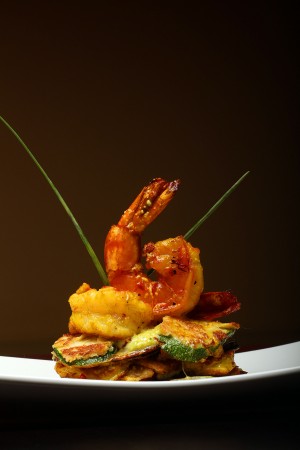
Garden vegetable napoleon with jumbo prawns and red curry sauce by David Palmateer, chef-owner at DeVine Bistro. (Libby Volgyes/The Palm Beach Post)
We took our challenge next to Spain, via Wellington, where we asked executive chef David Palmateer of DeVine Bistro to bravely pair a 2007 Cuatro Rayas from the Rueda region.
We were originally concerned. This wine had a very strong nose of citrus, lemon, grapefruit, limes and lime zest. It smelled sharp. And tasted tart. It’s high acidity stopped us from sipping before our course was ready, but all was forgiven when we saw how nicely the verdejo played with chef’s creation: saffron seared black tiger jumbo shrimp on top of summer vegetables served Napoleon style with heirloom golden tomatoes. It was visually stunning and tamed the wine like a matador.
"Going into the summer season, I wanted the zestiness (of the dish) with this wine," Chef Brian said. "Fresh, zesty acidity pairs well with this wine."
The dish, which included some very difficult items to match (onions and tomatoes) completely cut the acidity in the wine. It allowed the rest of the wine to come out and present us with a lovely weight and a delicate taste. The wine brought out the fresh flavors in the vegetables and the dish brought out a softer, more sensual side to the wine.
THE POUR: In case you haven’t heard, Spain is producing fabulous – and fairly inexpensive – white wines from the Rueda region. The verdejo grapes can wear several hats between the mineral, grassy or floral profile. It’s a smashing alternative to sauvignon blanc.
- Libby Volgyes, Swirl Girl "Sweet"
CHALLENGE FOUR
THE WINE:
2007 Mazzei Nero d’Avola Zisola from Sicily
THE CHEF: Nick Morfogen, executive chef and partner at 32 East, Delray Beach
THE DISH: Braised Beef Short Ribs
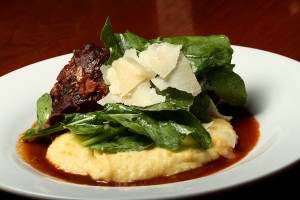
Braised beef short ribs with creamy polenta, arugula with an ice wine vinegar and extra virgin olive oil and shaved Parmesan, prepared by Chef Nick Morfogen of 32 East. (Libby Volgyes/The Palm Beach Post)
White tablecloths, dark wood, sounds of people having a great time and the smell of good food mean you’re in 32 East, on Atlantic Avenue in Delray Beach. We were here for the food that matched our wine, a 2007 Mazzei Nero d’Avola Zisola from Sicily, which is made from the dark nero d’avola grapes. This wine is aged for 10 months in oak, and is very dark red, with a nose you can smell 10 inches away.
Executive Chef and partner Nick Morfogen did the wine proud, with his dish of braised beef short ribs with creamy polenta, arugula with an ice wine vinegar and extra virgin olive oil and shaved Parmesan. The beef and Zisola are a good match and, surprisingly, the arugula and wine also pair well.
"This is a good pasta wine, good beef wine," said Chef Morfogen. "I didn’t want to overdo it – I kept the recipe from the country the wine is from. It’s simple, but tasty The French and Americans have so many rules about wine and food – the Italians don’t. They eat everything with wine; wine is like water there."
THE POUR: On taste, this wine was lighter than I thought it would be. Some spice gave it a punch, and cherries, blackberries and plums raised their heads in the glass. It has a lighter mouthfeel, but it’s still a nice, big, slightly tannic wine with a medium to long finish.
- Lynn Kalber, Swirl Girl "Bold"
RECIPES BELOW
CHALLENGE ONE
LAMB LOIN WITH CARAMELIZED TURNIP PUREE, BRAISED RED CABBAGE, BLACKBERRY AND ‘ROOT BEER SPICE’
Recipe by Zach Bell, chef de cuisine,
Café Boulud Palm Beach
(Serves 4)
For the red cabbage:
1 head red cabbage, shredded finely
1 gala apple, peeled, cored, finely sliced.
2 cups red wine
1/2 cup ruby port
1/2 cup red wine vinegar
1 tablespoon fine sea salt
4 pieces allspice
1/2 piece star anise
8 pieces black peppercorn
1 each clove
2 tablespoons duck fat, butter or olive oil (your choice)
1 each onion, finely julienned
Combine red cabbage, apple, red wine, ruby port, red wine vinegar and salt in a large non-reactive bowl. With your hands, squeeze and crush the cabbage to get the tenderization process started. Grind the spices in a coffee grinder or with a mortar and pestle and add to the cabbage. Cover the bowl with plastic wrap and refrigerate overnight. The next day, strain the liquid from the cabbage into a sauce pan and simmer until reduced by half, skimming the scum as it comes to the top.
Gently heat your choice of yummy fat in a heavy-bottomed casserole. Add the julienned onions and cook over medium heat, stirring, until tender but not colored. Add the drained cabbage and cook, stirring for 3 more minutes. Add the reduced liquid, reduce heat to low and simmer gently until the cabbage is tender. The liquid should be mostly evaporated. If not, increase the heat slightly to finish reducing, then turn of the heat, cover, and rest at room temperature. After an hour, remove lid and taste the cabbage. It should have a balanced sweet and sour flavor. Adjust as needed with red wine vinegar or sugar to achieve balance.
For the caramelized turnip puree:
4 tablespoons butter
2 pounds turnips, peeled, cut into chunks
1 tablespoon honey
Vegetable stock or filtered water, as needed
In a heavy-bottomed casserole, melt the butter over medium heat. When butter begins to turn brown, add the turnips and cook, stirring, until deeply golden brown on all sides, about 8-10 minutes. Add the honey and 1/2 cup of water or vegetable stock. Reduce heat to low, cover and simmer until turnips are completely tender and liquid has evaporated. If the liquid evaporates too quickly and turnips are not yet tender, simply add water or stock and continue to cook. Transfer turnips to a blender or food processor and puree until smooth. Season lightly with salt and pepper. Remove and keep warm until ready to serve.
For the blackberries:
1 1/2 cups red wine
4 ounces port wine
2 tablespoons granulated sugar
1 pint blackberries
In a small saucepan, reduce red wine, port wine and sugar by 3/4. Add blackberries and stir gently to coat. Cover pan and let sit in a warm place for 15 to 20 minutes. Very gently stir the berries every 5 minutes to ensure they are tenderizing evenly. Taste to ensure they have a nice balance and are not too tart. If too tart, add a bit of sugar or honey, if too sweet, add a couple of drops of red wine vinegar.
For the root beer spice:
4 3/4 tablespoons licorice powder
2 tablespoons clove, ground
2 tablespoons star anise, ground
2 tablespoons demerara sugar
1 1/2 tablespoons sassafras (gumbo filé powder)
2 1/4 teaspoons fennel seed, ground
1 3/4 teaspoons cinnamon, ground
Toss all ingredients together and reserve until needed.
For the lamb loin:
2 tablespoons light olive oil
2 (10 ounce) boneless lamb loins
Root Beer Spice mix, as needed
Fine sea salt and freshly ground white
pepper, as needed
Heat olive oil in a medium sauté pan over medium-high heat. Sprinkle the lamb loins on all sides with root beer seasoning, salt and pepper. Carefully place lamb in pan and brown on all sides. Reduce heat to medium low, add 1 tablespoon of butter and continue to cook, while basting, for 1 minute on each side. Remove from the heat and rest for 5 minutes before slicing.
To Serve: For each serving, spoon a large dollop of turnip puree in the center of a round dinner plate. With the back of a spoon or ladle, gently spread out the puree with a light circular motion. Place a pile of braised red cabbage in the middle of the turnip puree. Slice the lamb and lay the slices over the cabbage. Arrange a few blackberries around the plate with a little of the berry-wine jus. Voila!
CHALLENGE TWO
LOCAL COBIA WITH SPICY LONG BEANS AND RED CURRY SAUCE
Recipe by Chef Charles Soo, Talay Thai
(Serves 2)
1 fillet of cobia (12-16 ounces)
1 pound of green beans or long beans (available in your local Asian market)
3 kaffir lime leaves, chiffonade
3 ounces olive oil (set aside 1/2 ounce for brushing fillet)
4 tablespoons red curry paste
1/8 cup ginger, peeled and julienned
1/8 cup red or green bell peppers, sliced
1/4 cup zucchini, sliced
1/4 cup carrots, sliced
3/4 can (10 ounces) coconut milk
2 teaspoons white sugar
2 tablespoons palm sugar or brown sugar
1/4 teaspoon salt
1/2 cup Thai or sweet basil
1/8 teaspoon white or rice vinegar
1 teaspoon thin Thai soy sauce
1 tablespoon fish sauce
Clean green beans. Cut into 1 to 1 1/2 inch pieces. Clean and pat dry kaffir lime leaves. Slice each leaf into very thinly sliced pieces, they should be thin like a needles.
Clean and portion cobia fillet into desired thickness. Brush fillet with olive oil and sear on a hot grill. Grill until cooked through. (A 1-inch thick fillet should take 7 to 10 minutes to cook with one turn.) Cover the fish on medium-heat for another several minutes until done.
While you wait for the cobia to cook, bring your prepared ingredients within reach to begin the sauce and vegetables.
Bring a pan of water to a boil for blanching the vegetables.
Heat oil in another pan, preferably in a high-temperature wok. On medium-high heat, add red curry paste in the pan. Stir-fry until it turns fragrant, about 1 to 2 minutes. Add ginger. Stir for about 1 minute.
Bring stove temp to highest heat available. Add the coconut milk and stir rapidly into a pasty texture.
In the pan of boiling water, blanch green beans, bell peppers, zucchini and carrots for 30 seconds. Quickly drain the blanched vegetables and add to the coconut mixture.
Stir-fry for 30 seconds. Add finely shredded kaffir lime leaves, white and palm sugars, salt, basil, vinegar, soy and fish sauce to taste. Continually mix to avoid burning. Remove from heat after 1 to 2 minutes of high temperature cooking. Serve on plate topped with fillet and garnish with a wedge of lime.
CHALLENGE THREE
GARDEN VEGETABLE NAPOLEON WITH JUMBO PRAWNS
Recipe by Executive Chef David Palmateer, DeVine Bistro
(Serves 4)
For the Francaise batter:
4 eggs
1/4 cup milk
1 lemon, zested
2 tablespoons Parmesan cheese
1 tablespoon flour
Salt and pepper to taste
To make batter, gently whisk the ingredients together.
Remainder of ingredients:
1 cup grapeseed oil
8 extra-large prawns
2 cups shrimp stock
1 pinch saffron
2 baby zucchini
2 baby squash
2 baby eggplant
2 baby onions
2 cups flour seasoned with salt and pepper
1 large golden heirloom tomato
1 tablespoon extra virgin olive oil
1 lemon, zested
Salt and pepper to taste
1 tablespoon pesto
4 tablespoons goat cheese
1 cup Champagne vinaigrette
1 tablespoon sun dried tomatoes, julienned
1 tablespoon capers
1 yellow pepper, roasted and julienned
1 red pepper, roasted and julienned
Sauté 1 tablespoon grapeseed oil with prawns, basting with shrimp stock. Add pinch of saffron. Cook and let rest.
Slice baby vegetables thin, dip both sides in flour and then dip in Francaise batter. Sauté in grapeseed oil over medium until crispy. Set aside.
To plate, shave golden heirloom tomato, paper-thin. Place, carpaccio-style, on serving plates. Season heirloom tomatoes with extra virgin olive oil, lemon zest, salt and pepper. Stack baby vegetables with pesto and goat cheese spread between layers. Top with shrimp (2 per serving) and drizzle with Champagne vinaigrette. Garnish plate with sun-dried tomatoes, capers and roasted red peppers.
CHALLENGE FOUR
BRAISED BEEF SHORT RIBS
Recipe by Nick Morfogen, executive chef at 32 East
(Serves 4)
Four 10- to 12-ounce beef short ribs
1/2 cup olive oil
1 yellow onion, diced
2 celery stalks, diced
1 fennel bulb, diced
2 tablespoons garlic, minced
1 teaspoon chili powder
1 teaspoon dried oregano
1 bay leaf
1 teaspoon chili flakes
2 cups red wine
1/2 cup sherry vinegar
4 tomatoes, peeled, seeded and chopped
1 cups chicken or beef broth
Salt and pepper to taste
Preheat oven to 225º. In a Dutch oven, heat 1/4 cup of the olive oil until it just begins to smoke. Season the beef with salt and pepper and sear on all sides. Remove beef from pan, discard grease and add remaining 1/4 cup of olive oil.
Add the vegetables and cook over medium heat until caramelized. Add the spices and stir to incorporate. Turn heat up high and add the wine and vinegar and reduce by half. Add the tomatoes and stock, bring to a boil. Turn heat down to a simmer, taste and add salt and pepper if necessary. Carefully place beef back in pot, cover and place in oven for 2 to 3 hours or until fork tender.
When done, remove pot from oven and take off the lid. Let cool to room temperature. Carefully remove beef with a slotted spoon and place on plate. Strain, de-grease and reduce liquid by half. Pour broth over meat and serve with buttered noodles, mashed potatoes or polenta. Garnish with dressed arugula greens and shaved Parmesan.