Vineyard celebrates top drop


By Tim Donoghue and Catherine Harris
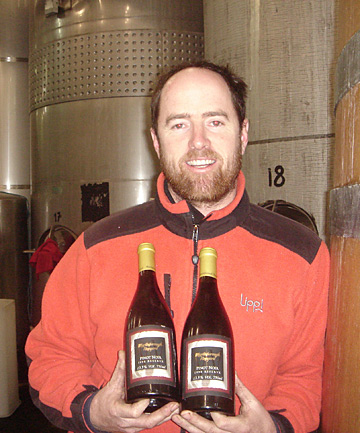
TOP TIPPLE: Winemaker Paul Mason with some of the last bottles of the 1998 Reserve Pinot Noir, which the vineyard wants to buy back to "use for tastings".
Bottles of a champion wine are beginning to wend their way home to Martinborough Vineyard, after the winery took the unusual step of offering to buy back bottles of its prized 1998 Reserve pinot noir.
The local tipple took top place last month in a prestigious Californian blind wine-tasting competition for the world's top 20 pinot noirs.
The first response to the buyback came from Zurich-based Kiwi banker Timothy Hudson, who has donated two bottles to charity.
Thirteen years ago Martinborough Vineyard produced just 300 cases of its winning pinot noir and sold it for $100 a bottle - now the winery is willing to pay five times that amount to get valuable supplies back.
"We've had calls from people wanting to place orders for a total of 23 dozen bottles at $500 per bottle. So demand is outstripping supply," winemaker Paul Mason said.
"On top of this our suppliers in America and the UK as well have said, 'OK, what is the deal? What can you get us?' We've got nothing to get to them at this stage."
The winery has just 10 bottles of the winning wine in stock but has been told of another five dozen that might be available.
"We don't want to sell them. We want to use them for tastings," Mr Mason said.
It's great news for Martinborough Vineyard, which, like the rest of the industry, has been in the grip of poor market conditions, low profits and high debt.
The company has about 560 shareholders and is one of Martinborough's founding wineries. It was started by current chairman Duncan Milne and his brother Derek, a scientist who read a 1978 DSIR report that Martinborough's climate and soil made it New Zealand's closest match to Burgundy.
With four other enthusiasts, the Milne brothers bought 16 acres in the zone and started Martinborough Vineyard in 1980. Five of the original six enthusiasts are still shareholders.
The vineyard began to win accolades under the guidance of former winemaker and chief executive Larry McKenna, who was responsible for the 1998 vintage and who left a year later to start his own winery on nearby Te Muna Road.
However, times have been tough lately. Another early Martinborough winery, Te Kairanga, is negotiating with an overseas buyer, and Martinborough Vineyard itself had to sell its Wharekauhau vineyard last year to pay off debt.
In its 2010 annual report, Martinborough Vineyard said its sales jumped 50 per cent to just over $4.5 million but high interest and accounting costs resulted in a total operating loss of $2.6m. The company tried but failed to find a new cornerstone shareholder and was considering tapping shareholders for more capital.
Mr Munro said that would not happen until "the ship was in the right state" and could show it was making a sustainable profit. The winery had done some restructuring in recent months, kept good margins and was tracking its sales target as it neared the end of its financial year.
As for the buyback, Mr Mason said he hoped to do an inspection tour of the bottles on offer in a fortnight.
Mr Hudson, who bought at least six bottles of the wine in 2004, told the vineyard to put the proceeds from his bottles towards a hospice in Masterton and the Christchurch earthquake fund.