Enjoying snake nine ways at a Hong Kong banquet


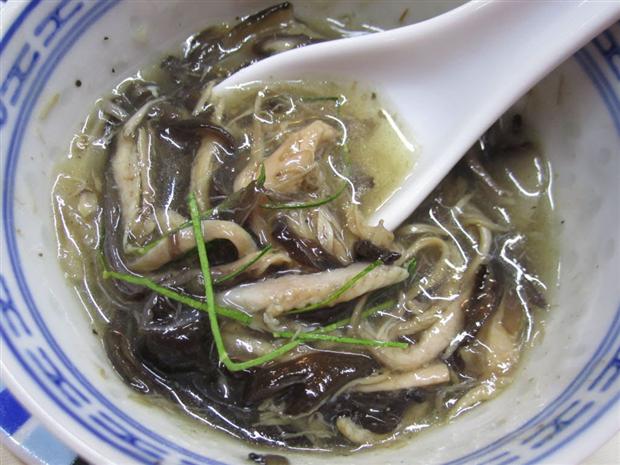
Snake soup. Yummy!
When I made the trek out to the mountainous suburbs of Hong Kong to partake in a nine-course snake banquet with three of my friends, I didn’t expect to be greeted by a middle aged wine proprietor and a waitress who wears leopard-print shorts and white patent leather thigh-high boots, and who kept asking us to guess her age. (“Thirty?” hazarded my friend, Peter, erring on the side of extreme caution.)
When in Rome, as they say. And priding myself on an adventurous palate, I had arrived eager to try new things, to discover new delicacies and test my gag reflex. Hong Kong is a great city to nurture any adventurous tendencies. The skyscraper city is fuelled by neon and work-hard-play-hard inhabitants who appear to be on permanent sensory overload.
With the exception of the magnificently wealthy -- of whom there are surprisingly many -- Hong Kongers are confined to tiny, sky-high apartments. And so they hit the streets day and night. They shop a mix of shiny big-box luxury brand-name stores such as Louis Vuitton and small, typically Asian markets. They socialize at glossy bars with $20 lychee martinis or linger in poorly lit, back alley, no-frills watering holes. And, of course, they indulge in one of Hong Kong’s most treasured past times: They eat.
The Cantonese are notorious eaters; the reverence for food -- from flat noodles and dim sum to soft-shell crab and roast duck -- far outstrips the local love of luxury goods. But after a week in the city, hitting a wide spectrum of street stalls, hole-in-the-wall noodle shops, and elegant restaurants, my culinary boundaries remained intact. In a flurry of neon green century eggs, abalone, fish maw, goose web, turtle jelly and one particularly unpleasant mouthful of gizzard, I was still looking for a challenge.
Then I discovered it was snake season in Hong Kong. And off we went.
Many of the dining choices among the Chinese have a narrative and snake is no different. It’s considered a warming food with all kinds of mystical health properties -- from enhancing male virility to improving a lady’s complexion -- and so every December, Hong Kongers start gobbling it up, mostly combined with chicken and mushrooms in a popular and tasty thickened soup. But having gorged on dim sum and noodles for over a week, and having come nowhere close to testing the boundaries of our fairly resilient palates, we decided to shake things up a bit by hopping on a train and heading out to a flea market restaurant, Red Kitchen.
After hugs all around from our leopard-printed hostess, we were given a tour of the open kitchen, where we asked chef Ng all of our most pressing snake-related questions. Turns out we were about to be served cobra and five other types of snakes, mostly from China and Malaysia. “We take whatever we can get,” said chef Ng. (Including the poisonous ones.) All of the snakes come in alive and are soon after killed. We were then seated around a sizable table in a shop full of heavy wooden furniture and random knick-knacks, with elaborate birdcages hanging from the ceiling. Our hostess opened the wine we picked out, pouring herself a full glass, while chef Ng headed back to the kitchen to prepare us a multi-course meal.
The menu?
1. Cold snake skin (served with sliced cucumbers and drenched in sesame oil)
2. Authentic thickened snake soup (with chrysanthemum and lemon leaf)
3. Snake balls with seasonal vegetables
4. Crispy stuffed chicken wings with prawns and snake livers
5. Braised snake and preserved duck casserole
6. Spicy snake
7. Slow-cooked snake and turtle soup with Chinese herbs
8. Flavoured rice with preserved pork and snake blood
9. Devil Green Jelly (with bile and mint liqueur)
Are you salivating yet? No? How about gagging? Well, rest assured: Almost all of it tasted like chicken. The texture of the snake skin -- rubbery like jellyfish or seaweed and slightly scaly -- was challenging. The spicy snake -- snake segments battered and deep fried -- would make for a perfect late-night bar snack, if not for all of the tiny bones that threaten to lodge in one’s throat. The braised snake and snake balls were extremely mild and meaty, and the soups (the first viscous and the other a broth), were so delicious that my friend, Jason, took the leftovers home. The bile jelly, on the other hand, tasted a little like poison -- but it’s supposed to do wonders for respiratory infections.
Instead of a mid-meal sorbet, chef Ng brought out a recently skinned snake and demonstrated the deboning process, which was mildly uncomfortable and medium appetite-suppressing. And then we watched a YouTube clip of him being interviewed on local television. We returned to the meal somewhat sobered, but still dedicated to the task at hand.
When we finally stumbled out of the oversized warehouse, squinting against the bright sun and commenting on our collective need for a nap, there was also a current of exhilaration running through the group. How rare to have the opportunity to try something so new, to test one’s culinary boundaries in such a deliberate way in such a specific context. And, might I add, I haven’t had a single respiratory infection since that meal.
• Sarah Treleaven was a guest of Cathay Pacific and the Hong Kong Tourism Board.
If You Go
Accommodation Hong Kong has more than its fair share of glamorous five-star properties. Both Island Shangri-la (Pacific Place, Supreme Court Rd., Central; 852-2877-3838) and Kowloon Shangri-la (64 Mody Rd., Tsim Sha Tsui East, Kowloon; 852-2721-2111) are a favourite among business travellers for luxe furnishings, amazing views and outstanding breakfast buffet. Four Seasons Hong Kong (8 Finance St., Central; 852-3196-8888) is opulent and contemporary, with a spectacular infinity pool overlooking the harbour, and possibly the most fashionable clientele I’ve ever encountered. (If you’re not super hot on feeling deep shame, I don’t recommend lugging around your laptap in a bag from American Apparel.)
Food The Red Kitchen (390-400 Tsz Tong Tsuen, Kam Tin, Yuen Long; 852-9588-1140). A snake banquet can accommodate up to 30 but should be booked two weeks in advance. If you’re looking for amazing but slightly less exotic Cantonese food, try the Michelin-starred Chinese restaurants at both Shangri-la properties, Summer Palace and Shang Palace, which offer delicate delicious renditions of Chinese classics.
Flight Cathay Pacific -- which at the end of last year announced that they’re renovating their already delightful business class cabins if you’re in the mood for a splurge -- has 12 weekly non-stop flights from Toronto to Hong Kong, and flies twice daily non-stop from Vancouver.