Beijing’s fine private dining


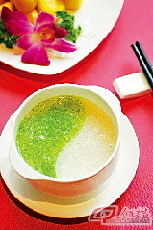
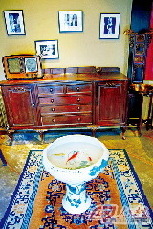
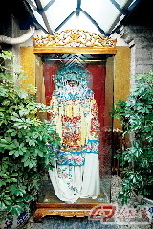
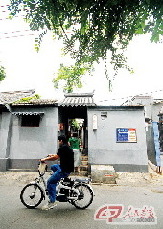
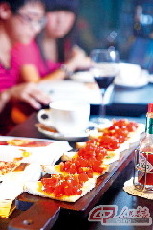
Former U.S. President Bill Clinton, legendary boxer Muhammad Ali and Microsoft founder Bill Gates all dined at the same restaurant when visiting Beijing. Most would assume it was a luxurious eatery in a Shangri-La or Hilton Hotel or one of Beijing’s myriad five-star hotspots, which would all be wrong. The restaurant, hidden in an unremarkable hutong in Beijing’s Houhai area, has fed numerous celebrities from China and around the world even though its exterior is less than glamorous. In summer, it tends to get shaded by dense foliage, and in winter it is often covered by mountains of snow, making it somewhat difficult to find. Still, the seemingly humble hideaway is well-known amongst dining connoisseurs: the Li Family Restaurant.
Li Family Restaurant’s prosperity confirms the adage “good wine needs no bush.” Although the business has expanded in recent years, opening branches in Shanghai, Tianjin, and even Melbourne and Tokyo, the original eatery has changed little over the past several decades. The siheyuan (quadrangle courtyard) where the Li family has lived for generations isn’t much different from its neighbors other than the few red characters reading “No. 11 Yangfang Hutong” on the white wooden door plate. Hardly a fancy decoration can be found in the house. Guests sit around simple round tables and have no say in which dishes will be served. Everything is decided by the chef.
Legend of the Li Family
The Li Family Restaurant may be one of the most renowned spots for “private cuisine” in town, but the dining genre itself is probably unfamiliar to most. The concept is actually quite simple: visitors eat the best of what the host has to offer. The story of the Li Family Restaurant is already legendary, and it aptly depicts the concept of private cuisine in Beijing.
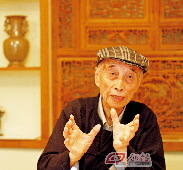
The restaurant is managed by 90-year-old mathematics professor Li Shanlin, whose grandfather was Minister of Household Affairs for the Imperial Court of the Qing Dynasty (1644-1911). Combining the essence of Qing imperial cuisine with contemporary nutrition principles and a life-long passion for food, Li Shanlin founded the business.
As a high-ranking official in the Qing Court, Li’s grandfather was responsible for security and dining management in the Forbidden City. Planning state banquets, managing the menu, and designing dishes were all part of his duty. Through the years, he learned every secret of imperial cuisine. After he retired, the elder Li wrote down as much as he could retrieve from memory, such as recipes of many aristocratic dishes (considered top national secrets at the time), and instructed his household chefs how to prepare them. Growing up in such a family, Li Shanlin not only inherited his grandfather’s fondness for cooking, but also his treasured recipes.
Since the founding of the People’s Republic of China in 1949, Li endured countless ups and downs, but has always enjoyed cooking at home, as do his three daughters and son. However, for a long time, they never considered opening a restaurant. The turning point came in 1984 when China Central Television held a “National Day Banquet Invitational Competition.” Li’s second daughter, Li Li, beat out over 3,000 chefs from all over China to win the event. When the media interviewed the champ, they were surprised to find that no one in her large family was a professional chef. After more encouragement was gained through hosting a series of parties, the Li Family finally opened its restaurant in May of 1985.
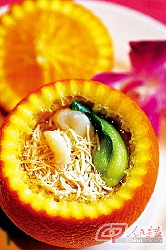
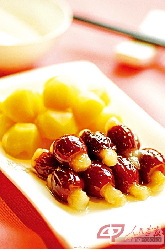
Stories Behind Private Cuisine
Just the mention of Mei Lanfang’s name thrills most Peking Opera fans. So it’s no surprise that an eatery with close ties to the performer would choose to include his name for the front doors of the establishment. The owner of Mei Mansion Banquet, located at Dafengxiang Hutong in Beijing’s Xicheng District, is a fan of Mei who converted the former residence of a Qing prince into the now famous restaurant. In cooperation with Mei’s kin, the restaurant eventually evolved into a museum dedicated to the Peking Opera master. Mei Baojiu, Mei’s son and honorary chairman of the restaurant, decorated the mansion with his father’s authentic tableware, cameras, calligraphy, paintings, and furniture. And most importantly, he donated about 600 recipes he inherited from his father.
Dishes served at the Mei Mansion Banquet were handed down from chefs who worked for the Mei family decades ago. Many of those currently employed by the restaurant are third or fourth generation protégés of chef Wang Shoushan, who personally served the Peking Opera master. In Mei’s time, he would invite three tables of guests to dine at his home after daily performances. One table would seat his family, one for his friends, and the other for students and musicians. During major festivals and important occasions, more would be invited.
The evolution of both Li Family Restaurant and Mei Mansion Banquet are closely tied to the development of the country. In the times when private businesses were forbidden, such indulgences could only be enjoyed by close friends and relatives. Unlike many big name restaurants that built respectable brands over their long histories, private cuisine eateries started relatively recently as microscopic businesses before the successful ones mushroomed along with the country’s prosperity.
After China launched reform and opening up in 1978, the country underwent tremendous social and economic change. Over the past 30 years, Beijing has gradually become one of the most important gourmet meccas of not only the country, but the world. Although some are easier to find than others, people from anywhere on earth can probably locate their favorite hometown dish somewhere in the city. The sprawling metropolis is home to both large luxurious restaurants grilling high-end steaks and small shabby stands serving simple meals for neighborhood residents. Fueled by the expanding market economy, private cuisine restaurants have enjoyed rapid development in recent years, quickly becoming favorites of more discerning diners.
Searching for Private Cuisine
Nowadays, Beijing’s private cuisine can be divided into two categories. The first is considered aristocratic cuisine, such as dishes served by the Li family. Usually known only by a reputable family name, these kitchens enjoy lofty esteem and comparatively longer histories. Tan Family cuisine, for example, originally only served friends before moving into Beijing Hotel to become the accommodation’s primary attraction.
These restaurants, characterized by legendary stories dating back decades, are mysterious and fascinating to fine dining novices. However, the second type of private cuisine is quickly gaining popularity. Usually founded by food connoisseurs and critics, these eateries embody a new understanding of private cuisine in a new era. Often occupying tiny spaces, they are mostly located in hutongs in older areas and attach great importance on communication with guests. While some argue that these establishments are little more than fads compared to historied private cuisine places, others consider them just as much part of the inheritance, but from a different perspective. Although newer now, many are sure to survive decades or even centuries, and someday they too may inspire legendary tales and become time-honored brands.
The history and culture of food are always closely tied to a region’s people and social development. In this aspect, much can be learned about today’s Beijingers from the places they consider best to eat.