Wine Package Rules Box-In B.C. Vintners


Only wines in glass bottles can wear quality designation
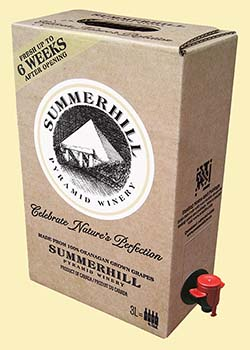
Current rules state that wines bearing the VQA seal must be bottled in standard-size glass bottles, irritating Summerhill Pyramid Winery, which plans to debut an Ehrenfelser and a Merlot in 3L bag-in-box formats.
Kelowna, British Columbia—British Columbia wines bearing the VQA (Vintners Quality Alliance) designation must be sold in glass bottles. The VQA industry standard is applied to wines made entirely from B.C. grapes that meet specific criteria of composition and quality. “All BC VQA wines must be bottled in glass bottles of a standard size,” regulations now state.
The decree created something of a glass ceiling for wineries that want to market wines that meet VQA standards in alternative formats, such as PET, Tetra Pak formats and, in the case of 30,000-case Summerhill Pyramid Organic Winery in Kelowna, the venerable bag-in-box.
Responding to a sommelier’s suggestion, Summerhill is preparing to launch two wines in a 3L bag-in-box format later this month. The two wines in question, an Ehrenfelser and a Merlot, will primarily be available in traditional bottles bearing the VQA designation. But casks of the same wines won’t bear the designation because it’s against the law.
The restriction prevents VQA-quality wines packaged in materials other than glass from enjoying the marketing benefits of the VQA mark, which gained prestige from controversy about Cellared in Canada wines, which are made from a blend of domestic and imported juice. Lacking the designation also bars them from the network of VQA stores licensed from the B.C. Wine Institute, thus limiting their distribution.
A financial benefit wineries receive from participation in the VQA program—originally designed to foster the local wine industry—also is lost to wines in alternative packaging by the glass-only restriction.
Consumer acceptance of varied wine packages has changed in recent years. “It’s a format that people at one time perceived as inferior,” Ezra Cipes, general manager of Summerhill explained to Wines & Vines.
Indeed, the majority of cask wines in Canada list at or below $10 per 750ml. Cipes knows the packaging isn’t designed to be cellared, but he believes it’s a viable option for those who want their wine to stay fresh over the course of several days. Restaurants with by-the-glass programs are a case in point.
The impetus for Summerhill to embrace the packaging came from Jason Ripley, a sommelier and wine consultant who suggested during a tasting that he would buy premium wine sold in boxes because it would be ideal for the restaurant where he worked and also reduce its environmental impact.
“Nobody sees the bottle anyway. The wine is the same, it’s better for their by-the-glass program because the wine stays fresh, so please skip the bottle and just give me the wine,” Cipes recalled Ripley saying. “We thought it was brilliant, and then you can also pass the savings along from not buying a bottle and label and everything.”
The savings amount to a couple of dollars per bottle. A 3L box of Summerhill’s 2010 Ehrenfelser will retail for $70 versus $20 for a 750ml bottle. An organic Merlot will be sold in a 3L box costing $80—or about $20 per bottle, the maximum restaurateurs can manage for by-the-glass wines, according to Cipes.
“I’m pretty sure it’s going to be an obvious benefit for restaurateurs. The great unknown is whether consumers who are used to spending money on wine will embrace the format,” he said.
The format has been offered in the past by, among others, 23,500-case Hester Creek Estate Winery of Oliver, B.C., which launched a Pinot Gris and a Cabernet/Merlot blend in boxes in 2005.
But the labelling restrictions on the format dog Cipes, who has contacted Steve Berney, general manager of the B.C. Wine Authority and Tyler Galts, operations manager at 50,000-case Quails Gate Estate Winery and representative of medium-sized wineries on the BCWA’s wine industry advisory council.
Galts told Wines & Vines that he will bring the matter forward for discussion by the authority on behalf of Summerhill. “There needs to be discussion among the members if we’re going to extend (VQA labelling) to other packaging options,” he said. “At the end of the day, it’s about quality and what can maintain quality for the image of the industry in B.C. and the products.”
Berney said the wine industry advisory committee would have to file a formal recommendation if a change to the packaging rules is deemed desirable. The matter would then go to an industry vote, with 65% of BCWA members producing at least half of the province’s premium wines (designated “Wines of Distinction” in the regulations) in favor.
“Such a recommendation has not come forward to date, nor have I heard many enquiries on this issue,” Berney said.
Cipes, for his part, is hopeful. “The industry has to always be alive and innovating,” he said. “The great parallel is that, at one time, you couldn’t get VQA on screwcap wine.”