Wine man faces tax sham claim


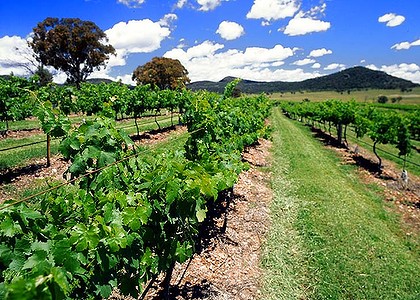
James Estate ... the OSR is probing David James's companies over tax.
David James is battling the Office of State Revenue, writes Vanda Carson.
THE millionaire Hunter Valley vineyard owner and liquor distributor David James is under investigation by state tax authorities for prosecution over alleged sham business agreements and forging of signatures as part of a massive tax avoidance scheme.
The NSW Office of State Revenue has told the NSW Supreme Court that it believes that Mr James's companies may have understated their wage bill by up to $3 million to avoid the state-based payroll tax.
Payroll tax has a tax-free threshold for small companies but mandatory grouping of subsidiaries within large companies is aimed at preventing an employer splitting its payroll to take advantage of the threshold.
Details of the investigation have come to light because Mr James has applied to the court in an attempt to block the OSR's attempts to force three of Mr James's executives, and his lender, Rabobank, to hand over documents and answer questions.
Mr James argues that notices forcing his executives to comply with state tax investigators were issued ''in bad faith''.
He has also asked the court to force the OSR to divulge details of its probe.
Mr James's companies range from wine production to liquor distribution and printing, and include Liquor National, Liquor National Wholesale, Print National and Wine National. Five years ago, one of his related companies purchased the failed wine investment company Heritage Fine Wines.
The OSR investigation is focusing on alleged discrepancies between the financial information Mr James's various companies have declared to state tax authorities and what they have told the federal tax authorities.
''There are potentially serious repercussions to Mr James from the investigation, which has revealed serious discrepancies between wage information provided to the Chief Commissioner and wage information provided to the [Tax Office],'' the court's Justice Ian Gzell said. ''Avoidance of payroll tax by non-grouping of companies is in question.''
The OSR believes finance facilities taken out by Mr James's companies suggested that the companies should be grouped for tax purposes.
It pointed to a $1 billion finance facility with Rabobank and another $100 million Rabobank facility - both guaranteed by various companies controlled by Mr James.
Evidence before Justice Gzell showed that the investigation is examining ''the suggestion that business agreements were fictitious and part of a tax avoidance scheme, and the suggestion that signatures on documents had been forged''.
''In addition, the investigation of Mr James may include consideration of whether he has committed offences by understating wages subject to payroll tax and whether he should be prosecuted.
''There are also offences for failing to keep proper records under the Taxation Administration Act … that may be considered.''
Mr James argued that in one case discrepancies between wages could be explained by the fact that wages for one company were incorrectly recorded in business activity statements for another of his companies.
An affidavit by an OSR staffer, Michael Sofiak, stated that the Chief Commissioner has been attempting to force three of Mr James's senior executives and his lender - Rabobank - to hand over documents or be questioned about Mr James's corporate tax affairs.
The commissioner has attempted to force Bruce Adams, the logistics manager of the distribution company Liquor National Wholesale, to hand over documents or be questioned.
The OSR is also seeking to question an Executive Brands executive, Graham Johnson, and a Wine National executive, Boonchoo Suriyachan.
Justice Gzell has ruled that Mr James may see some portions of the OSR's documents, but has stood the case over so the OSR can produce further evidence or appeal his ruling.
Mr James declined to return calls to his Hunter Valley vineyard, James Estate, to his lawyers at Hunt and Hunt or to his Newcastle accounting firm.