Pinot noir pioneer spins his levitation theory


|
VERDUN BURGESS: Planted pinot noir in Otago while others called it madness. |
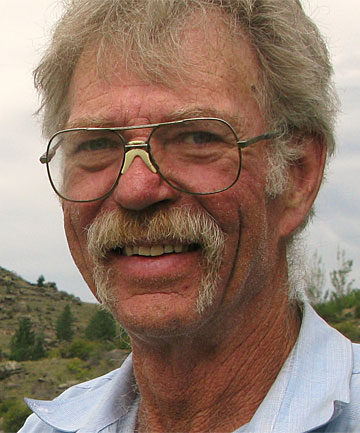
Most of the wine industry knows that pioneer Verdun Burgess and his partner Sue Edwards are selling their long-standing central Otago winery.
What most don't suspect is that Mr Burgess intends devoting much of his time once the winery is sold to getting a new project off the ground, literally. He will take to his shed and build a flying saucer, the self-confessed inventor said.
The technology, if he can make it work, would also be embraced by the car industry, he said.
Considered slightly crazy by their industry counterparts when the pair first planted vines on the rugged Alexandra schist slopes in 1981, they persevered and Black Ridge became one of the region's original pinot noir-producing wineries. It is also the world's southern-most winery and vineyard.
Mr Burgess, 61, said it was time the couple did something for themselves after 30 years devoted to the 21-hectare property.
As for his plans to construct a flying saucer, was it really true?
"Yeah, well, umm, I'm looking at that technology," he said. "I haven't even started on it yet because it is such a big project. "It's a matter of doing the experiments and putting it altogether."
Anti-matter, gravity, propulsion and a power source are conundrums that Mr Burgess had already given a lot of thought to. "If I do manage to get something that does levitate and create its own energy or treble the energy input as to output, I've then got a problem because it's a different power source, isn't it?"
That power source, he theorised, could allow them to hook up three wires to the house and cut the main lines to the power grid.
"The other side of it is that if you get something that levitates and needs batteries to chug it along, you've got a different problem because that in itself means you can build cars that can actually levitate."
For the car industry, that would be akin to changing water into petrol, he said.
The idea of flying across the night skies has captivated Mr Burgess from childhood. Aged six in Invercargill, he found discarded charts of the night sky while on his paper run and took them home. For years on clear nights, he would take them outside and try to figure out how they fit together above him.
"I was fascinated by them. I've found out a little bit more since then in so far as the distances needed to travel."
He's already figured out a couple of models to try out his power generation theories and said the machine would need to travel at the speed of light. "Can it be done? Oh, yeah. According to theory, [we can] actually travel faster than the speed of light and I'm talking about four to six times the speed of light."
Philip Gregan, New Zealand Winegrowers chief executive officer, has known Mr Burgess for more than 20 years and recalled the decision to plant in Alexandra was seen as highly questionable at the time.
"The wisdom at the time was that they were all mad. Verdun was one of the original fivesome down there," Mr Gregan said. He had not heard of the flying machine project.
He conceded it was not a great time to be selling a vineyard, even one that had produced very good wines over the years. But he said there were Asian investors interested in vineyards and wineries.