A taste for Cheese


Image courtesy of Fromagerie de Pekin
Most people in China have never tasted proper cheese -- the really pungent stuff so beloved by the French -- and appear to be in no rush to remedy that state of affairs.
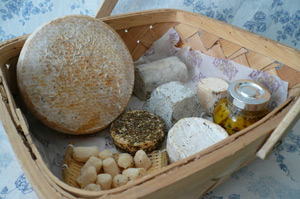
But a couple of artisanal cheese-makers, one Chinese, one Dutch, are confident that Chinese urbanites will develop a taste for it. The theory is that once people have sampled whiffy, real-deal cheese, with its subtle flavors and textures, they will never go back to the processed, packaged and tasteless version that supermarkets pass off as cheese.
Selling the product to a nation of non-cheese eaters is certainly a massive challenge, but one that appears to be showing signs of yielding some positive results. Although cheese-makers Liu Yang and Marc de Ruiter still count largely on the ever-expanding expatriate community to buy their products, more and more Chinese, particularly those who have lived overseas, or traveled extensively, are showing an interest in sampling domestically-produced cheeses.
Perhaps surprisingly, made-in-China cheeses are more expensive than the imported Cheddar, Brie and Camembert varieties that are sold in expatriate-oriented supermarkets such as Jenny Lou's and April Gourmet in Beijing, and Cityshop in Shanghai. The local cheese-makers argue that although their products are pricier, they are far fresher, and therefore tastier, delivered to retail outlets in China within a few weeks of being made, rather than enduring an indeterminate amount of time in shipping containers as imported cheeses do.
"Chinese people are becoming more and more interested in eating cheese," says Liu. "In three years I think sales could be split 50-50 between expatriates and Chinese. It is like coffee, it has really grown in popularity during the last ten years. In the future, I will focus on Chinese customers, but they need to be educated first on how to eat cheese. I think that is a work for a big enterprise; I don't have the capability or resources to do that right now, but I think in time people will learn the cheese culture."
Liu's company, the Fromagerie de Pekin, produces some 200kg of cheese a month at its suburban Beijing factory. Corporate orders come from hotels such as the Ritz-Carlton Financial Street and Hotel G, upscale restaurants such as Maison Boulud de Pekin, Capital M and Modo, the French embassy and companies with a nucleus of French employees such as Airbus in Tianjin and Michelin in Shenyang.
The company also has a roster of private customers, mostly in Beijing, with some in Shanghai and other ci ......ption on the premises or to take home.
"Most of our clients are after high quality wine and cheese at great value," says proprietor Christophe Pompeani. "Not using intermediaries allows us to offer very competitive prices for high quality. Most of our cheeses, if they could be found in specialist supermarkets, would be cheaper in our store, even though consumers tend to equate supermarkets with cheaper deals. The same is true with our wines.
"Our Chinese clients are good consumers of cheese: those that were expats have acquired the taste for cheese, especially if they have lived in France. Chinese children tend to like the very same cheese French children like, that is harder cheese with a nutty flavor such as Comte and Gruyere or mild Cheddar. Another favorite with children is the 24-month-aged Mimolette, possibly because of its orange color!"
Over on the other side of the city, at the Ritz-Carlton Financial Street, the Western restaurants serve imported cheese as well the products of Le Fromager de Pekin. The offerings from abroad include Camembert, Tome, Parmesan, Feta, Gouda, Cheddar, Emmental and goats' cheese.
Further south, in Shanghai, the Hyatt on the Bund stocks a huge variety of cheeses sourced from Europe and Australia including buffalo mozzarella, Gruyere, parmesan, Brie, Comte and Roquefort. Increasingly, Chinese diners are starting to appreciate the delights of a strong cheese enjoyed after dinner accompanied by a glass of wine, port, or brandy.
"Chinese are very open to new culinary adventures," says, executive sous chef John Zhou "Cheese is becoming popular in the first-tier cities which then influence the secondary cities. Chinese are comfortable partnering cheese with wine, and cheese is widely accepted in cooking. People are starting to enjoy and appreciate cheese."