The legend of China's national liquor Maotai


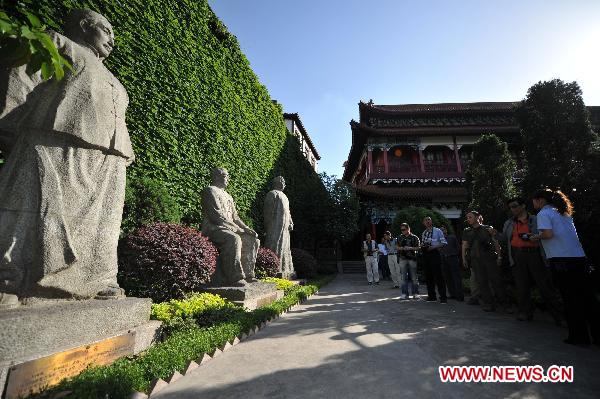
People visit the liquor culture museum of Moutai Co. Ltd. in Maotai Township of Renhuai, southwest China's Guizhou Province, May 17, 2011. (Xinhua/Ou Dongqu)
BEIJING, May 31 (Xinhuanet) -- Maotai is a small town in Renhuai City of Zunyi, southwest China's Guizhou Province. Liquor-making can be dated back to 2,000 years ago in the small town. There are many anecdotes about the liquor.
During the Long March, the Chinese Red Army passed through Maotai Town in 1935, and used the hard liquor to treat the wounds of soldiers. In January 1935, an enlarged meeting of the Political Bureau of the Communist Party of China (CPC) Central Committee was held in Zunyi, the place where Mao Zedong established his authority within the military, marking a turning point for the CPC and paving the way for the success of China's revolution.
With deep affection to the liquor, Chinese leaders honored Moutai as the national liquor after the founding of the People's Republic of China. Moutai liquor was officially used to feast foreign heads of state and distinguished guests visiting China, and was the only alcohol given as official gifts by Chinese embassies in foreign countries.
It is said that former U.S. President Richard Nixon was fascinated by Moutai liquor when he visited China in 1972.
As China moves from a planned to a market economy, the Moutai brewery has developed into one of China's handful of leading liquor producers with conspicuous achievements in modern corporate management and construction of factory facilities.
In 2010, the annual output of Moutai liquor topped 26,000 tons. However, the market supply and demand of the liquor is imbalanced because of its special manufacturing techniques. Prices of the liquor range from 1,000 RMB yuan (about 154 U.S. dollars) to more than 10,000 RMB yuan (about 1,541 U.S. dollars) per bottle.
In April, a bottle of vintage Moutai was sold for 8.9 million RMB yuan (about 1.37 million U.S. dollars) at an auction in Guizhou, while the price of Moutai liquor was less than 10 RMB yuan (about 1.54 U.S. dollar) per bottle thirty years ago.
A large amount of urban families were able to afford it. However, nowadays, drinking the liquor gradually becomes flaunt to wealth and status of a few persons for its high cost.
For ordinary people, it has been more and more difficult to enjoy Moutai liquor. In mid-April 2011, China's oil giant Sinopec's Guangdong unit was revealed to have spent over one million yuan on high-end liquor, including Moutai liquor.
It drew wide public attention. The liquor scandal led people think that the price increase of Moutai liquor was driven by recreational activities with public expenses.
Some netizens linked the consumption of Moutai liquor with corruption, which placed the once splendid Moutai liquor in an embarrassing situation.
The discipline inspection authorities of CPC have taken more forceful measures to advance anti-corruption work.
In February 2010, the CPC Central Committee issued a code of ethics for CPC cadres to follow to ensure clean practice in their work and prevent corruption.
The guidelines specified 52 "unacceptable practices" with respect to CPC leaders and cadres of various levels.
According to the code, CPC officials are banned from spending inappropriately large amounts of government funds on office receptions, as well as high-cost recreational activities.
A member of the 11th National Committee of the Chinese People's Political Consultative Conference (CPPCC) suggested that government funds consumption of Moutai liquor during office receptions should be prohibited, except for important foreign services.
The State Council, or China's Cabinet, urged the Party and government departments to make their financial information public in more areas and provide greater details in the released information, especially in regard to using funds for overseas trips, vehicle purchases and official receptions, dubbed the "three public consumptions." In the process to build a clean government and to build a fine Party work style, a new "revolution" led by CPC, Moutai liquor has been regarded as a test for cadres.
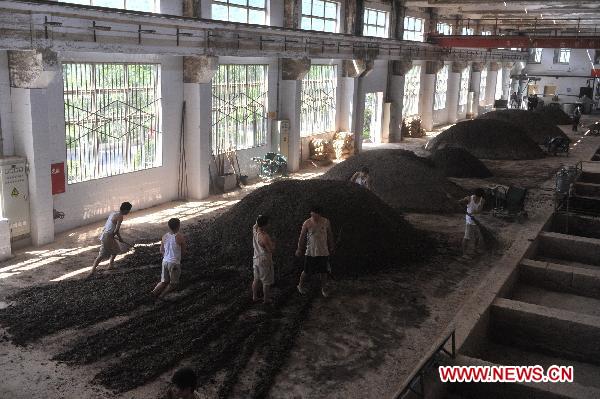
Workers are seen at a plant of Moutai Co. Ltd. in Maotai Township of Renhuai, southwest China's Guizhou Province, May 17, 2011.
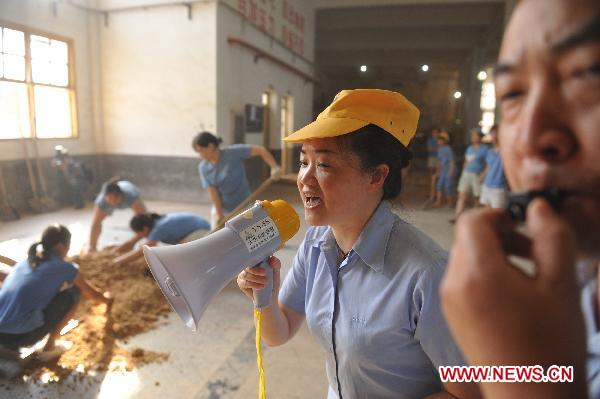
Wang Xirong (2nd R), daughter of the 76-year-old Moutai retired worker Hu Shixian, encourages workers during a manufacturing contest at a plant of Moutai Co. Ltd. in Maotai Township of Renhuai, southwest China's Guizhou Province, May 18, 2011. A total of 19 members of Hu's family have worked in the distillery.(Xinhua/Ou Dongqu)
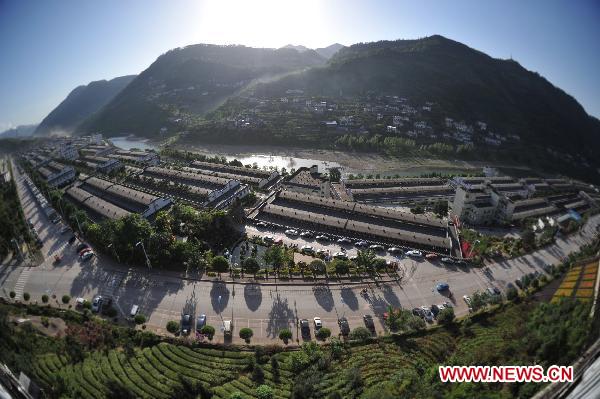
The bird's-eye view photo taken on May 17, 2011 shows plants of Moutai Co. Ltd. in Maotai Township of Renhuai, southwest China's Guizhou Province. (Xinhua/Ou Dongqu)
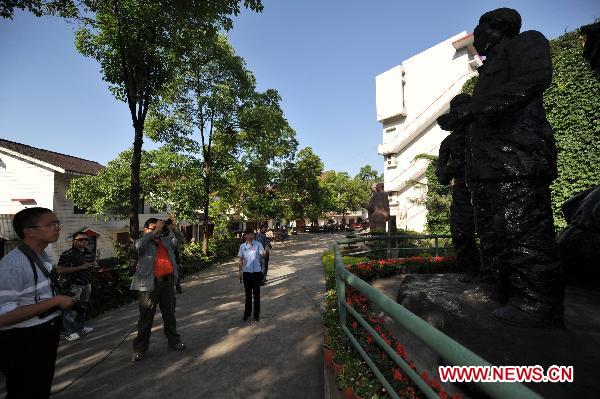
People view sculptures about the Red Army crossing the Chishui River in 1935 at the liquor culture city of Moutai Co. Ltd. in Maotai Township of Renhuai, southwest China's Guizhou Province, May 17, 2011. (Xinhua/Ou Dongqu)
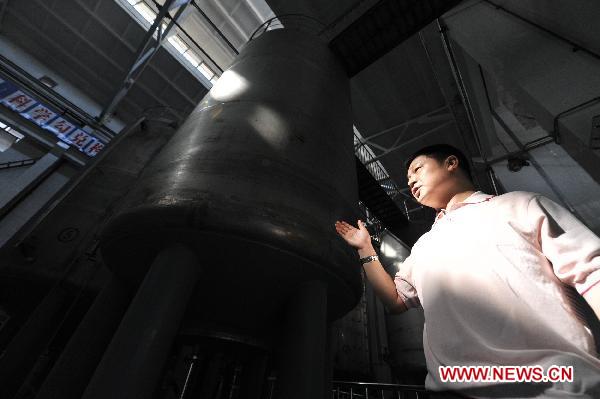
A worker introduces blending techniques at a plant of Moutai Co. Ltd. in Maotai Township of Renhuai, southwest China's Guizhou Province, May 18, 2011. (Xinhua/Ou Dongqu)
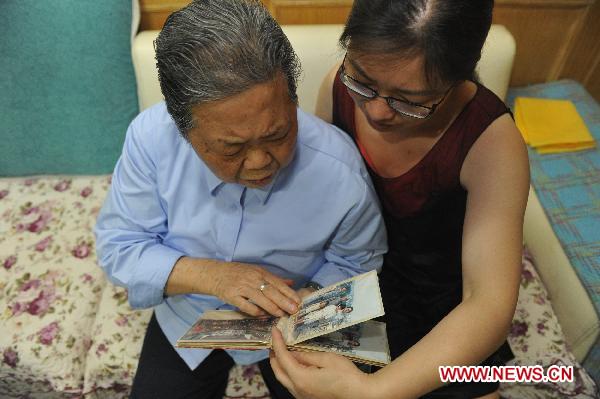
The 76-year-old Hu Shixian (L), a retired worker of Moutai distillery, looks at pictures of her family at her home in Maotai Township of Renhuai, southwest China's Guizhou Province, May 18, 2011. A total of 19 members of Hu's family have worked in the distillery. (Xinhua/Ou Dongqu)
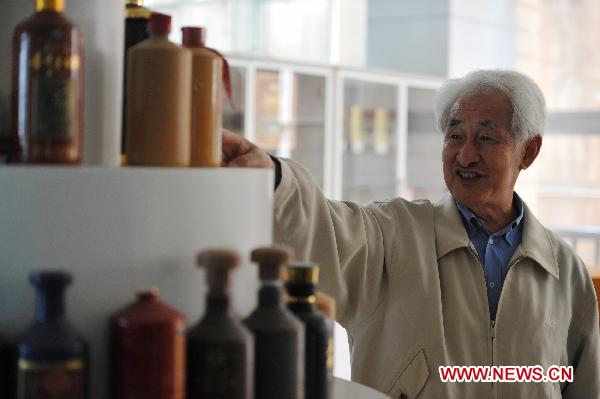
Ji Keliang, board chairman and general engineer of Moutai Group, introduces the development of the distillery in Maotai Township of Renhuai, southwest China's Guizhou Province, May 18, 2011. (Xinhua/Ou Dongqu)
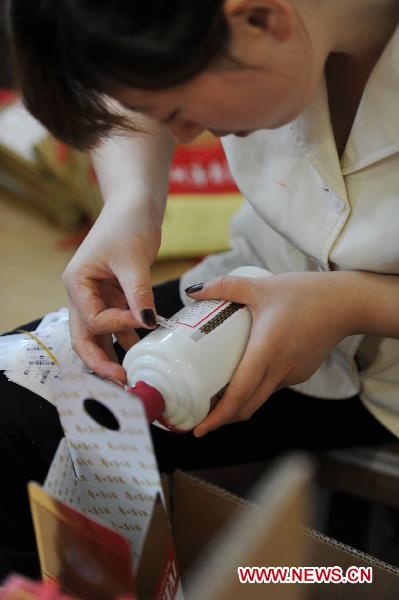
A worker pastes anti-false label on a bottle at a plant of Moutai Co. Ltd. in Maotai Township of Renhuai, southwest China's Guizhou Province, May 18, 2011. (Xinhua/Ou Dongqu)
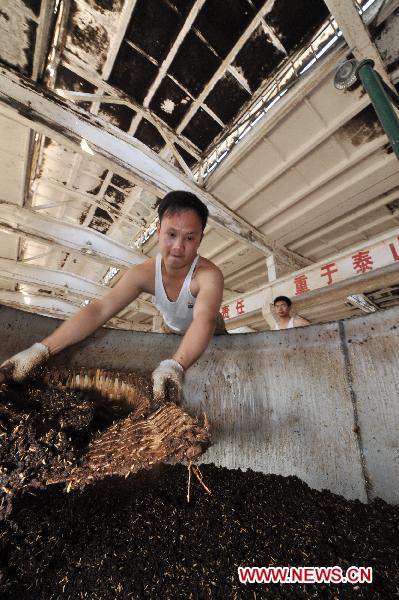
A worker pours ferment materials into at a plant of Moutai Co. Ltd. in Maotai Township of Renhuai, southwest China's Guizhou Province, May 17, 2011. (Xinhua/Ou Dongqu)