Australia: Smoke taint costing millions


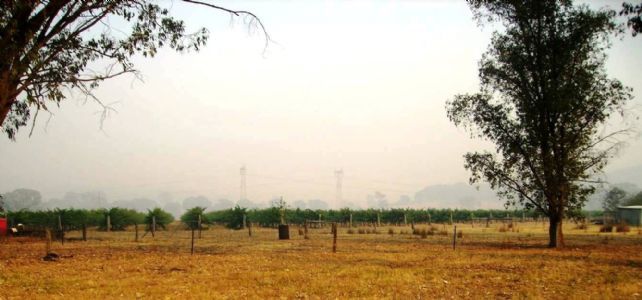
Grapes of wrath: Smoke hangs over a King Valley vineyard during the 2009 bushfires.
Smoke taint has cost Victorian wine grape growers more than $300 million in the past five years.
Centre for Expertise in Smoke Taint Research director Dr Mark Downey said the bushfires in Victoria in 2007 and 2009 highlighted the devastating effect smoke could have on the industry.
"Many vineyards in northeast Victoria had fruit rejected or the wine was made only to discover it was tainted and had no commercial value," Dr Downey said.
"Low consumer appeal, due to smoke taint aroma, resulted in a $300-million loss to the wine grape industry. Such a massive economic loss meant finding out when grapes are sensitive to smoke exposure and how management options can mitigate the negative effects of smoke became extremely important to growers and the industry."
Senior research scientist Dr Davinder Singh said an analytical method had been developed at the Victorian Department of Primary Industries' Mildura laboratory to enable researchers to detect compounds associated with smoke taint in wines and fruit.
After collecting chardonnay, merlot, shiraz, sangiovese and cabernet sauvignon grapes from the King Valley wine region following the 2006 and 2007 bushfires, Dr Singh said they had discovered taint could be identified in older wines and appeared to intensify as wines aged.
"The major advantage of this method was its ability to measure both free and bound forms of taint compounds," Dr Singh said.
"This was a significant achievement, not only in determining the extent of smoke exposure but also the source of high levels of taint identified during or after wine making when taint compounds had not previously been detected, or were detected at only low levels in the fruit.
"For winemakers and consumers, this means smoke taint may increase in ageing wines, causing negative implications for the shelf life of bottled wines made from smoke-exposed fruits."
Dr Singh said testing could be used after future bushfires to determine a smoke index in the fruit and wines, which could help winemakers decide which fruit should be rejected or accepted by the market.
Research was continuing on the different varieties to find out which growth stages were more susceptible to smoke and to establish the impact of intensity and duration of smoke on taint levels in wine grapes.