California's plan to tax online sales hits a bump


Douglas C. Pizac / AP
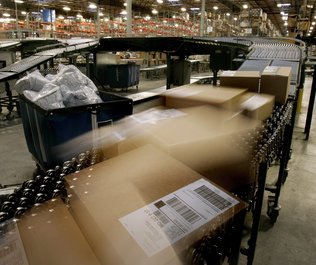
Boxes filled with merchandise travel down a conveyor system to waiting trucks for shipment at the Overstock.com warehouse Wednesday, Dec. 13, 2006, in Salt Lake City. The company is currently running 24/ 7 to keep up with the holiday rush of online orders. (AP Photo/ Douglas C. Pizac)
California lawmakers have taken another run at taxing online shopping, setting up a major confrontation with online retailers like Amazon.com.
The Legislature this week approved a bill that would force Amazon and many other out-of-state Internet retailers to collect tax on goods sold to Californians.
The Board of Equalization estimates the legislation could produce as much as $317 million a year in additional tax revenue.
Still, backers insist it's not about the money; it's about being fair. The bill would force e-commerce retailers to charge the same taxes collected by their brick-and-mortar competitors.
"We're finally on the way to creating a level playing field for California companies," said Sen. Loni Hancock, D-Berkeley, who has helped lead the effort.
It's not clear if the bill will become law. It was part of the budget package approved Wednesday by the Legislature. Gov. Jerry Brown vetoed the main budget bill Thursday, and on Friday legislative staff members were determining whether the sales tax bill can still be legally sent to the governor separate from the budget, or whether lawmakers will need to vote on it again.
Brown told reporters in Los Angeles he believes the Internet tax is a "common sense idea."
If he does sign the Internet bill, California could be in for a fight. Amazon and Overstock.com have threatened to sever ties with their California "affiliates" – thousands of businesses that earn commissions by referring customers to Amazon.
Amazon, probably the most aggressive opponent of the legislation, has already fired affiliates in several other states over similar laws, including two last week: Connecticut and Arkansas. It had no comment on this week's developments in California.
The fight could go beyond that. Amazon and other e-tailers might also sue to block the law, as they have in New York. The New York challenge is pending, but so far the lower courts have ruled in the tax collector's favor.
California's legislation is crafted in a way that leaves one Internet giant largely unscathed: online auctioneer eBay, which is based in San Jose. The bill exempts out-of-state sellers on auction sites whose annual sales to California consumers fall below $500,000 (In-state sellers have to collect sales tax if they make more than three sales a year).
Since many of eBay's sellers are moms and pops, they wouldn't be covered.
Taxing the Internet is a complicated and still-evolving issue, layered with confusing court decisions and legislation. The bottom line is that very little tax gets paid, even as billions of dollars are spent on e-commerce, to the frustration of Main Street merchants and tax collectors.
"It creates a huge competitive imbalance for the small businessman," said Joe Huddleston of the Multistate Tax Commission, a consortium that includes all but three states.
A study last summer by Richard Parker, a professor of public administration at San Diego State University, concluded that California merchants are losing $4 billion a year in sales to online competitors.
Previous bills vetoed
Democratic lawmakers have tried several times in the past decade to pass some form of Internet sales tax. Former Gov. Gray Davis vetoed one bill in 2000, saying he didn't want to "send the wrong signal about California's international role as the incubator of the dot-com community."
Brown's predecessor, Arnold Schwarzenegger, vetoed another version of the bill two years ago.
Most consumers probably don't realize it, but a decades-old state law requires Californians to pay a "use tax" when they buy something from out of state. Generally speaking, they're supposed to declare the purchases and make the payment when they file their income taxes.
But the law is almost impossible to enforce, and the state figures it's losing about $1 billion a year in revenue from online and mail-order sales.
With the explosion in e-commerce, lawmakers in California and many other states have tried shifting the tax-collection burden from consumers to retailers – the same way brick-and-mortar transactions are treated.
Those efforts have been largely thwarted by a landmark 1992 U.S. Supreme Court decision involving a mail-order office-supply company. The court said retailers can't be forced to collect taxes unless it has a "physical presence" in the state.
Nevertheless, several states have passed laws in the past few years forcing online retailers to collect tax. Lawmakers have attempted to get around the 1992 ruling by expanding the definitions of physical presence.
In California, with the legislation passed this week, that means subsidiaries doing business in the state. Amazon, for instance, employs 500 Californians at two subsidiaries in Silicon Valley, including one unit that helped design the Kindle electronic book reader.
California also says the retailer's in-state affiliates constitute a physical presence. These affiliates are independent businesspeople who post links on their websites to Amazon and other e-tailers. When a customer clicks through and buys something from the e-tailer, they're paid a commission.
Amazon and Overstock's threats to dump their California affiliates, in retaliation for the tax legislation, has some of these affiliates rattled.
Ken Rockwell of La Jolla, who runs a photography website, said he earns much of his income from links to Amazon and other online sellers of camera equipment. If the bill becomes law, he and thousands of others would get cut off, he said.
"The only people who would get hurt are the people in the state of California," Rockwell said.
Rockwell said he might move out of state as a result.