A crayfish a day keeps the invader at bay


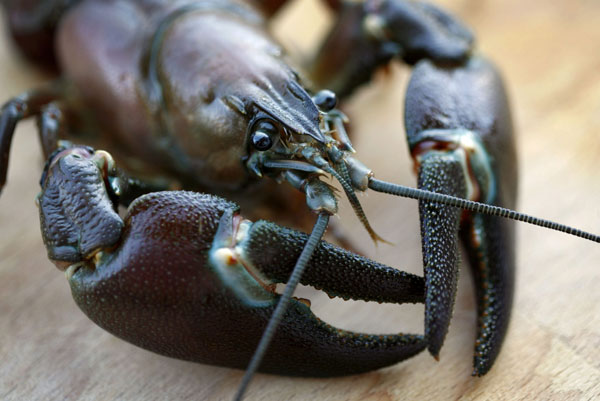
The American invader, Pacifastacus leniusculus (Image: Timo Jaakonaho/Rex)
"Does it feel good to be eating our enemy?" asks the stranger sitting next to me. An unusual question for the dinner table perhaps, but then again, tonight is an unusual night.
As commuters rush past on their way home from the City, I'm sitting down for dinner in a pretty little courtyard in the middle of Aldgate, in London's bustling East End. With fairy lights in the trees, a checked tablecloth spread over a trestle table laid for 20 or so guests, and the sun cracking its way through the clouds, there are certainly worse ways to end a long day. One glance at the menu in front of me, and things are looking even better.
I'm here to sample one of London's lesser-known delicacies - the American signal crayfish (Pacifastacus leniusculus). The name might be a giveaway, but these tasty little crustaceans aren't native to our shores. In fact, they were actively introduced to the UK in the 1970s by the Ministry of Agriculture, Fisheries and Food (MAFF). The idea was that farming them would alleviate the pressure on our own native species, the white-clawed crayfish (Austropotamobius pallipes), which were being threatened by overfishing at the time.
But it turns out that the American crayfish didn't travel alone, and brought with them the crayfish plague - a parasitic water mould called Aphanomyces astaci, which US crayfish species can carry unharmed but to which European species, such as the white-claw, are especially susceptible. The result? The American signal is running amok, at the expense of our native species.
To make things worse, the vast majority of crayfish consumed in the UK (it's now become a popular ingredients in high street sandwich chains) is imported from China. So why are we Brits so keen to eat imported crayfish when we have an abundance we need to get rid of right here in the river Thames, and is there a solution?
Meet Crayfish Bob. Née Bob Ring, Crayfish Bob is one third of the trio behind tonight's event. The others are artist Clare Patey and theatre designer Lizzie Clachan. Bob himself is an environmentalist, who has decided to tackle the problem of invasive crayfish head on. Talking to Bob, in his pop up café (which takes the form of a kind of converted beach hut spit in two - half food stall, half crayfish memorabilia museum) it's obvious he's crayfish obsessed. Since 2003 he's been trapping, cooking, and studying these crayfish, and well as trying to raise awareness of the situation. Bob's solution to the pesky American crayfish? Eat the lot of them.
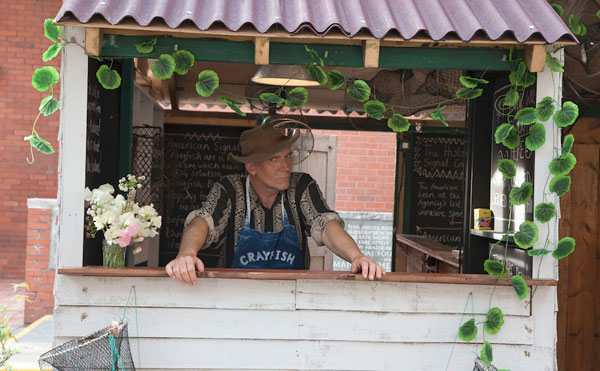
Crayfish Bob's at Two Degrees (Image: Toby Smith, courtesy of Artsadmin)
So that's why I'm here, along with the other guests, eyeing up a menu of River Thames American signal crayfish served with sourdough bread with homemade butter, hogweed, broad bean and borage salad and roasted hay mayonnaise. The food looks incredible, and was put together by food designers Blanch and Shock. The feast is topped off with panna cotta, strawberries and butterscotch for pudding, and Urban Wine made in Tooting, London. And all for just a £5 ticket.
Artist Clare Patey loves to produce events that are food-related, and hopes that bringing people together over the dinner table will generate discussion and awareness about the crayfish situation. The plan works, but one question which comes up over dinner is whether it's worth the hassle - it is so important to manage one crayfish species just to save another?
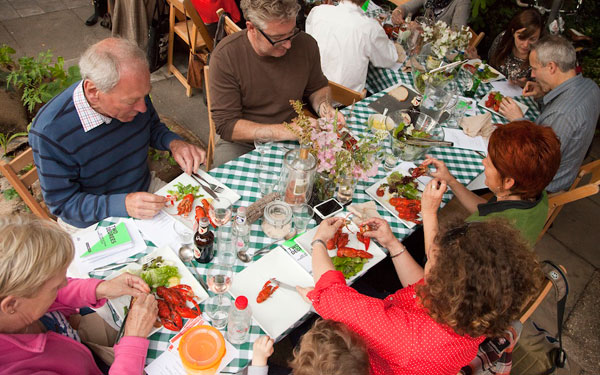
Eating the enemy (Image: Toby Smith, courtesy of Artsadmin)
But there's a bigger issue at stake. According to Bob, each year we import tonnes of crayfish that has been intensively farmed then transported across the globe. It is then packaged in the UK and branded as a UK manufactured product, he says, misleading consumers into thinking they are buying local goods. If only people realised there was a surplus of delicious crayfish so locally, the problem might be redressed, says Bob. He is currently working on some crayfish-based products he thinks might appeal to the public.
The unique collaboration behind the pop up café is just one event in the week-long Two Degrees festival, which features interactive art works with an activist twist. On offer this year are free haircuts in exchange for conversation, urban herbal medicine, and a work-athon for the self-employed. One of the big ideas behind the festival is to try and tackle some of the crises facing the world today, from financial to environmental, in an alternative, more positive, and participatory way.
In my case, that means eating dinner in the name of ecology. I have to say, in a day and age when much of the shellfish and sea food we eat is unsustainable or comes at a high environmental price, it's quite refreshing to be getting environmental brownie points whilst tucking in to great pile of delicious (and healthy) food. Does it feel good to be eating the enemy? In that context, I have to admit, it does.