Rebecca Pidgeon returns to Vermont with 'Wine, Women & Song' tour


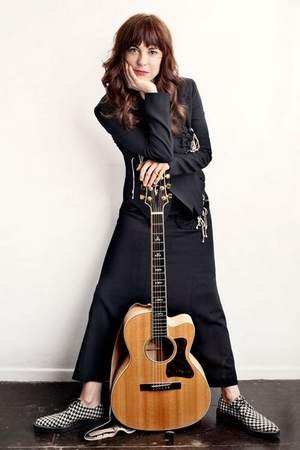
Though she has spent a fair amount of time living in Vermont, singer-songwriter Rebecca Pidgeon admits she had no idea there was such a thing as Vermont wine.
She’ll probably find out more about wine from the Green Mountain State when she arrives for her concert Friday at Higher Ground as part of the “Wine, Women & Song” tour with Deborah Brenner, author of the book “Women of the Vine” about women in the wine industry. The wine tasting and performance precedes the Burlington Wine & Food Festival that takes place Saturday in Waterfront Park and will showcase wine from Vermont and around the world.
Pidgeon lives part-time in Vermont with her husband, filmmaker and Pulitzer Prize-winning playwright David Mamet, who attended Goddard College in Plainfield and settled in the area soon after. Pidgeon, also an actress who’s appeared in the Mamet-made films “State and Main” and “Heist,” spoke about the “Wine, Women & Song” tour and her upcoming album during a phone conversation last week from the couple’s home in Los Angeles.
Burlington Free Press: Can you describe what the show will be like? Is it all music or a mix of music and wine talk?
Rebecca Pidgeon: It’s really music, and a great wine tasting with the people who actually make the handmade, boutique, yummy yummy wine. Deborah Brenner (will be) signing her book and I guess talking about it, but it’s not like a formal presentation. The only show really is the music. So basically drinking wine and playing music.
BFP: How much time have you and your husband spent in Vermont? Do you still own property here, in the Plainfield area?
RP: Yes, in Plainfield. I have many good friends in Vermont. I had my first child in Vermont at the Randolph birthing center and we spent the first year of her life in our house in Vermont. Someone once said it’s an easy place to live emotionally and a tough place to live physically. It’s so very beautiful. People usually come up to Vermont because they love the artisans there, the craftspeople with the wonderful work ethic and philosophy about the way they want to live a good life. For the most part they do live a good life.
BFP: How much time do you spend in Vermont?
RP: It’s become difficult because of working in the industry. David’s actually making a film in New York right now.
BFP: How did you wind up becoming involved with this project (“Wine, Women and Song”)?
RP: Both Deborah and I work with (marketing executive) Harvey Leeds, a legend in the music industry. He worked for about 30 years with many great people and he says he was thinking about, “What can I do with Deborah and Rebecca?” and he said, “I’ll put them together.” It’s a nice way for me to reach a new audience. And it’s a nice way for Deborah to help people enjoy an evening with the wine and the wine tasting.
BFP: You have a new album coming out. Deborah suggests in the press material for the tour that your songs closely match the tone of her book.
RP: I think maybe what she’s identifying with is that the songs on the CD “Slingshot” — it’s going to be out in October — they seem to be about starting over. The opening track is “Get Up Get Out” and it’s about starting fresh. There’s a lot of co-writing on this record — Larry Klein the producer; Freedy Johnston, who’s also a great songwriter; Timothy Bracy — so that led me down some really great and unexpected alleys and also broadened my scope as a writer. I would say the songs are mainly, interestingly, just a little bit darker thematically; they’re about relationships in flux or relationships that didn’t work, or being alone. I think that resonated with Deborah because the group of women she was interested in who started Women of the Vine (which is also a wine company) seemed to come at it late after completely different careers. They’d start in some business or other that didn’t really have much to do with the wine industry. A lot of women sort of made a U-turn and picked this up because it was a passion and decided to go for it in a brave step forward. Some of the women came out of divorces and went into this new phase of their lives. Not many of the songs are autobiographical on this record and I’m certainly very, very happily married, thank God, but I don’t find it easy to write about “Oh, I’m happy” things because there’s no tension in it. I don’t think my husband would write plays about being happy.
BFP: So how did you get this darker tone?
RP: There’s always something in one’s soul, you know. You’re a writer, you have some other thing which feeds you, the creative impulse. You’re inspired by books you read and music you hear. And also life — life is just sometimes not easy.
BFP: Even if you have a good life with a happy marriage and two children.
RP: It’s a big mystery. A lot of things are not in our control.
BFP: As an actress you inherently assume roles of other people. Does that help you as a songwriter?
RP: I think so. I think it really helps in performance. It helps to adopt some persona in performances.
BFP: Is one harder than other? I’ve interviewed a few actor/musicians, including Kevin Bacon, who once told me it was scarier at first being on stage as a musician because you’re out there on your own and you’re not hiding behind someone else’s words like you are as an actor. And there’s no opportunities for second takes.
RP: I love them both. If you’re in a good group, if you’re on a good set making a movie with people who are very giving, and if you’re in a group of musicians you love, you can let that piece of trouble go and be grateful for what you’ve got and it can be a joyful experience. It can be difficult if you’re on a rotten set, even a mediocre, sad set; you’re playing the second lawyer and you’re doing laywer-ese. It’s not what people get into the profession for. You can’t always play Mary, Queen of Scots or, if you’re a man, Richard III. They don’t usually want to play some lawyer who always says things you can’t really understand.
BFP: You have more control as a musician writing and performing your own songs than you do as an actress.
RP: But it does take awhile to get comfortable. It takes a lot of performing to become comfortable on stage. I’ve seen Kevin Bacon (in concert), I think he’s great, I don’t see that he’s uncomfortable. If you’ve got a bad audience, you’re in a venue that’s inappropriate for you, you have a bad sound system, then it can be discouraging or disheartening. Or if you’re feeling insecure.
BFP: You mentioned that you wrote with other people for your new album. One of those was your husband, right? What was that like?
RP: Magic. Working with my husband is always great. You have to be fast because he’s a genius. When I write a song with him it’s like he takes five minutes and I take two weeks. He’ll just be, “Do this and this and this” and I’m like, “OK, right. I’m going to take two weeks to think about it.” The one that’s on the record (“Baby Please Come Home”) is my attempt at a Hank Williams kind of structure of a song. I came up with the general idea and general lyric, but of course if you’re going to write a Hank Williams song you have to be a genius from another dimension, so I said, “I know a genius from another dimension....”