Wind, not rain, threatens vineyards


By Emily Charrier-Botts INDEX-TRIBUNE STAFF WRITER
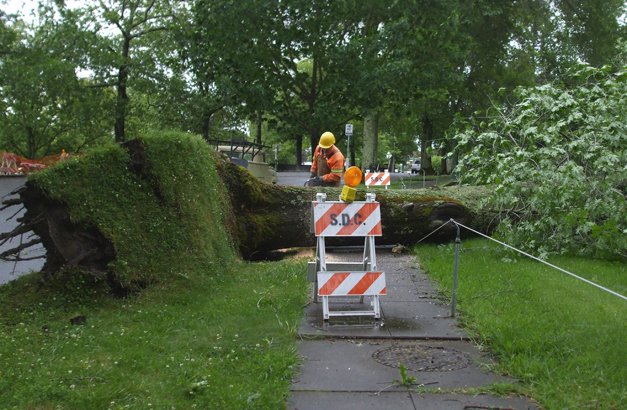
THE INTENSE WIND on Saturday sent a giant oak tree at the Sonoma Developmental Center falling to the ground.
Yvonne Soto-Pomeroy/Index-Tribune
Rain pounded the Valley for more than a week, sending vineyard crews inside to wait out the wet weather. But Sonoma growers say it was the whip of the wind, not the rain, that caused the most damage to the vines.
"The only thing that effected us was the heavy wind, it snapped off some shoots," said David Cook, owner of Cook Vineyard Management.
Some Sonoma County growers were worried the rain would hamper the crop's ability to pollinate by damaging the flowers on the vine, making it impossible for them to fertilize and develop grapes. Cook said because of the cool temperatures all season, the vines are late to bloom, meaning the recent rains had minimal negative impact on his vineyards. Cook explained that thus far, only the chardonnay and pinot crops are blooming, with just 5 percent of those fields showing flowers.
"The other 95 percent hasn't bloomed yet, so the only loss we'd see would be to that 5 percent (in bloom)," he said, adding that he expects the heat this week to speed up the blooming process. "If we get it (rain) next week, it could be devastating."
Ned Hill of La Prenda Vineyards Management agreed that the winds were the worst part of the recent storm. He said he also lost some vines that broke under the intense gusts. In his fields, he's seen a maximum of 30 percent in bloom, adding that it was too early to tell if there would be any yield loss due to an interruption in the pollination process from the late season rains.
"This is definitely a late spring, we're a good three weeks behind where we'd like to be in terms of growth," Hill said. "It's cold, it's wet and it's windy."
Hill added that following any storm, his crews are on the lookout for botrytis, a fungus that can damage grape growth known to thrive in the moist climate. Hill said he directed his crews to spray fungicide across most of the vineyards during the brief break in the rain last Thursday and Friday, but added he would have to be vigilant about checking fields in the coming week.
"The bunches can get rot and shrivel up and die," Hill said.
Cook said the silver lining to the storm system was that the fields have not required irrigation yet, relieving the water tables. But to have a full yield, Cook said, "We really need things to warm up."
Both Cook and Hill agree that a few weeks of heat would get the vines back on track for the season. The damp ground is better for holding in warmth, which would allow the vines to catch up quickly after a delayed growing season. But like most things in agricultural, a little of anything goes a long way.
"If it got too hot too quickly, then they'd be growing so much that we couldn't keep up. We can never be happy," Hill joked.
National Weather Service has the Valley warming up to the 60s with partially cloudy skies at the beginning of the week, with temperatures in the low- to mid-70s with sunshine by the end of the week.