Rivers deep, mountains high


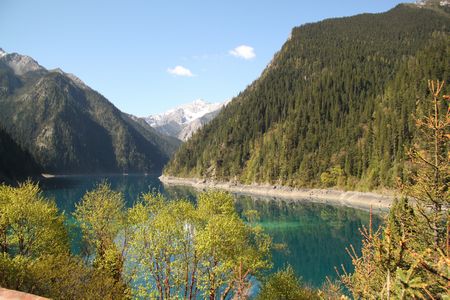
Views of Long Lake.
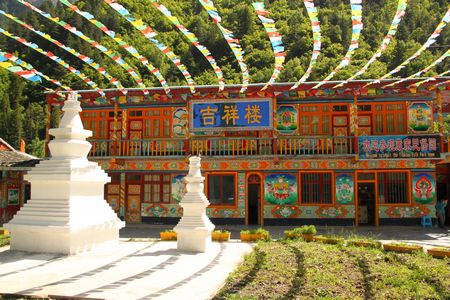
He Ye Village.
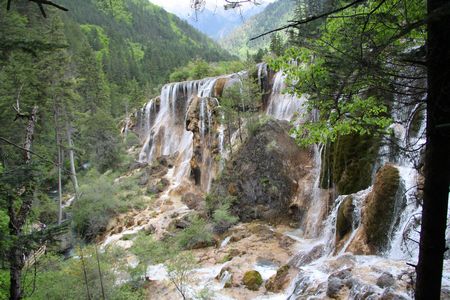
Pearl Shoals.
Hidden in a remote part of the Minshan Mountain on the edge of the Qinghai-Tibetan Plateau, Jiuzhai Valley is China's premier national park with elevations reaching up to 4,764 meters above sea level.
Just 200 kilometers from Wenchuan and Beichuan, Jiuzhai Valley survived unscathed after the devastating earthquake of 2008. And widely regarded as a sacred spot by locals and outsiders alike, it wasn't long before tourism recovered after the tragedy.
Named after the nine Tibetan villages scattered throughout the region, Jiuzhai Valley boasts breathtaking views all year round with its karst formations and spectacular waterfalls. However, summer is the best time to see flowers in bloom, winding streams and crystal-clear lakes.
What to see:
Only three Tibetan villages are open to tourists, namely He Ye, Shu Zheng and Ze Cha Wa.
The borders of Jiuzhai Valley National Park assume the outline of a letter "Y" and located in the top left-hand corner of this "Y," is Long Lake (Chang Hai), the highest spot tourists can visit in the park. This crescent-shaped lake is over 100 meters deep and is surrounded by snow-capped peaks and verdant forests. Traveling downhill by wooden walkway, visitors come across the exquisite and impressive scenery of Five-Colored Pond (Wucai Chi). And thanks to the limestone sedimentation on the uneven lake bed, combined with various forms of algae, the lake appears to magically change color.
Pearl Shoals (Zhenzhu Tan) sited on the right-hand side of the letter "Y" is one of the most popular spots in the park and features cascading waterfalls.
Pearl Shoals is also famous for its appearance in the original TV version of the famous Chinese story Journey to the West. Since then it has attracted untold numbers of newly wed couples eager to be photographed along the picturesque riverside.
The world's widest limestone waterfall, Nuo Ri Lang, also lies in the park. Near the entrance gate to the park sits the Bonsai Shoal (Pen Jing Tan) a stretch of shoal with poplars, azaleas, pines, cypresses, willows and other shrubs.
The park is well developed with easy access to shuttle buses that operate throughout the day and include a well-informed tour guide. Each shuttle bus offers panoramic views by way of a glass roof. The shuttle buses carry visitors to the end of the main route, picking up passengers at every stop on the journey downhill.
With the exception of the tourist center at the junction of three main routes, the rest of the park is strictly cigarette and litter free.
The entrance fee is 220 yuan ($33.96) with an extra 90 yuan for the shuttle bus.
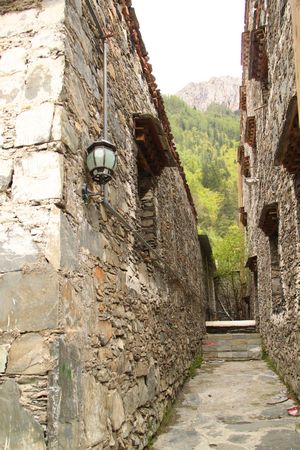
Jiabo Old Town. Photos: Zhu Jialei/GT
Where to stay:
Roughly a dozen hotels located at the foot of Jiuzhai Valley National Park provide visitors with a variety of choices. Most of the hotels have three or four star ratings, but few have air conditioning due to the all-year-round cool climate. To save energy and reduce pollution, none of the hotels provide disposable toothbrushes, toothpaste or shampoo, so be sure to bring your own.
If you are hoping to enjoy a first-rate experience, the Jiuzhai Paradise is the only five-star hotel in the region. Isolated in the middle of woods, the hotel draws a stream of water direct from the Jiuzhai Valley into its lobby, and each room offers breathtaking views of the national park.
What to eat:
For an authentically traditional feast, try local yak butter tea (suyou cha), yak meat or qingke barley wine.
Better still, enjoy the local cuisine courtesy of a roundtable dinner provided by a local Tibetan family. The friendly and hospitable residents provide a three-course dinner with free-flow qingke barley wine and a performance of singing and dancing that costs 150 yuan per person.
How to get there:
Direct flights go from Beijing, Shanghai, Xi'an, Chengdu, Chongqing, Kunming and Hangzhou to Sichuan Jiuzhai Huanglong Airport. Alternatively you can fly from Guangzhou and Shenzhen with a stopover in Chengdu or Chongqing.
Sited at 3,447 meters above sea level, the airport is 88 kilometers from Jiuzhai Valley National Park and has the shortest runway in China. Be prepared to spend some time at the airport, however, as many flights are either delayed or rescheduled due to the region's unpredictable weather.