Growing a giant


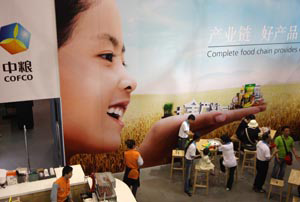
Sitting in COFCO's comfortably modern offices in Jianguomen, the juncture of Beijing's business and political districts, you get the feeling the company is moving fast into a bright future. Long at the heart of China's agricultural commodities trade, China National Cereals, Oils and Foodstuffs Corp has reinvented itself from a protected monopoly grains trader to a food processor with products ranging from rice to fruit juice, wine and chocolate.
As the country eases away from a long-held policy of self-sufficiency amid rising global food prices, China's rising demand for commodities like corn and wheat has been a boon for COFCO which is using its long-established international network to source supplies. COFCO is starting to look a lot like trading giants Cargill and Bunge.
Indeed COFCO was in the news lately for its bid for Queensland-based sugar processor Tully Sugar. The Beijing-based firm joins peers like Cargill, Bunge and Singapore-based Wilmar in seeking to secure agricultural assets in Australia, a key exporter of commodities such as grain, meat and sugar. COFCO is also building alliances near home: it recently signed a cooperation agreement with Japan-based trading house Itochun to jointly source food products overseas.
Given that it is one of just a few entities entitled to import grains into the country, COFCO seems well placed to satisfy China's ne ......'s WTO membership in 2001 was expected to open the country up to grain trading — with equal access to imports for Cargill as well as COFCO — in reality some of the old rules remain, such as tariffs of 65% for grain imports outside of government-granted quotas.
While China has for some time been a big player in the production and consumption of grains — and, increasingly is an importer of grains — it has not become part of global markets in the same way as Brazil or Russia have largely because approval of import quotas and market data remain tightly controlled.
The likes of Cargill, Bunge and Louis Dreyfus still have a limited presence in China compared to their dominance in Europe and the Americas. That's likely to remain the case given the rise of COFCO, and a new focus on big trading houses among G20 governments who fear the power of such firms over key farm products is driving inflation.
One of China's largest state owned firms and a powerful player in feeding the nation, COFCO is a firm well worth watching as China makes itself felt both as a consumer and a buyer of agricultural commodities.