Hard times among the vines


MARION VAN DIJK
"For sale" signs are sprouting up on a growing number of Nelson vineyards and wineries as the global oversupply of grapes continues to squeeze the industry.
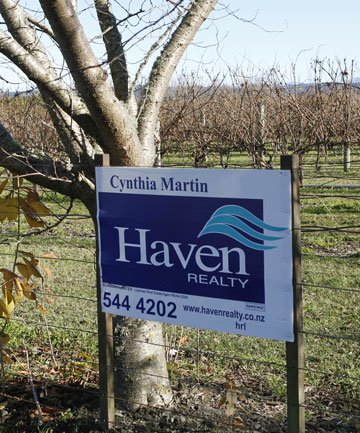
FEW TAKERS: Stafford Lane Estate at Appleby is among the Nelson vineyards and wineries on the market.
While the region has so far avoided the worsening situation in Marlborough, where a host of heavily indebted companies are on the market and mortgagee sales are becoming commonplace as banks lose patience, there has been a noticeable lift in listings here.
Among them is one of Nelson's biggest contract growers, Golden Hill Estates.
Established by the Marr family in 2002, it spans four vineyards totalling 71 hectares and produces about 500 tonnes of mainly sauvignon blanc, pinot gris and pinot noir, most of which goes to Waimea Estates and Kahurangi Estate.
Jeff Marr declined to say why the multimillion-dollar business was on the market, but in April he said it would barely break even this year despite selling all its grapes at prices that "suck".
Daniel Reed of Bayleys, which is marketing the property, says there has been some interest in it both as a complete package and in separate vineyard blocks.
His colleague, Robert Wallace, has been trying for several months to find a buyer for Anchorage Wines, the Motueka-based contract winery and vineyard operation owned by the Drummond family.
Anchorage has expanded rapidly in recent years and now processes about 500 tonnes of grapes, with the capacity to handle 1000 tonnes, as well as having about 50ha of vineyards, dominated by sauvignon blanc and other white varieties.
Mr Wallace said there had been only limited interest in the business, although an Auckland investor was due to visit. It is for sale as a going concern or as part of a 50:50 partnership with the Drummonds, who are still keen to be involved.
Sales manager Chris Drummond said the main reason it was on the market was that his father Ray wanted to retire, and the business needed new capital if it was to continue to expand. It was not because of high debt, although he conceded that trading conditions were tough in its major export markets of Britain and the United States, with the New Zealand dollar so high.
Anchorage had sold all but a couple of thousand bottles of its 2010 vintage and was busy bottling its biggest harvest yet, which it remained confident of shifting, he said.
"We don't have a problem selling, but the price point is obviously tough. Margins are very tight, and you've got to cut your costs and watch every penny."
Mr Wallace – who said Nelson was better off than other regions because of the boutique nature of its industry – is also the agent for two blocks totalling 27ha being offered for sale by Woollaston Estates in Upper Moutere, for $850,000 and $650,000. One is bare land and the other is planted in eight-year-old pinot noir vines.
Woollaston general manager Scott Ingram said it was reducing its vineyard land to 50ha because the two blocks were "surplus to requirements" in the current tough economic climate.
"We are selling a lot of sauvignon blanc and other white varieties, and we don't need as much pinot noir, which is also very costly to make."
With the domestic market in "turmoil", it was a struggle to make money selling wine, which a rise in excise duty this month would only exacerbate, he said.
"You've got to produce only what you know you can sell. If you haven't got a market, it will just put a hole in your pocket."
He admitted that it was not a good time to sell vineyard land but said the block would suit a lifestyle grower.
Other properties officially on the market are Kina Beach Vineyard Estate, Stafford Lane and Waiwera Estate in Golden Bay, while a number of unlisted smaller wineries are known to be for sale.
John Tocker, owner of Moutere Hills, which didn't open its winery and cafe or harvest its grapes this year, said he was negotiating a sale which would hopefully see it reopen in the near future.
Waiwera owner Dave Heraud said he was selling because at 76, he was getting too "decrepit" to handle a hectare of pinot noir grapes and 230 avocado trees on his boutique 7ha hillside winery at Clifton, and just wanted to take it easy.
He said he was not concerned about the surfeit of vineyards for sale, as his property would appeal to someone buying for the lifestyle, who was not worried about making money out of wine. So far, he had received inquiries from South Africa, Russia and Europe.
Mr Wallace said the property was likely to fetch between $3 million and $4m. Grape growers are feeling the pinch more than wineries, with the bulk price of sauvignon blanc dipping below $1000 per hectare this season, prompting many to quit or reduce their crops.
Michael Mokhtar, a longtime real estate agent for Harcourts in Richmond who also owns a vineyard, said the amount of grape-growing land for sale had jumped, and he expected it to increase further after this year's record harvest, which was likely to exacerbate the oversupply and keep prices low for longer.
"A lot of vineyards are being pulled up or sold. There's no money in it, and many wineries don't need contract growers any more now that their own vineyards have become established."
If too much land came on the market, it could depress property values, as was happening in Marlborough, he said.
With grape prices "pretty dismal", he had scaled back his own growing.
Garry Hall, whose family has put 34ha of pipfruit and vineyards in Waimea West up for sale, said they didn't want to sell but couldn't see prospects for either crop improving for a while.
"You're working for nothing if you're doing it for export.
"We're testing the market ... because things could get worse."
Anna Seifried, deputy chairwoman of the Nelson Winegrowers Association and sales and marketing manager for her family's company, said the increase in listings was a reflection of how hard it was to make a living out of wine.
"Economies of scale are certainly helping us, but it's hard for the little guys with excise duty and other things going up but wine prices coming down."
She confirmed that Seifried Estate had been approached regularly over the past few months by people with vineyards to sell, often at bargain prices, but would not be changing its conservative approach to growth, which had served it well for 40 years.
"We have 200ha of our own vines, and the way the market is going we need to tread carefully and think about our own sustainability.
"The secret to Seifried's success has been small steps over a long period, and we've built markets and then planted vineyards, which is not always the case these days in the industry."
While cheap Marlborough sauvignon blanc dominated New Zealand sales, Nelson could still trade on its boutique image to get reasonable prices for its wines by targeting the right markets, she said. New opportunities, such as in China, were opening up, which would help to soak up the excess wine.
Meanwhile, Pacific Prime Wines – Seifried's joint venture with other Kiwi wine producers to increase sales in the US – shipped its first container last week and had distributors ready to go out and sell it, she said.
"The forecasts look good and there are opportunities for New Zealand wines at our price points, so we are quietly confident."