A look inside house of the four winds


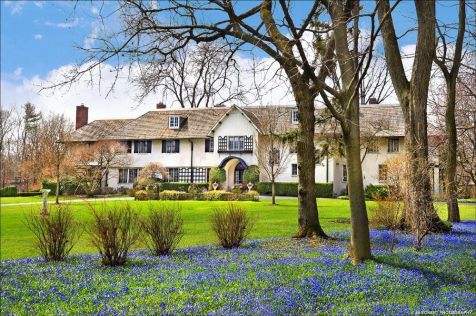
The House of the Four Winds ... photo submitted by the Lake Forest Preservation Foundation
Howard Van Doren Shaw designed House of the Four Winds in 1909 as a Mediterranean style house for Hugh Johnson McBirney, a Chicago manufacturer. McBirney was inspired to name his country home House of the Four Winds after leading an expedition to China in 1917.
The Moorish garden layout was designed by Howard Van Doren Shaw and for House of the Four Winds Shaw’s principal stylistic reference was Iberian Moorish. Shaw embraced European influences and eclecticism in his design. The home’s long axial relationship extends from inside the main living room, through the sheltering porch and continuing out into the landscape with a linear arrangement of fountains and gardens. The relationship was inspired by the Generalife Gardens above the Alhambra in Granada, Spain which Shaw visited on a European tour in 1892.
Shaw’s laid out the geometric garden design. Shaw designed the garden on two levels using rectangular pools linked by a channel spilling over a small waterfall flowing under the arched bridge. Descending the stairs from the bridge and looking toward the south lawn is the original gate with the trademark fruit basket of Howard Van Doren Shaw, the Hugh Mc Birney initials in the crest and the Latin inscription beginning “Small but suited to me” are seen above the iron fretwork gates.
Of note in this garden, Shaw used the landscaping device of the council ring and added seating to it. From the council ring at the back of the garden you see the fountain bowl with a replica of Giambologna’s Mercury (1564). The original fountain bowl remains today. The Water Garden has statues of a man and woman and the original arts and crafts inspired pathway motif framing the in the pool with a view to the mercury Statue.
The garden planting scheme and flower borders were originally designed by Boston landscape architect, Rose Standish Nichols (1872-1960). Nichols approach to design was influenced by the English formal garden. The Garden was on tour for the Garden Club of America’s Meeting in 1919. The vista is across the garden to the Strolling Garden which Rose Standish Nichols originally designed to be a green and white garden. Looking back toward the house Rose Standish Nichols planted roses on each side of the lower pool in the Water Garden.
Landscape designer Craig Bergmann has re-interpreted and restored the historic garden.
In 2002 the garden was excavated revealing the long buried coping and walls. The Strolling Garden was restored to feature the curved stone borders. The bronze statue of the small boy by Spanish sculptor, Julio Lopez Gonzalez was found in the house.
Today, the spectacular restored gardens showcase boxwood parterres, filled with roses, phlox, lambs ears, Russian sage and caryopteris. The two reflecting pools are connected via a channel and receive water from a recycling station in the back of the property. The terrace has two beautiful espaliers, ferns and a Chinese feeding trough with flowers. A bronze statue of a child reading looks into the garden and reflects Lyn Redfield’s lifelong commitment to education.