Booking Italy, without leaving your Philadelphia home


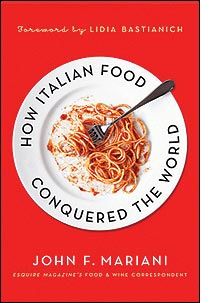 You don’t have to tell an Italian to eat locally – or regionally. By nature and experience, it’s just something the Italian does. 150 years ago, a newly unified Italy inherited twenty regions, each with a geography, a microclimate, a culinary legacy of past occupations by other peoples, and each with an effortlessly delicious and nutritionally sound culinary inheritance. Where once there was only Sicilian food, or Tuscan food, or Venetian food, today, there is Italian food, and it has only recently made the transition from cucina povera to alta cucina.
The amazing part of the story, says John F. Mariani, Esquire magazine’s food and travel columnist for many years, is that today, with people traveling more, exchanging product and expertise, and spending more on food, expensive restaurants anywhere in the world -- from Tokyo to Mumbai, from Brazil to Berlin, from London to New York City -- proudly offer Italian food and wine when, just a few decades ago, no one would mention Italian cooking in the same breath as French cuisine.
Mariani, who has kept a watchful eye on Italian food since the 60s, has just authored a book called How Italian Food Conquered the World (Palgrave Macmillan, $25) which romps through peasant kitchens and top restaurants as it chronicles the return, after about 2,000 years, of Italian cooking as alta cucina, with simple ingredients (think "Mediterranean Diet") now recognized as hallmarks of health and longevity.
At the Summer Fancy Foods Show in Washington DC in mid-July, there were over 200 Italian producers of specialty foods flown in from Italy: San Daniele prosciutto di Parma, giant wheels of Parmigiana Reggiano aged 24 to 36 months, fresh black summer truffles the size of a fist, olives, olives, olives, and extra virgin olive oils, balsamic vinegars, chocolates, Roman coffee from Sant’Eustacchio and from the more familiar illy, the foods of northern Italy and the foods from the heel of the boot and every authentic and sensory delight from regions in between.
Mariani came to the show as part of a panel of experts discussing the current popularity of fusing Italian foods with the foods of host nations. Fusion? Confusion? Mariani, an Italian-American, espouses the regional, but after 5 days in Torino recently, he reports craving the cooking of other regions and pouts a little because he has to go there to eat them. The panel’s Italian chef defended regional cooking, period, knowing that too much fusion ultimately erases memory and influences production.
In his book, Mariani documents Italian gastronomy from its ancient Etruscan beginnings to the present, combining history, sociology, and food. The world’s first cookbooks were written by servants for other servants of the Roman aristocrats whose dinners were described by Apicus, Cato, Pliny, and Plutarch. While the decadent feasts of porpoise, sow’s wombs, and cranes were washed down with sweet wines and a visit to the vomitarium and then a return to the table, the rest of Italy lived on bread, olives, chickpeas, and broccoli. The Dark Ages closed in until the Crusades in 1095 led to a growing merchant class with access to Arab culture, science, trade, and food. And as Marco Polo’s travel reports show, even the wealthiest Venetians lived in the shadow of China in art, science, architecture, and gastronomy, arousing a raging appetite in Italy for the foods and spices of China and India.
Mariani shares wonderful detail as he builds the past into the present, and his real strength lies in his insider’s knowledge of the last 40 years. For those who also lived this journey, Mariani starts in the 60’s in an Italy not yet recovered from World War II and an America that loved the cheap red wines of the Italian-American red-sauce restaurants with their red-and-white checkered tablecloths and straw-covered Chianti bottles, and he ends today with a global alta cucina that has, remarkably, all but replaced French haute cuisine.
Twenty-five years ago, who could buy radicchio and arugula in a supermarket? Or extra-virgin olive oil? When a Tuscan orphan named Sirio Maccioni rose to head Le Cirque, he secretly prepared, by request, pasta primavera "dozens of times a day" in this famed haute cuisine French restaurant.
By the late 80s, there were foodies everywhere, and food magazines, and an explosion of books about food. People were making their own cheeses and becoming vintners, checkered tablecloths at Italian restaurants had turned into white Frette linens, and spaghetti and meatballs into pasta with white truffles. Industrialists and bankers were backing la nuova cucina Italian restaurants with young chefs trained in Northern Italy. There were young celebrities seeking trendy hot spots to be seen, couture photo shoots on yachts off Capri or straddling Vespas in Rome. There was a relaxing of the rule-bound French couture by Armani, and an embrace by Italian restaurants of wealthy businesswomen in pantsuits, even as revered French restaurants in NYC spurned them.
The last ten years has seen restaurants making the once-lowly meatball from Kobe beef, and seen the early pioneers of the Italian food phenomenon lead to the new heroes. Mariani captures names, details, the anecdotal and the historical, the routes from obscurity to fame for the likes of Seattle-born Mario Batali or Rachel Ray whose "EVOO" on TV did more for sales than anything in olive oil’s 7,000-year history, and the trials and triumphs of restaurants and restaurateurs, and even some recipes – it’s all here as a really delicious chronicle.