Sichuan Cuisine - an outsider's overview


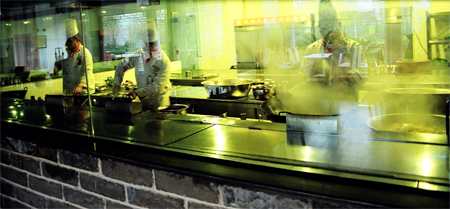
While in China, Sichuan food 川菜 is the sort of thing to inspire poetry, before I came to live in Chengdu, I had never tasted anything like it. "This is Chinese?!" was my initial reaction to "fish-flavored eggplant" (鱼香茄子). It seemed to have more in common with Indian curries than with the spare ribs and fried rice of Chinese restaurants in the UK.
I fell instantly in love with Sichuan food, but over the past two years of living here, I have met plenty who think otherwise. Sichuan food seems to inspire a love or hate relationship with its eaters. I've met people from all over the world who say that the food here is better than anywhere else, but I have also heard others complain that the too-liberal use of chilies makes all food taste the same.
But although chilies are a big feature of Sichuan food, they do not, I would argue, define it. To me, Sichuan food seems to be more characterized by variety and breadth than anything else. The region is said to be home to at least 5,000 different dishes, produced though an astounding 56 cooking methods that yield 23 distinct flavors, from "hot and numbing" (麻辣) to "sweet and sour" (糖醋), from "ginger juice" (姜汁) to "garlic paste" (蒜泥), to name just a few.
This diversity is perhaps even more extraordinary because its building blocks are so few. True, Sichuan province boasts a treasure trove of year-round fruit and vegetables, but if you look at the seasonings and flavorings gathered around the wok in any Sichuanese kitchen, you will find only a small collection of simple and modest items—chili-bean paste, soy sauce, vinegar, dried chili peppers, ginger, garlic, Sichuan pepper, fermented black beans, cooking wine, sesame oil, sugar, and salt. The magic of Sichuan cooking is in its combining of such limited ingredients in myriad different ways and quantities, each one yielding its own unique and delicious flavor: As locals say, "百菜百味"—"A hundred dishes, a hundred different flavors."
Today, Sichuan food is famous the world over, and in China the region's food has enjoyed a long and well-regarded history. One of the "Eight Great Traditions" of Chinese cuisine, Sichuan cuisine's renown dates back to as early as the 10th century. So it may come as a surprise to many that the food of this region has not always been spicy. Chili peppers, brought to China from the Americas either via European traders or through Southeast Asia, were first used in Chinese cooking by the people of the Lower Yangtze region (now Jiangxi, Zhejiang and Anhui), and it wasn't until the early 19th century that they began to be grown in Sichuan.
The culinary history of Sichuan is also inherently linked to geography. According to the doctrines of Chinese medicine, moist and wet weather are dangerous to the chi energy of the body, and the proper balance of yin and yang is best restored by eating foods that banish dampness. The Sichuan basin's climate, characterized by heavy rainfall and overcast skies, meant that even as far back as the 5th century the Sichuanese were boldly flavoring their food to combat these unfavorable weather conditions.
The story of Sichuan food is one of change and flux. From as far back as two thousand years ago, the region has been a destination for migrants from all over the country, many of whom brought with them their own food culture. Red-braising, roasting of meat, and dumplings are all originally from outside Sichuan. Today, Sichuanese chefs continue to experiment with new ingredients and methods, wasabi and fresh seafood being just two examples.
Sichuan cuisine might not (yet) have the international prestige of Cantonese dim sum or Beijing Duck; instead, its pleasures lie in the humbleness of its ingredients and its heart-warming flavors. As Chinese-food expert Fuchsia Dunlop says, "This is the greatness of Sichuan cuisine—to make the ordinary extraordinary."
Stay tuned for the next installments in this column (Chuancai cupboard), which will take us on a tour of the various components that comprise Sichuan cuisine.
This article by Jessie Levene was first published in CHENGDOO citylife Magazine, issue 25 ("Sichuan").