The simple and complex flavors of Sichuan


By Darren Lim
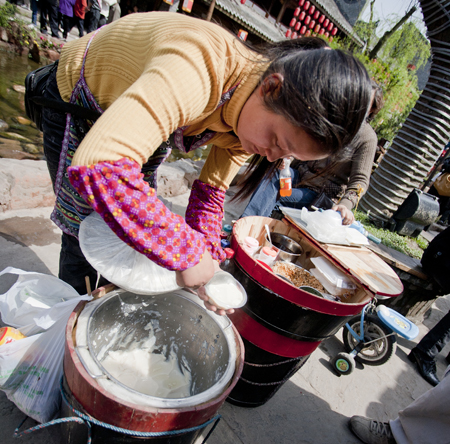
To most foreigners, Sichuan delicacies are comprised of only three flavors: spicy, salty, and oily. More often than not, they're all tossed into one big wok. However, Chengdu-born food lovers beg to differ; some consider Sichuan cuisine the greatest invention not just since sliced bread, but long before it, too. And in reverence to their city's beloved food, they have built an entire culture on it (a culture that goes beyond tea and mahjong). This includes an elaborate classification of flavors that heaps shame on the basic Western palate of "sweet, sour, salty, and bitter."
Sichuan food possesses two basic categories of flavors: simple and complex.
Simple flavors cover the basic tastes, plus a few extra sensations that are endearingly familiar to anyone living in Chengdu.
Sweet (Ìð ti¨¢n)
Sour (Ëá su¨¡n)
Salty (ÏÌ xi¨¢n)
Bitter (¿à k¨³)
Spicy (À± l¨¤)
Numbing (Âé m¨¢)
Using these simple flavors as building blocks, Chengdu chefs have created an entire system of complex flavors, one that ranges from dozens to hundreds of unique tastes, depending on your perspective. Here are a few you might encounter:
Strange tasting (¹Öζ gu¨¤iw¨¨i): Consists of salt, soy sauce, chili oil, chili powder, sesame sauce, sugar, garlic, sesame oil, MSG, and others. Representative dishes: strange-tasting beans (¹Öζ¶¹ gu¨¤iw¨¨id¨°u) and strange-tasting pork stomach (¹Öζ¶ÇË¿ gu¨¤iw¨¨id¨³s¨©).
Home-cooked style (¼Ò³£Î¶ ji¨¡ch¨¢ngw¨¨i): Consists of bean paste, red chili, salt, and soy sauce. Representative dishes: twice-cooked pork (»Ø¹øÈâ hu¨ªgu¨r¨°u), homestyle tofu (¼Ò³£¶¹¸¯ ji¨¡ch¨¢ng d¨°ufu).
Fish fragrance (ÓãÏãζ y¨²xi¨¡ngw¨¨i): Consists of salt, soy sauce, sugar, vinegar, pickled chili, ginger, onion, and garlic. Representative dishes: yuxiang pork strips (ÓãÏãÈâË¿ y¨²xi¨¡ng r¨°us¨©), yuxiang braised eggplant (ô~ÏãÇÑ×Ó y¨²xi¨¡ng qi¨¦zi).
Numbing and spicy (ÂéÀ±Î¶ m¨¢l¨¤w¨¨i): Consists of salt, bean paste, dried red chili, Sichuan pepper, chili powder, and soy sauce. Representative dishes: mapo tofu (ÂéÆŶ¹¸¯ m¨¢p¨® d¨°ufu), water-boiled beef (Ë®ÖóÅ£Èâ shu¨ªzh¨² ni¨²r¨°u).
Sticky spicy (ºýÀ±Î¶h¨²l¨¤w¨¨i): Consists of salt, soy sauce, dried red chili, Sichuan pepper, ginger, garlic, and onion. Representative dishes: Kungpao chicken (¹¬±£¼¦¶¡g¨ngb¨£o j¨©d¨©ng), Kungpao prawn balls (¹¬±£ÏºÈÊ g¨ngb¨£o xi¨¡r¨¦n).
Sour and spicy (ËáÀ±Î¶su¨¡nl¨¤w¨¨i): Consists of salt, soy sauce, chili powder, MSG, and sesame oil. Representative dishes: chili chicken (À±×Ó¼¦ l¨¤z¨« j¨©), spicy cucumber (ÇÀ»Æ¹Ï qi¨¡ng hu¨¢nggu¨¡).
Garlic paste (ËâÄàζ su¨¤nn¨ªw¨¨i): Consists of minced garlic, chili oil, soy sauce, and sugar. Representative dishes: Garlic pork (ËâÄà°×Èâ su¨¤nn¨ª b¨¢ir¨°u), garlic cucumber (ËâÄà»Æ¹Ï su¨¤nn¨ª hu¨¢nggu¨¡).
Ginger taste (½ªÖζ ji¨¡ngzh¨©w¨¨i): Consists of salt, soy sauce, ginger, sesame oil, and MSG. Representative dishes: Ginger fish (½ªÖÏÊÓã ji¨¡ngzh¨© xi¨¡ny¨²), ginger chicken (½ªÖ×м¦ ji¨¡ngzh¨© z¨©j¨©).
Sweet and sour (ÌÇ´×ζt¨¢ngc¨´w¨¨i): Consists of salt, sugar, dark vinegar, and MSG. Representative dishes: Sweet and sour lotus root (ÌÇ´×Á«Åº t¨¢ngc¨´ li¨¢n¨¯u), sweet and sour cabbage (ÌÇ´×°×²Ë t¨¢ngc¨´ b¨¢ic¨¤i).
The list goes on, and it might seem bizarrely complicated, but without these flavors, how else could Chengdu have been named the world's second "City of Gastronomy" by UNESCO?
Photo by Dan Sandoval.