Grocery wine sales gain in support


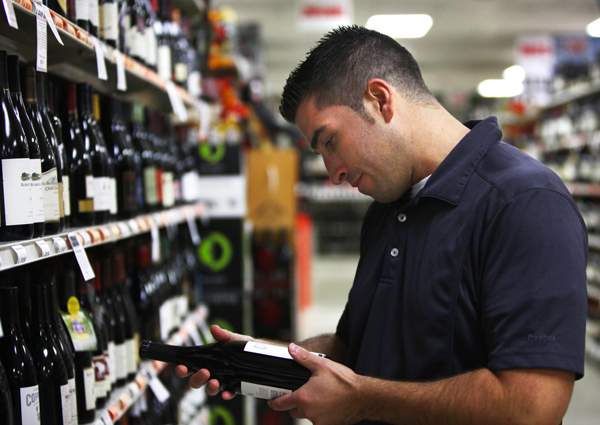
Derek Petrone, 27, of Chili appreciates the level of knowledge liquor stores employees offer, making the shopping experience complete. Petrone shops for red wine to pair with the pasta he plans to prepare for dinner. / MARIE DE JESUS staff photographer
Support has increased in Monroe County for the idea of selling wine in grocery stores, even though the proposal has failed to get through the state Legislature in recent years.
Results of a new Voice of the Voter poll show that 51 percent now back the expansion of wine sales beyond liquor stores, up from 46 percent a year ago. Opposition also is up, but not by as much, to 45 percent from 43 percent last year.
Though the coalition of supermarkets and convenience stores pushing the change has cited price and availability as key reasons, a sample of the poll respondents mentioned convenience more than economics. They said that those who want to buy wine should have more places to do so than are currently available.
"I'm not a real big wine person, but it might as well be as available as it can be for those who want it," said Kathy Santana of Brockport.
Wine sales in New York have been restricted to liquor stores since the end of Prohibition in the 1930s. A strong bloc of liquor stores, arguing that to expand sales would damage small business, have managed since that time to fend off efforts to change the law.
The grocers and convenience stores, led in upstate by Wegmans Food Markets Inc., have intensified their lobbying in recent years, forming a coalition of markets, chain convenience stores and wineries arguing that allowing wine sales outside of liquor stores would bring more jobs and tax revenue and be a boon to New York wineries.
Under legislation introduced last year, liquor stores, to compensate for any wine sales they would lose, would be allowed for the first time to sell food, beer and to install ATMs. The bill also proposed a medallion system, permitting liquor stores to hold multiple licenses instead of the sole license they now can have.
Advocates argue that the change would bring initially more than $400 million to the state in expanded sales and jobs, with an additional $70 million annually thereafter.
The legislation cleared the state Assembly but did not come up for a vote in the state Senate. Gov. Andrew Cuomo's first proposed budget did not include revenue from grocery wine sales and he mostly has ducked the issue.
Rob Lillpopp, a spokesman for the state Business Council, a lobbying organization that supports the change, said he expects next year's campaign to be even more vigorous.
"Your poll shows that a growing number of New Yorkers want the choice that this legislation represents," Lillpopp said. "This issue got traction last year because people are starting to see it on its merits. The New York consumer should be able to have the same kind of access that is available in 35 other states."
The liquor stores have their own lobby, Last Store on Main Street, and spokesman Mike McKeon said that now, with the economy still struggling, would be the worst time to take away a source of income and jobs from small business.
"This would put 1,000 stores out of business, all to the benefit of the big-box stores, not the consumer," McKeon said. "The message could not be more powerful this year. Our coalition is a big supporter of the wine industry in this state. But this is a bad idea, and legislators see it."
"If the law is changed, we wouldn't be able to compete with the buying power of the big-box stores," said Randy Schmitt, manager at Marketview Liquor in Henrietta. "Wine is about 75 percent to 85 percent of our business.''
Despite the intense debate, one local voter said he wasn't persuaded that the sale of wine in grocery stores ranked in importance with other pressing issues in New York and America.
"It just doesn't seem all that important, when you come right down to it," said Bill Walls of Penfield. "When I'm discussing issues with my friends, the question of wine in grocery stores never comes up."
Those who oppose the change took the side of small business versus the large chain grocers and convenience stores.
"I just don't think it is necessary to change the way it is," said Marilyn Duryea of Brockport. "For people with this business, wine sales are important to them. I just don't think that should be taken away."
Kevin Maloney of Rochester sided with the liquor stores and dismissed the offer to liquor stores to sell some food items.
"Being able to sell a 99-cent bag of chips won't make up for the $5 or $10 bottle of wine," he said. "Seventy percent of these stores will go out of business if this goes through."
Other opinion polls on the issue have shown the public favors expanding wine sales. A Siena College Research Institute poll released in June found that 59 percent of New Yorkers favor wine being sold in grocery stores.
"There's been intense lobbying on both sides on this issue and lawmakers clearly are listening to something besides public opinion," Steven Greenberg, spokesman for the Siena institute, said when the poll was released.