Cheers to India


Not many people know that India’s burgeoning economy includes wine production. Two entrepreneurs saw an opportunity to import and create awareness and sales in the United States.
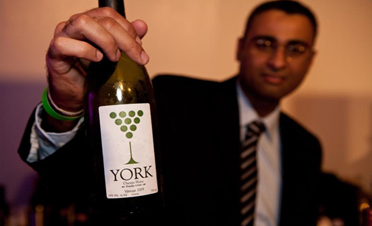
Malay Shah, who founded Wine of India Wholesale with his 28-year-old brother, is seeing the opportunity in importing vintages from his native country to the U.S.
Image: Handout
At the end of 2008, Malay Shah and his brother Yash stopped by an Indian restaurant in Manhattan. The food made its way to their table. The Indian wine listed on the menu did not.
After the Shahs heard the same story from several Indian eateries–that availability of imported Indian wine product was highly erratic–they saw a business opportunity. By the beginning of 2009, the duo was in India, spending more than a month visiting wineries to test the waters.
“Not only did we find that some wineries were willing to export, but they were also willing to do what it took to help build our importing business,” says Malay Shah, 32, who co-founded, with 28-year-old Yash, Wine of India Wholesale, based in Queens, New York.
The Shahs launched their business, using personal savings, in July 2010. “Startup costs were about $50,000, with about two-thirds of that going to buying inventory,” says Yash Shah. Later that year they added a third partner, Prashant Jain. Their company, says Shah, is the only Indian-wine importer in the United States that brings in a steady and dependable supply of the stuff from several wineries.
“Twenty years ago, if you said you were drinking a wine from India, you’d have gotten a shocked reaction,” says Dan Berger, a syndicated wine columnist, publisher of www.vintageexperiences.com, and an international wine judge. “Today’s consumers, having experienced wines from Chile and South Africa and Argentina, are much more savvy.” So are the producers.
“Vintners have better equipment and viticultural experience, which means there’s almost no reason they can’t make high quality wine almost anywhere,” says Berger, adding that he had his first taste of a wine produced in India–a sauvignon blanc at a high-end restaurant in Santa Rosa, California–about a year ago. “It was pretty good!” he says.
In his blog early this year for The Wine Economist, Mike Veseth notes the 2007 statistics from the International Organization of Vine and Wine. OIV cites Italy as the number one producer of wine in the world, followed by France. China is number six, and Brazil at 15.
“India does not appear in the OIV wine statistics, indicating that its wine industry is quite small at present,” writes Veseth. However, he adds, “India is already a major producer of table grapes, with 2007 production only a little less than Chile and the U.S. combined (that’s a lot of grapes), so it is not unreasonable to suppose that higher levels of wine grape production may follow. India would be on the wine BRIC list for its potential as wine import market, of course, even if it didn’t make any wine at all.”
Malay Shah, his company’s CEO–brother Yash and Jain are directors of sales–says consumer surprise, even among more sophisticated wine enthusiasts, is not uncommon. First, he says, there’s the shock of learning that India produces wine–the Napa-Valley equivalent is the area surrounding the city of Nashik in the southwestern part of the continent. Then there’s the double-take that the product is good.
The third stunner–often observed by imbibers the morning after–is Indian wine’s higher alcohol content, by volume. “We have a York reserve cabernet, our best seller, that’s 14.5 percent alcohol, which is between a one- and two-percent higher alcohol content than, say, a California cabernet,” says Shah, adding that Indian wines’ acidity tends to be higher than other wines.
Wine of India now imports about a dozen wines from the York, Vinsura and Aryaa wineries in Nashik. Prices range from about $10 to $20 a bottle. “Considering that these are new-world wines, it may be a high price,” says Yash Shah. “But India doesn’t produce the quantity of wine that other countries produce. So there’s not much of it to go around and, therefore, exclusive.” The partners sell mainly to liquor stores where they hold frequent tastings. They sell to Indian and other restaurants mainly in New York City and Long Island. The partners also provide a portfolio of lighter and curry-friendly wines, imported from France and Italy, under their company’s Urban Taj brand.
Tulsi, a high-end Indian restaurant in midtown Manhattan, sells the York reserve cabernet at $10 a glass and Urban Taj’s pinot grigio at $12 a glass at private parties or when customers ask for them. Sonny Solomon, Tulsi’s general manager and a Wine of India’s client, says both offerings are popular but so far neither is on the wine list.
“India’s Kingfisher and Taj Mahal beers are internationally known, but it will take time for people to become aware that India makes wine, and for the Indian wine industry to grow,” says Solomon. “If diners request different varietals of Indian wine, I’ll order them.”
Shah concedes his business has its challenges. “India’s wine consumption is growing at between two hundred and three hundred percent annually,” he says, noting that vintners can handily sell their output at home with no need to export. However, good relationships with suppliers have helped ensure that the partners get the quantity they require, even when there are close calls. “York turns out only four-hundred cases of its reserve cabernet a year, and we had to fight tooth and nail for them to give us two-hundred,” he says.
Despite the challenges inherent in slowly educating the public, Shah wouldn’t have it any other way: “My brother and I knew that, if we didn’t do this now, when we were young and could take the risk, that we were never going to get to work for ourselves.”
Entrepreneurs can raise a glass of wine to that.