Innovative strategies can save exchange costs


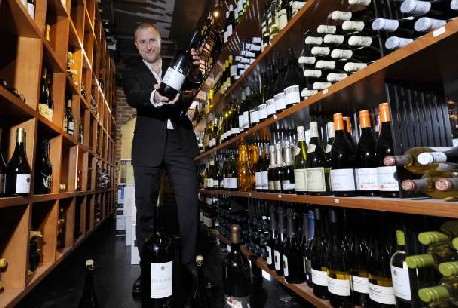
Nick Kosick is a wine importer shown here at Yaletown's Blue Water Cafe. He saves money on exchange rates by using exchange contracts and other financial instruments.Photograph by: Mark van Manen, Vancouver Sun
Even small Canadian businesses that import or export can take steps to protect themselves in face of Europe’s financial crisis, a senior currency market strategist with Western Union Business Solutions says.
While large corporations routinely work currency rates to their favour, small and mid-sized businesses often aren’t aware that they, too, can streamline foreign cashflows and manage currency risk, Karl Schamotta said.
The European financial crisis is driving a contraction in global liquidity. As a result, small and mid-sized businesses are facing unstable export markets while nervous financial institutions are pulling back from lending, and exchange rates are becoming more volatile as markets adjust, Schamotta said.
Here are three things a small business can do to take control of foreign exchange:
1. Simplify cashflows by removing as many transaction points as possible.
Using many intermediary banks and several currencies can be expensive. Instead, work with currency exchange providers that can remit and receive funds in your trading partner’s home countries, Schamotta said.
2. Price transactions in your partner’s domestic currency.
If you choose to price in Canadian or U.S. dollars with partners outside North America, you are forcing them to handle the foreign exchange risk. Currency exchange costs, which are both higher and less accessible in developing countries, will be passed on to you. Instead, manage the risk yourself by using forward contracts, Schamotta said.
Forward contracts are simply a way to lock in your exchange rates for a specified period.
Currency exchange providers usually charge the difference between the “risk-free interest rates” of both currencies. Risk-free interest rates are rates on highly secured instruments such as U.S. treasury bills. “This is typically measured in basis point terms [1/100th of one per cent],” he said. “At the moment, it’s rarely more than a percentage point for terms of less than a year.”
Forward contracts are almost always worthwhile “even down to a sole proprietor that buys tile from Italy all the way up [to major corporations],” Schamotta said. “You’re leveraging the Canadian financial structure against the world,” Schamotta said. “Right now, it’s just the large companies that really get it.”
3. Harness volatility.
One certainty about currencies is they are going to move, Schamotta said. On average, they move one per cent every day, Schamotta said. This creates opportunities to buy and sell currencies at favourable levels, he said.
“You’re not saying ‘I’m waiting for the Canadian dollar to drop 10 cents. You’re saying ‘I want to pick up 20 basis points if the market moves the right way. You basically pick up a nickel every time the market moves the right way. You’re relying on the market to simply keep moving.”
Currency exchange providers can create market bids that trigger when the exchange rate hits a specific level.
Vancouver fine wine importer Nick Kosick of CRU Wine Selections Ltd. saved $30,000 within eight months when he switched from straight bank foreign currency exchange to managing his transactions with forward contracts and market bids though Western Union four years ago.
Kosick’s three-person firm deals with 50 suppliers worldwide and purchases just under $2 million in foreign currency a year. “If I think something is going to happen with the euro, I’ll say, I’m going to need 50,000 euro and I’m going to use it in the next two months, grab some for me,” he said. “Quite a few people in my industry still use the banks,” he said.
“We are seeing ongoing weakness in the emerging markets, [and] potential ratings downgrades across the industrialized world,” Schamotta said. “New opportunities are appearing in areas that have long been discounted, like Japan and the United States.”
“I don’t think the mid-size and small businesses are quite cottoning onto that right now,” he said.