With oak or not, Spain's Rioja reds delight


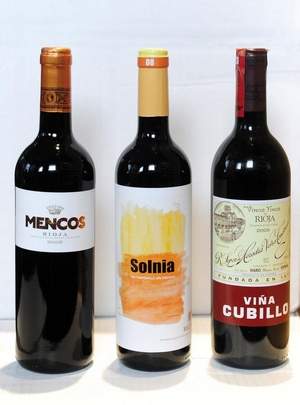
2009 Conde de Hervias Mencos, 100% Tempranillo, unoaked, $15; 2008 Bodegas y Vinedos Ilurce Solnia Rioja, 50% Tempranillo 50% Graciano, $13; 2005 R. Lopez de Heredia Rioja Crianza Vina Cubillo, 65% Tempranillo, 25% Garnacha with Mazuelo and Graciano, $30. / Samuel Simpkins/The Tennessean/Samuel M. Simpkins
I am constantly on the search for wines that have spice, earth, are affordable and yet completely drinkable. Often, I immediately head to Valpolicella in Italy or the Rhone in France for these wines, but another area that shouldn’t be missed is La Rioja.
La Rioja is a small region in Spain, but its reputation is well-known worldwide for the production of beautiful wines. There is so much history in these Old World wine production regions. It has been said that Rioja wines have been in production since the time of the Phoenicians. However, they didn’t gain much popularity until the famous 1970 vintage. It was named wine region of the year then because the wines produced were proclaimed exemplary.
Rioja is made up of local indigenous grape varieties, consisting of mainly of tempranillo. There are many important varieties being used, and often blended, to make up Rioja, as in graciano, garnacha tinta and mazuelo. Even though I am going to just give you suggestions on the red (tinto) wines of Rioja, the region also makes some really fun white (blanco) and rosé (rosado) as well.
Rioja is one of the few regions that handmakes all of its cooperages (barrels). Bodegas (wineries) vary on whether to use all American or French oak. It’s nice to have this variation in flavor profiles and styles as we all have such diverse palates. There are even some wineries that use no oak at all. Rioja can really speak to everyone.
Though some of the wines from Rioja are bottled without ever seeing a cooperage, others take pride in allowing the time and essence of the wood to integrate into the wine. And many bodegas hold on to their wines for many years before releasing, allowing the wine to mellow and become more refined, and giving you the satisfaction of getting the wine when it’s ready to be consumed. How nice!
There are some regulations in the region that allow the average consumer to know whether the wine has seen a certain amount of aging before being released. If a Rioja has been aged up to two years with at least one year in oak, it is called Crianza. Three years with at least one year in oak is called a Rioja Reserva. Rioja Gran Reserva is required to have three years of aging with at least two years in oak. Like in Champagne, France, if wineries do not feel the vintage is worthy enough, the Reserva and the Gran Reserva will not be produced.
Salud!
Robin Riddell is the chapter leader of Slow Food Nashville and a regional manager for Winebow, an international importer of wine, spirits and sake.