Affluent Asians turn to investment in art as market uncertainty continues


By James Pomfret and Lisa Yuriko Thomas
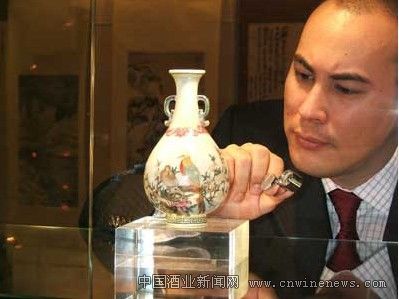
HONG KONG -- In a spacious, luxury apartment perched on the leafy hills of Hong Kong, Kai-Yin Lo browses through a trove of Chinese art acquired over several decades, reflecting how her niche, scholarly pursuit has now hit the mainstream.
Despite giddy Chinese art prices showing some strain from global economic uncertainty, collectors like Lo think values will continue to rise due to limited supply and continued strong demand as Asian collectors become more affluent.
“As East and West get into more of a confluence in taste and in the market place, it will still go up,” said Lo, a Cambridge-educated writer and jewellery designer, a slim, elegant woman famously known for wearing mismatched designer shoes.
She is one of Hong Kong's leading art collectors — her home is stacked with rare Chinese furniture, stone carvings and paintings, including an ink brush panorama of the Grand Canyon by Chinese 20th century master Wu Guanzhong.
“These days art investment has entered into the mainstream of investment, especially for younger people. You cannot divorce love of the piece from what lies behind, the value of it.”
Hong Kong has played a key role in Asia's art market boom. Its auction market turnover — anchored by Sotheby's and Christie's — skyrocketed 300 percent from 2009 to 2010, powered by a wave of Chinese millionaires buying art with avid fervor.
“Hong Kong has become the sales centre of the world,” said Patti Wong, chairman of Sotheby's Asia, with revenue in the former British colony on par with New York and London.
Despite the art market's vulnerability to shocks, including the 2008 Lehman Brothers collapse, when unrealistic estimates left scores of unsold lots amid tepid bidding even in the red-hot Chinese ceramics market, Asia's rapid wealth accumulation will likely see more and more money flow into art and alternative investments such as wine.
Asia's wealth management and private banking industry remains a sparkling growth area for many struggling banks, with an estimated 3.3 million high net worth individuals worth more than US$1 million, according to Capgemini and Merrill Lynch's latest annual World Wealth report.
Despite giddy Chinese art prices showing some strain from global economic uncertainty, collectors like Lo think values will continue to rise due to limited supply and continued strong demand as Asian collectors become more affluent.
“As East and West get into more of a confluence in taste and in the market place, it will still go up,” said Lo, a Cambridge-educated writer and jewellery designer, a slim, elegant woman famously known for wearing mismatched designer shoes.
She is one of Hong Kong's leading art collectors — her home is stacked with rare Chinese furniture, stone carvings and paintings, including an ink brush panorama of the Grand Canyon by Chinese 20th century master Wu Guanzhong.
“These days art investment has entered into the mainstream of investment, especially for younger people. You cannot divorce love of the piece from what lies behind, the value of it.”
Hong Kong has played a key role in Asia's art market boom. Its auction market turnover — anchored by Sotheby's and Christie's — skyrocketed 300 percent from 2009 to 2010, powered by a wave of Chinese millionaires buying art with avid fervor.
“Hong Kong has become the sales centre of the world,” said Patti Wong, chairman of Sotheby's Asia, with revenue in the former British colony on par with New York and London.
Despite the art market's vulnerability to shocks, including the 2008 Lehman Brothers collapse, when unrealistic estimates left scores of unsold lots amid tepid bidding even in the red-hot Chinese ceramics market, Asia's rapid wealth accumulation will likely see more and more money flow into art and alternative investments such as wine.
Asia's wealth management and private banking industry remains a sparkling growth area for many struggling banks, with an estimated 3.3 million high net worth individuals worth more than US$1 million, according to Capgemini and Merrill Lynch's latest annual World Wealth report.
With a combined wealth of US$10.7 trillion, Asia's wealthy have even eclipsed the US$10.2 trillion held by Europe's generational millionaires.
“The exponential growth in the number of emerging market (millionaires) ... is expanding the global market for investments of passion,” the report said.
Safe Haven?
While art often comes straddled with hefty commission, storage and insurance costs, it can serve as a fun portfolio diversifier, mixing decent returns with aesthetic pleasure.
Even as the eurozone debt crisis rages and buffets regional stock markets, the Mei Moses Global Art Index, a widely tracked art indicator, showed an 11.8 percent rise in 2011 to November.
“It may not be a good time for sellers but it's an excellent time for buyers. During late 2008 and 2009, I highly advised clients to buy,” said Bobby Mohseni, director of MFA Asia, an art consultancy. “With Chinese contemporary art, some prices have gone exceptionally high and that's just over a decade ... so it's best to look at upcoming or mid-tier artists.”
While stocks on the S&P 500 have outperformed Western art over the past 25 years, according to Mei Moses data, top Chinese and Asian art is still comparatively cheap compared with Western impressionists or American contemporary art. A Mei Moses index for traditional Chinese art showed a 24-percent jump in the first three quarters this year.
“The confidence in the Chinese contemporary art market remains high despite art market confidence dropping sharply in the U.S. and European contemporary market,” Anders Petterson, head of art research consultancy ArtTactic, told Reuters.