Chinese demand for Napa Valley Cabernet only just beginning


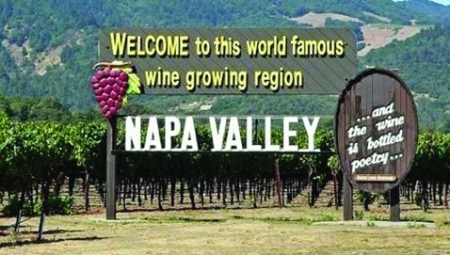
What will happen when the Chinese discover Napa Valley Cabernet Sauvignon?
For the answer, we look to Bordeaux. China is now Bordeaux’s largest export market, a position long held by Britain. As a result, prices for Lafite, Latour and company, already high, have soared, placing those wines effectively beyond the reach of all but the world’s one percenters, including those in China. Chinese people are buying up Bordeaux chateaux, with at least six now so owned. It’s impossible to forecast an end to China’s Boreaux-mania. Indeed, there’s no reason at all why it should stop. It’s just getting started.
The laws of supply and demand being what they are, it’s likely that prices of the top Bordeaux will continue to rise. They’ve been going up for years, anyhow, making this one of the longest sustained periods of steady increases in Bordeaux’s long history, to judge by Eddie Penning Rowsell’s record-keeping in The Wines of Bordeaux.
But even a wealthy Chinese collector must blanch to some of these prices. What happens when top tier Bordeaux starts to be too expensive in Beijing, Hong Kong, Shanghai? People look to second tier Bordeaux. That’s exactly what we see happening: Decanter just reported that, despite some softening in pricing for Lafite and other First Growths on the auction market, prices for “blue chip second wines” are “robust,” a phenomenon that “is almost certainly due to the Chinese market.” The Chinese, it seems, will pay more for a wine like Carruades de Lafite (from Chateau Lafite Rothschild) or Chateau Margaux’s Pavillon Rouge than will an American or European.
So we already see incredibly high pricing pinching the prices of First Growths in China, leading to increased demand for “lesser” but still prestigious Bordeaux. What does it mean for Napa Valley Cabernet Sauvignon?
Pretty obvious. After Bordeaux, what’s the most famous region in the world for Bordeaux-style wines? You got it. Chinese interest in Napa Valley is on the rise. A delegation of Chinese wine industry types recently visited the valley, and of course Yao Ming is going to further raise Napa’s visibility in his homeland when he starts selling his own wine there.
You can see where this is heading. it can be only a matter of time before the top ranked Napa Cabernets hit China bigtime. (I suspect the Chinese will have a harder time with Meritage-style wines with proprietary names.) The Napa Valley Vintners, sensing opportunities, last year sent a major league delegation to the PRC; it included Amuse Bouche, Rubicon, Dalla Valle, Wilver Oak, Moone-Tsai and Heitz. Janet Viader, who also was part of the mission, told the Napa Register on her return, “I was very inspired to pursue opening the Chinese market for us.”
Truer words never were spoken.