U.S. exports to China boom despite tension


Appetite grows for American products
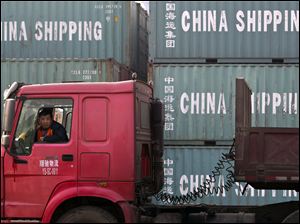
A truck driver waits to unload his cargo at the port in Tangshan, China. A growing taste for meat has sparked a surge of U.S. exports of soybeans for livestock feed.
ASSOCIATED PRESS
BEIJING -- While the U.S. trade deficit with China continues to soar, a surge in U.S. exports is emerging as a bright spot in the often-troubled trade ties between the world's largest economy and its largest foreign creditor.
With a richer China showing a growing appetite for U.S. products, the flow includes an increasing volume of American soybeans, cars, airplanes, medicine, and even garbage that can be mined for copper and aluminium. Overall, U.S. exports to China are up nearly 50 percent in value since 2008.
The surge is happening without much change in Chinese government policies and without much specific help from the Obama Administration, which has a stated goal of doubling all U.S. exports globally by 2014. Instead, experts say, the main reason for the rise has been wealthier tastes in China that include an increased appetite for meat -- and hence for soybeans for livestock feed.
Almost every state and congressional district has seen its China exports grow exponentially.
But as impressive as the U.S. export figures look, experts say that the number could be higher and that it would grow even more if China lowered its protectionist barriers.
"The China market should probably be even bigger than it is," said John Frisbie, head of the Washington-based U.S.-China Business Council. "It is absolutely right to make sure Americans understand that China's market is fairly open to U.S. goods and services, but at the same time be clear that there are many market access barriers that make the market less than it should be."
The boom in U.S. exports is not helping erase America's trade deficit with China, which was $295 billion in 2011, $22 billion higher than the year before. But American exports to China have increased by an astounding 468 percent since 2001, when the country joined the World Trade Organization, and are up by nearly 50 percent since 2008.
The top export last year was food, reflecting China's insatiable demand for soybeans, which are used for livestock and poultry feed -- and are cheaper than importing feed grain. Ohio ranked sixth among U.S. states in soybean production in 2010, according to soystats.com.
The effects of China's newfound wealth and tastes are showing up elsewhere in the food business, to the benefit of American exporters. For the first three quarters of 2011, the Agriculture Department reported increases in exports to China in four categories: snack foods, pork, dairy products, and beer and wine.
But despite that success, some agricultural exports remain hindered by barriers and market restrictions in China.
U.S. chicken feet are blocked in a tit-for-tat trade dispute with the United States involving Chinese tires. American beef has been banned since 2003, initially because of concerns over mad cow disease -- although there has not been a case of the bovine infection for nine years.