Faux Bordeaux and copycat wine spoil China's 'homegrown' brand drive


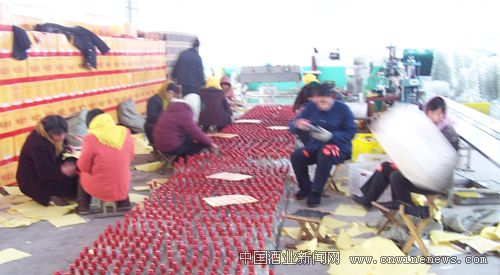
It kind of just rolls off the tongue: "Faux Bordeaux." But the actual words rolling off the tongues of winemakers dealing with the spike in wine knock-offs coming out of China these days cannot be printed.
As the nation's taste for wine explodes, so do opportunities for marketing knock-offs. Aside from the occasional heath threats of poorly-made batches, the growth of the counterfeit wine business threatens to choke the growth of an entire industry. What's more, the phenomenon again illustrates why a current nationwide drive to strengthen "homegrown" Chinese brands could be a bust.
China's thirst for wine is skyrocketing. Already the fifth largest consumer of putaojiu (葡萄酒), the nation's wine market is forecast to increase over 50 percent by 2015. Wine exports to China from the US grew 42% in 2011. And the interest is a boon for winemakers outside of France and Napa Valley too. China is quickly becoming the most important market for Australian vineyards. Last year, China drove Australia's exports to "the best price in more than two years." Even Romanian winemakers have found the China market alluring.
But it's more than the imports. Chinese winemakers are popping up everywhere. The Huiyuan Juice brand just announced plans for a new 500 million yuan ($79 million) winery. Meanwhile, Moët Hennessy announced a joint venture to bottle red wine in China's southern Yunan Province. Scharf partnered with a famous Beijing restaurant to bottle a wine exclusively for its locations.
Also joining the joint venture boom is Chateau Lafite, which is investing 100 million yuan (15.87 million) to construct its own vineyard in China. Chateau Lafite is the flashpoint for the Chinese counterfeit market. As one of the most popular labels, it's a prime target for fakers. And the cost to the brand is real.
A recent Reuters report suggested that the 45 percent price fall-off the brand saw in China last year might have been from consumers losing confidence in the authenticity of what they were actually buying. The report quotes a Shanghai wine expert noting that "the amount of ex-vintage of Chateau Lafite consumed in China is five times the annual total production," which would suggest mass counterfeiting. Last year, another expert estimated "that 70 percent of the so-called Chateau Lafite Rothschild sold in China’s mainland is fake."
A Shanghai Daily report seems to confirm all the worst expectations: "China’s annual quota of Lafite wine from France is no more than 50,000 bottles, according to a market insider. However, the annual Lafite consumption of one five-star hotel in Dongguan in south Guangdong Province is 40,000 bottles, according to a CCTV report earlier this year."
Ouch. But a wine brand needn't be foreign to suffer knock-offs. In 2010, 30 Chinese wineries were shut down in the "China's Bordeaux" region after mass adulteration and forgery was discovered across a range of brands such as Great Wall Wine.
The obvious problem is that a loss of confidence in the authenticity of a brand kills the party for everyone involved. Marketwatch succinctly sums up the boom-to-bust Lafite situation and how an inability of the marketplace to guard against forgery ruined it for everyone:
"Market forces eventually work. When fakes are so pervasive, consumers shy away. This point appears to have been reached in China. The country’s rich and powerful no longer brag about drinking Lafite, fearing they will appear foolish. Consumption of Chateau Lafite has descended the social hierarchy. It’s now popping up in poor provinces."
As with many things, technology may be the answer to some of the winemakers' problems.
On a bigger level, the pervasiveness of fakes in the marketplace handicaps China's recent drive to develop homegrown brands before the drive even really has a chance to get started. The new effort, consisting of rules such as no more foreign brand luxury cars for cadres, encourages Chinese brands "to move up the value chain and develop margin-producing brands, partly as a matter of national pride but also to shift the world's second-biggest economy away from gritty, low-profit manufacturing."
But when fakes make up a significant portion of the marketplace, what's the point of investing more to buy a brand name?