LIBERATING MARKETING


Standardisation has long been a production proposition in global business, from Coca-Cola to McDonald's, from Levi's jeans to Mercedes-Benz, Boeing and even Hollywood movies. A standardization strategy allows a company to achieve economies of scale with significant reduction in the costs of product R & D, production and marketing to improve profits.
But the new world economy has seen the emphasis shift away from production standardization to marketing power. We are facing an innovation economy with companies using marketing to capture large numbers of consumers: marketing execution has become the key to success. Thus it follows that a 'Standardized integrated marketing enterprise’ is more likely to have be successful than a ‘production-oriented enterprise with an attached marketing capability'.
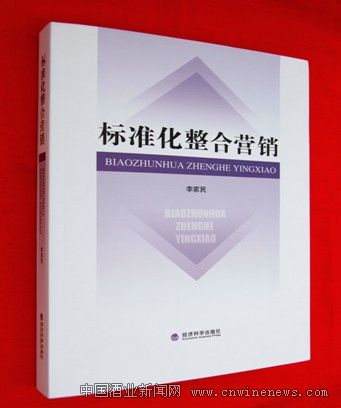
According to Mr. Li Jiamin his research in recent ten years mostly supports standardized marketing strategy implemented in whole or part across foreign markets. For integrated marketing single brand names, similar product characteristics and similar packaging are highly implementable standardizations. Especially for multinational corporations when it is likely more than half of its merchandise will sell outside the home country. China has a wealth of experience in standardization from a production and manufacturing standpoint, but the standardization process has to shift its emphasis to be in step with China's economic development and government advocacy. The shift to be away from manufacturing to design. This is the significance of Mr. Li Jiamin book… the standardized approach to design is as pivotal role as was the standardization of manufacturing.
In parallel with China's economic development, the Chinese FMCG companies have experienced expansion from regional to national and even international. The challenge facing them is achieving that expansion whilst retaining the flexibility to react to regional competition. The answer lies in establishing a standardized marketing system to enhance the ability to develop markets and react to competitive threats quickly. As for the standardization of integrated marketing, Mr. Li Jiamin in his book covers theory and practice with case histories and explains the implementation process of a standardization integrated marketing system with its emphasis on research and a systematic approach. Following a standardized brand development mechanism will enable Chinese enterprises develop competitive products and brands, speeding up the process of internationalization of Chinese brands.
Nowadays, we are in a fast changing business environment and in order to grasp the opportunities we must combine a well-established methodology with our experience and instincts. With the continuous development of China's economy, and the maturation of its advertising, marketing and brand building, China will no longer be a market featuring labor-intensive production of cheap products. As happened more than 40 years ago in Japan and 10 years ago in Korea, we are witnessing the rise of local brands, and now the rising status of these local brands among consumers. The marketing industry has evolved greatly in a short period of time and the creation and communication of brands and their values are all around us. Chinese products have their own unique characteristics and the brands will reflect them. China has a long history of cultural and philosophical wisdom, which is a strong brand equity with marketing potential that can be capitalized upon to achieve growth.
Standardization is actually a very effective integrated marketing approach. It influences all aspects of marketing management, even being the deciding factor of a business win, and maybe even determine the survival of enterprises.
In summary. This book is not just a book about marketing skills, but about corporate strategy. Not exclusively for marketers, it is easy to understand so long as the reader has some basic marketing knowledge. Therefore, the judgment made that standardized integrated marketing should be used to guide development of enterprises to obtain the advantages of scale, and this advantage should be achieved in a way sensitive to the emerging media and marketing environments and the new consumer. The author is confident in this vision of the future market.
The author has to be congratulated for the breadth of this book, complete as it is with examples, analysis and viewpoints. It makes a number of perceptive points that have prompted me to examine my experience of marketing throughout my career.
Production standardisation was and still is a significant driver of commercial success, initially nationally but increasingly internationally. But international standardisation has its limitations with marketers having the responsibility to listen to the voices of national consumers and specifying to the designers and engineers what the production lines should produce. Production cannot take place in a vacuum. Be standardized in isolation.
Marketing is a dynamic blend of art and science… and that is its beauty. What marketers should focus on is not to standardize it, but to reinforce its scientific basis to ensure the security of strategies and products to allow maximum potential for the artistic side. And by scientific basis I do not mean computer projections etc, I mean following a systematic approach to ensure that all empirical data is brought to bear.
Companies around the world are consistently striving to find the best way to market products, and when they have found it…then find a better way. Leading marketers P&G believe the saying ‘if it ain’t broke, don’t fix it.’ consistently executing long running, often global, campaigns. But their marketers are charged with finding better ways to market the products…with a systematic approach to improvement: measurement and analysis.
Marketing now occupies a higher place in the commercial process because increasingly we are in a world of product parity and marginal difference. So the marketers have to allow their artistic skills flow, secure in the knowledge that they have systematically exercised their scientific duties.
Embracing marketing is the challenge that faces China. As it moves on globally from a ‘Made in China’ manufacturing culture to a ‘Designed in China’ innovation culture it will be necessary to pursue systematic development. Standardisation of development will not work. In marketing there is no ‘one size fits all’ solution… it will always be a blend.
My experience of China and the Chinese is that you will be equal to the challenge.
As a foreigner travel heavily in China I am amazed at the work ethic of the Chinese people and their ability to learn and adapt. In my opinion, the systematic development of Chinese brands will happen and go around the world putting the multinational companies under pressure. I have no doubt that China's brand power will not be ignored.