Bordeaux 2011: Choose Carefully


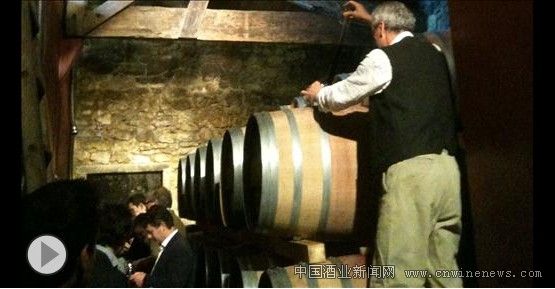
Bordeaux, the world's largest fine wine region has just released its 2011 vintage. This follows two spectacular vintages in 2009 and 2010, which saw prices rise by as much 50% for some châteaux. WSJ's Will Lyons has been tasting the latest wines.
They can build the most sophisticated, technologically advanced wineries in the world, match them with immaculate, temperate cellars, and employ the most talented winemakers of a generation. But behind the neoclassical facades of Bordeaux's spectacular châteaux, the Bordelais understand that however much attention to detail they lavish on their vines, they cannot control mother nature.
The region's very best wines may command thousands of pounds a bottle, morphing into international brands and commodities to be traded in countless investment portfolios, but unlike fabricating a Hermès handbag or the latest McLaren supercar, if the weather conditions conspire to affect the growing season, there is only so much one can do to save the quality of the wine.
In 2011, it was as if the rain gods themselves had decided to temper the rapid price inflation of Bordeaux's most sought-after wines. After two remarkable vintages in 2009 and 2010, years where conditions led to the production of wines with outstanding quality but also enormous price increases, 2011 experienced a growing season where, for the Bordelais, everything was thrown at them. Hail, drought, hot weather when cool was expected, cool weather when hot was expected, heat spikes, storms and rain all battered the vines, ripping through Bordeaux and causing some winemakers to admit it was one of the most unlikely growing seasons in living memory.
"We had summer in the spring and spring in the summer," said François Mitjaville, owner of Saint-Émilion's Château Tertre-Rôteboeuf, in reference to a year that saw temperatures rise to 30 degrees Celsius in April, hitting highs of 40 degrees Celsius in late June then plunging in July and August before a stormy Indian summer in September, which, in the case of the Cabernet Sauvignon variety, saved the vintage.
![[Lyons]](/pic/201205/9/20120509094637_1.jpg)
All of this has conspired to produce a vintage in 2011 of sporadic quality, with no real commonality or easy-to-digest narrative. "It's not a great vintage, I will not lie to you," said Olivier Berrouet, director at Château Pétrus. Correct. But that is not to say there aren't some very good wines.
Those who have made good wine have mastered the art of decision making. Picking at the correct time to achieve the right level of ripeness, pruning in the vineyard to suit the weather conditions and, because of the very high tannin levels, limiting the amount of time the juice has contact with its skins. Due to the heat and lack of rainfall all the Merlot grapes were small with, in some cases, thick skins and uneven ripeness. Extraction is all important: Like a tea bag infused with hot water, if you extract too much, the tea can be bitter and strong. It is the same with wine, and those who haven't extracted too much have handled the vintage well.
Having just returned from a week in Bordeaux tasting six-month-old barrel samples, my own assessment is that this is a vintage of variable quality, a year of highs and lows, when choosing which wines to buy is more important than ever. If 2009 and 2010 were years to stock up on Cru Bourgeois and lesser wines, (as quality levels were uniform), 2011 is a year to buy judiciously.
Of course, tasting the wines from the barrel offers a snapshot of a vintage and it is always unwise to generalize. But from the wines I tasted, the appellations of Pomerol, Pauillac and Saint-Julien have made good wines, with some châteaux producing exceptional examples. The quality of the wines in Saint-Émilion is mixed but it certainly isn't as disappointing as some of the wines that are found in the appellations of Margaux and Pessac, albeit with some notable exceptions. Château Palmer in Margaux has made a wine of outstanding quality, as has Château Ausone in Saint-Émilion, which could emerge as the wine of the vintage.
In Pomerol, the wines possess a saline minerality and freshness on the palate. Far removed from the luscious wines of 2009 and 2010, they nevertheless have some charm in a reserved, clipped style. At Vieux Château Certan, the Cabernet Franc has fully ripened, adding another layer of complexity to the wine. Once again, this estate has made very good wines, as have châteaux L'Eglise-Clinet, L'Evangile and Lafleur.
The unusual weather doesn't come without its benefits. It has been good for the region's sweet and white wines. The cool June and July has enabled them to achieve freshness, acidity and concentration. In Sauternes, there are some very good sweet wines, including Château d'Yquem, which is a standout.
But whether these wines are an interesting purchase for both the connoisseur and the investor remains to be seen. The much-hyped 2009 and 2010 saw price rises by as much as 50% for some châteaux, including the five First Growths (Lafite, Latour, Margaux, Haut-Brion and Mouton Rothschild). Privately, négociants, the wholesale buyers who buy from the châteaux and sell to the trade, say prices will have to fall by as much as 50% for these wines to sell. If they do, the wines I have listed will offer very interesting buying opportunities. If they don't, it is hard to recommend buying these wines en primeur.