Part 2: Confessions of a Chinese Wine Consultant(1)


Last month I began Confessions of a Chinese Wine Consultant: what I hope will be a series of posts devoted to the realities of working with wine here in China; especially in Beijing, but also on the back of repeat trips to Shanghai, some frolicks in a few other �first� and �second�-tier cities, with the promise of odd reports (I mean �odd� as in occasional) from some remoter locales and various vineyard sites.
But having bemoaned Beijing�s winter-time aridity last time round � and wondering about the logistics of selling/distributing wine under sometimes adverse conditions, dryness included � I�d like to rewind a little. Why Beijing? Why did Fongyee and I hit upon China�s capital � �central� and politically powerful though it is � when the real wine hubbub must surely be flowing in Shanghai, one of the country�s most significant ports and where over 70% of China�s alcoholic drinks imports are thought to enter the PRC?
Shanghai does have the most sophisticated and extensive wine market, to be sure. But our propulsion to Beijing grew out of a number of push and pull factors (I never knew the drive for wine could be so �physical��):
1. The very fact China�s capital was thought to be more than a �little behind� Shanghai suggested opportunities for furthering wine education/training programmes;
2. As the political centre and focus of the Olympics, Beijing would obviously be a significant place to begin, not least owing to the different groups of wine lovers emerging there (politicos, heads of national organizations, artists, national media, even the large student population soon to be China�s future);
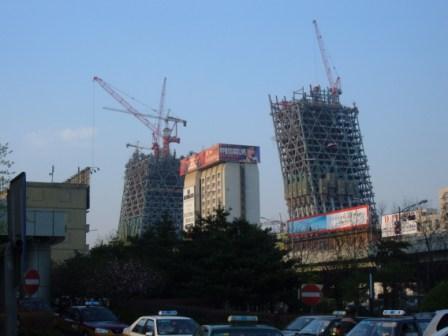
3. The city itself is a construction site which, for better or worse, heralds a new age (as I write someone has just started what can only be described as flatulent drilling two floors up� At night Beijing is lit up, beyond the neon, with welders� sparks). Although Shanghai is no different in this respect, the obsession with opening multiple five-star � and some six-star � hotels was bound to affect the Beijing wine market;
4. Beijing offers much less of an ex-pat dominated wine scene/trade, providing more opportunities to see how Chinese tasters react to new wines;
5. Beijingers have a traditional regard for education/learning (this is not a comment intended to denigrate the Shanghainese�.);
6. Beijing has better food! (I�m sorry, but the city does offer the cuisines of every single Chinese province as well as international fare from around the world);
7. Fongyee already knew the place and…
8. The buildings are actually heated in winter (not a luxury Shanghai enjoys).
From www.catavino.net
