Charles Carrard on wine distribution in China: Shifts, prospects, the “dumping ground” mindset, and more(2)


Some French people have a fear of competition from new world wines; that France will lose out. But I think that the more new world wine that comes in, that the more French wine will be sold. The market will come mature and people who start by drinking cheap wine will move up to better brands.
In fact, a study was presented at VinExpo in December of 2007 that provided a forecast of the next ten years. It said that Chinese people would drink increasingly expensive wine and increasingly appreciate the quality of wine. Instead of buying an 80 RMB wine, for example, they will spend 100 RMB or 120 RMB.
-
One of my favorite wines tried last year was the Chamarré Jurancon. What is the story behind it?
Jurancon is a small area southwest of France, near the Pyrenees Mountains. There is only one winery – a cooperative – that can make it. It is not very famous yet and most of its production is for the domestic market, but Charmarré received the right to export it and it is now becoming renown.
We call it a “yellow” wine, and it is made from Gros Manseng and Petit Manseng. It comes from big grapes that have received a lot of sun, and that makes it fruity and sweet, somewhere between Muscat and ice wine.
-
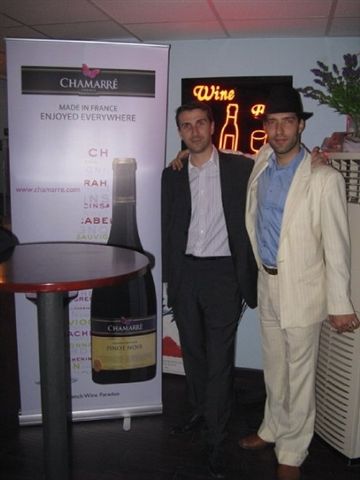 What is the idea of the “I am a Paradox” events held by French Wine Paradox?
Before being a business, wine is a pleasure, and contrary to some wine distributors in Beijing, I don’t want to make customers pay an entrance fee to try my wines. So, I have created “I am a Paradox”, the only private sales event for wine in Beijing, where the entrance is free, and people can try all of the wines on display and then buy the ones they like at a 50 percent discount. Every month we change location, to promote a different restaurant, and rotate wines from the 500 we carry.
We have everyone from CEOs of big French companies to food and beverage people to average customers attend. The idea is to create a “cellar” in your home for a low price. They can try wine at home, decide what they like, and then there is less risk when they order it from a menu at a restaurant.
-
French Wine Paradox is also doing “mobile training.” What does that involve?
You learn different things about your colleagues while sharing a bottle of wine rather than being in a meeting, and this makes wine good for team building. We can send someone to your office, perhaps on a Friday evening from 6 to 8 PM, to do a tasting and encourage your colleagues to try and talk about different wines. This is typically French, as we drink wine more to socialize than to get drunk.
-
How did you get involved in China’s wine scene and in wine in the first place?
By accident: I came to China in 2005 for the first time, for a one-month summer program. I returned to France to finish business school and wanted to return to China, so I created a position for the House of Champagne (Boizel Chanoine Champagne) to be in charge of Asia for Tsarine, a Champagne originally made in honor of a Russian Tsar. The company bought Lanson and asked me to go back to France to look after the Asia, German, East European and Swiss markets. I did not want to spend as much time traveling in Europe as I had in Asia, so I instead joined French Wine Paradox when I learned owner Erwann Le Moigne wanted someone to take care of on-trade business in North China.
I decided to enter FWP since its approach to business differed from other suppliers in China. We are not teachers or wine specialists, but wine lovers who want to share our products with customers. We trust our Chinese staff one hundred percent and we think we know a bit about the way consumers will buy and enjoy wines.
