Tasmania(1)


Overview
The Tasmanian wine zone is climatically diverse, from the Pipers River and Tamar Valley areas in the north to the Coal River and Derwent Valley districts in the south. The island state is developing a reputation, both nationally and internationally, for producing high-quality premium wine, food and other beverages from its pristine and natural environment. With a cool climate that has long, sunny and dry autumns, Tasmania has ideal growing conditions for developing intensely flavoured, aromatic Chardonnay and Pinot Noir.
The Big Picture
Despite demonstrable geographic and style variations between the different viticultural areas of the island, Tasmania remains the only state-wide zone in its own right. It is obviously also Australia's most geographically discreet GI. Considering the small size of the industry, the desirability of a united marketing approach and the wide recognition of "Tasmania" as a brand and place, it is unlikely that further subdivision into smaller GIs will be sought in the near future.
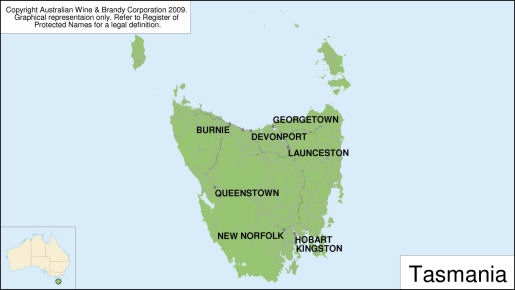
Tasmania
Several of the larger national companies have either established vineyards in the state or source Tasmanian fruit for their premium sparkling wines. Although production accounts for less than 1% of Australia’s overall crush, Tasmanian wines are well represented in Australia’s premium wine sales and exports. With production set to double in the next five years, the future of Tasmania’s wine industry is looking very rosy indeed.
Climate
Tasmania has a moderate maritime climate, cooled by prevailing westerlies off the Southern Ocean, providing conditions that are generally free from extremes. Mild spring and summer temperatures, with warm autumn days and cool nights, allow the grapes to ripen slowly on the vine, resulting in maximum varietal flavour development. This is achieved without losing that essential natural acid that gives Tasmania’s wines freshness and balance.
Soil
The Tasmanian landscape is dominated by dolerite-capped mountains that shelter the state’s vineyards from high winds and rainfall. On the lower slopes, the vineyard soils are formed from ancient sandstones and mudstones and also from more recent river sediments and igneous rock of volcanic origin.
For more detailed information on Tasmania’s soil types, the Tasmanian Viticultural Soils and Geology map provides a broad overview of the seven major and relevant rock types in Tasmania. For more information contact Service Tasmania on Tel 1300 135 513.
