China's Economic Strategy To Become The World's Biggest Superpower(1)
By 2009-7-2 15:02:45


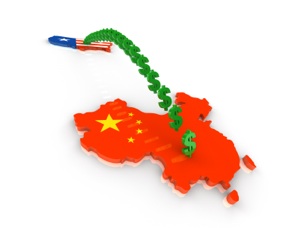
China is taking advantage of the global recession to position themselves to eventually become the world's number 1 superpower. They are lending out massive amounts of money to countries like the US, and stockpiling gold in order to prepare for the possible fall of the dollar. Tony Straka from The Prudent Investor explains China's economic strategy and why we should all be watching very closely.
 Shocked by the fact that lamestream media and Twitter are all about Michael Jackson's death from what appears to be a drug overdose, I enjoy being the spoiler for a world that seemingly does not know how to set its priorities anymore. While 33 of the 42 commercial media I regularly read headline with Jacko, it is Chinese media that published the truly important news of the day.
Here's the executive version of Chinese economic news picked from the English language People's Daily Online.
You can now go back to watch CNN's US propaganda broadcast and remain in the "don't worry, be happy" camp which still has a solid majority in the Western world. Or would you prefer to gather a little more intel on the next #1 power in the world? Then read on.
Bullet point #1 appears to point to a struggle of ideologies in the Chinese communist party. Chinese entrepreneurs certainly favor a more liberal business climate but one must not forget that there is still a gap as wide as the Amazon river between the Ferrari driving riches in towns and a rural hinterland where oxcarts and bicycles remain to be seen as signs of prosperity. In order to prevent social upheaval China needs to bridge this gap or it risks falling apart. The anonymous commenter in the People's Daily reminds the world that China still favors a hands-on approach:
Pointing out, that 26 of the 500 largest companies in the world as of 2008 are state-controlled Chinese corporations, the most populous nation on earth insists that it is not so much about ownership-ideology but about keeping up a harmonious people.
Confronted with a global economic downturn China's central bank made it clear this week that it will emphasize an easy monetary policy to keep its economy humming despite declining exports. In a stark contrast to the indebted western world China sits on roughly $2 trillion in assets, enabling it to conduct stimulus policies no country in the Western hemisphere could afford. Read their opinion on bullet point #2 in their own words as it also signals a concern about the environment:
The Eastern dragon so far performs much better than any recession-stricken nation in the West, where money supply has rocketed to potentially fatal (hyper inflationary) levels. Covering bullet point #3 in their own words, China plays its monetary muscle.
Show me a Western country that could shell out a trillion Euros/dollars from its full pockets! There is no such thing. All stimulus packages Western politicians promise are only backed by the hope of future tax payments. China can dive through a recession on its savings whereas the so called first world has nothing else to show than debts that are enough of a burden for the two next generations.
Wouldn't we all love to have the same economic discussion as the Chinese where economists argue whether the economy has bottomed out at a growth rate of 6.1% in Q1 2008 or whether one should be skeptical about a possible GDP growth rate of 9%?
Diving into recent history (i.e. this blog's archive) China can actually see the global downturn as a benefit that helps keeping the economy from overheating. BTW, why are we actually concerned with "overheating" economies? Don't we all want to become rich by tomorrow? But I won't digress, this is an entirely different discussion best to be had over a bottle of good plum wine.
Let's better proceed to bullet point #4: China's growing role in forex markets.
Reuters staffers Zhou Xin and Alan Wheatley direct my attention to the fact that China sees a much bigger role of gold in global currency policy after surprising the world with the fact that it had domestically purchased gold and now sits on a hoard of 1,054 tonnes after publishing a figure of 660 tonnes since 2003.
 Shocked by the fact that lamestream media and Twitter are all about Michael Jackson's death from what appears to be a drug overdose, I enjoy being the spoiler for a world that seemingly does not know how to set its priorities anymore. While 33 of the 42 commercial media I regularly read headline with Jacko, it is Chinese media that published the truly important news of the day.
Here's the executive version of Chinese economic news picked from the English language People's Daily Online.
1. China takes public ownership as the main body and the other (issue) is to adhere to the common growth of economy belonging to diverse forms of ownership.
2. The People's Bank of China (PBoC) will stick to an appropriately easy monetary policy but will ensure reasonable growth in money and credit, the central bank said yesterday.
3. New credit in the first half of 2009 will definitely surpass 6 trillion yuan, and some experts even predict the figure to be up to 6.5 trillion yuan. This means that total credit in the first half of this year will be more than the total amount invested in any year since China was founded.
4. China should buy more gold because the dollar is poised for a fall and the metal is needed to support the greater international role envisaged for the yuan, a senior researcher with the ruling Communist Party said.
You can now go back to watch CNN's US propaganda broadcast and remain in the "don't worry, be happy" camp which still has a solid majority in the Western world. Or would you prefer to gather a little more intel on the next #1 power in the world? Then read on.
Bullet point #1 appears to point to a struggle of ideologies in the Chinese communist party. Chinese entrepreneurs certainly favor a more liberal business climate but one must not forget that there is still a gap as wide as the Amazon river between the Ferrari driving riches in towns and a rural hinterland where oxcarts and bicycles remain to be seen as signs of prosperity. In order to prevent social upheaval China needs to bridge this gap or it risks falling apart. The anonymous commenter in the People's Daily reminds the world that China still favors a hands-on approach:
Taking public ownership as the mainstay is a fundamental principle of socialism. In a socialist country like China, where people have become masters of their own destiny, it is imperative to keep public ownership of means of production as a basis of the socialist economic system. So, adherence to public ownership as the main body is of vital importance in giving play to the superiority of the nation's socialist system, increasing the nation's economic strength and promoting social harmony in the country.
Pointing out, that 26 of the 500 largest companies in the world as of 2008 are state-controlled Chinese corporations, the most populous nation on earth insists that it is not so much about ownership-ideology but about keeping up a harmonious people.
In a nutshell, it is imperative and essential to consolidate and develop the public ownership economy, to encourage, support and guide the growth of the non-public sector economy, and to maintain the right to equal access of property resources, so that a brand-new situation will emerge, in which all economic sectors will "vie with each other" on an equal footing so as to spur their economic activity for mutual advancement.
Confronted with a global economic downturn China's central bank made it clear this week that it will emphasize an easy monetary policy to keep its economy humming despite declining exports. In a stark contrast to the indebted western world China sits on roughly $2 trillion in assets, enabling it to conduct stimulus policies no country in the Western hemisphere could afford. Read their opinion on bullet point #2 in their own words as it also signals a concern about the environment:
In a summary of the conclusions drawn at its second-quarter monetary policy committee meeting, the central bank said yesterday that it would ensure reasonable growth in money and credit but would strictly control lending to polluting, energy-intensive industries...
"The top priority at the moment is to stop the explosive growth in lending at the end of the month and quarter," China Banking Regulatory Commission said in a recent notice to lenders, pointing to the phenomena of banks racing to offer loans before June to meet their half-year lending targets.
The Eastern dragon so far performs much better than any recession-stricken nation in the West, where money supply has rocketed to potentially fatal (hyper inflationary) levels. Covering bullet point #3 in their own words, China plays its monetary muscle.
People's Bank of China Monetary Policy Committee recently held a regular meeting on the second quarter of 2009. The conference studies the orientation of monetary policy and measures for the coming future, concluding that we need to implement moderately easy monetary policy and maintain the continuity and stability of policies to guide a reasonable growth in monetary credit.
It is learned that in the first five months, RMB loans increased by 5.84 trillion yuan. June figures have not yet been released, but according to past experience, new credit in the first half of 2009 will definitely surpass 6 trillion yuan, and some experts even predict the figure to be up to 6.5 trillion yuan. This means that total credit in the first half of this year will be more than the total amount invested in any year since China was founded.
2 Ways Through a Recession: China Can Afford It Because of Savings
Show me a Western country that could shell out a trillion Euros/dollars from its full pockets! There is no such thing. All stimulus packages Western politicians promise are only backed by the hope of future tax payments. China can dive through a recession on its savings whereas the so called first world has nothing else to show than debts that are enough of a burden for the two next generations.
Wouldn't we all love to have the same economic discussion as the Chinese where economists argue whether the economy has bottomed out at a growth rate of 6.1% in Q1 2008 or whether one should be skeptical about a possible GDP growth rate of 9%?
Diving into recent history (i.e. this blog's archive) China can actually see the global downturn as a benefit that helps keeping the economy from overheating. BTW, why are we actually concerned with "overheating" economies? Don't we all want to become rich by tomorrow? But I won't digress, this is an entirely different discussion best to be had over a bottle of good plum wine.
Let's better proceed to bullet point #4: China's growing role in forex markets.
Reuters staffers Zhou Xin and Alan Wheatley direct my attention to the fact that China sees a much bigger role of gold in global currency policy after surprising the world with the fact that it had domestically purchased gold and now sits on a hoard of 1,054 tonnes after publishing a figure of 660 tonnes since 2003.

From www.nuwireinvestor.com