Hastings River, NSW(1)


Overview
Viticulture and winemaking in the Hastings River region date back to 1837 when the first vineyard was planted by Henry Fancourt White, a colonial surveyor. In the 1860s there were 33 vineyards in the area.
The Big Picture
The Australian wine industry declined in the early 1900s and, along with many other wine regions, production ceased in the Hastings Valley during that period. After 60 years of non-productivity, in 1980 the Cassegrain family of French descent decided to expand into real estate and associated viticulture and winery interests. Improbable though it seemed at the time, it has significantly expanded the viticultural map of Australia. In the course of meeting the unique climatic challenges of the region, the family pioneered new varieties and new ways of managing vineyards, and indirectly encouraged the development of other vineyards and wineries along the northern coast of New South Wales.
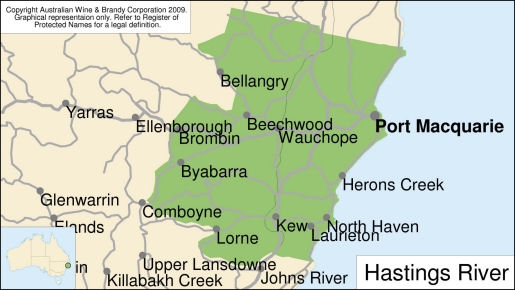
Hastings River Wine Region
The vineyards of the Hastings River are the only significant new plantings in Australia over the past 30 years not to have been supplemented with irrigation, simply because they have no need of it. As well as being uncompromisingly warm, this is a region that combines high summer humidity and high rainfall. It is much affected by the tail end of tropical cyclones moving down the coast from Queensland, and by its proximity to the warm waters of the Pacific Ocean.
The best vintages are the driest; those in which the late summer rains are below average. However, even in these circumstances the successful outcome of the vintage is dependent on split-second timing of the harvest and very careful management of the canopy. The only assured solution has been the propagation of the French-bred hybrid Chambourcin, which is resistant to the mildews that otherwise pose a constant threat.
Soil
The gently hilly terrain offers a wide choice of aspect that affords a response to, as well as the use of, prevailing winds, which are helpful in assisting disease control. The soils vary greatly in fertility, depth and drainage capacity, spanning rich free-draining alluvial and red volcanic soils, and running from sandy through to heavy, water-resistant yellow clay; some are deep, while others overlie gravel or limestone.
