Sharing the sweet secrets of the famed Kempi Deli(1)


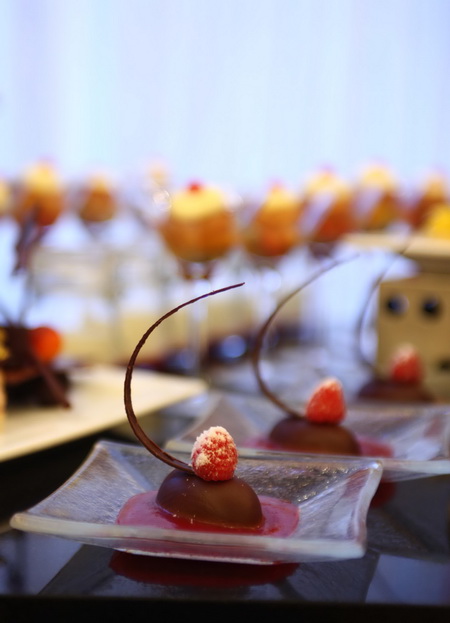
The temptation of chocolate, red pepper and raspberry. Photo courtesy of Kempinski Hotel
I could simply tell you that for distinctive and classic European flavors, Kempi Deli has an extraordinary reputation among gourmets. But that wouldn't make you salivate like this list will: Schwarzwald cake with alternate layers of ice cream, butter and raspberry sauce; chocolate mousse with the blended taste of cheese, chocolate and berry sauce; French sausage; Italian air-dried meat. As Thomas Laberer, general executive chef of Kempinski Hotel boasted during their inaugural pastry cooking class last Friday, “In the past 17 years, many guests have come to us just for the best cheese cake in Beijing.'
Based on their previous achievements, Kempinski Hotel intends to add more innovative elements to their pastries, giving their classical, European-fl avor dominated pastries more modern inspiration. Jean-Luc Vasseur, the new general executive chef of Kempinski's Pastry Department, will be the one to fulfi ll the mission.
Starting in February 2010, the Kempinski will offer pastrycooking classes to the public. Not only will people have the chance to share the secrets of Kempi Deli, they will experience the innovative ideas of Vasseur.
This French pastry chef of 12 years has garnered many international awards during his career, including the Sugar Art Golden Medal of the Singapore National Cuisine Exhibition and the Bronze Medal of the Kremlin Cup International Sugar Art Contest. 'Dessert always easily makes people happy,' he said. 'However, the creative process is not simple. Asians have different tastes from Europeans, and the raw materials are also quite different. But I like to learn the local flavors, and use that as a base to demonstrate the European flavor. It's a challenge filled with fun.'
The combination also gives him the opportunity to do the opposite, altering and accenting traditional European desserts with Chinese fl avors. 'In my opinion, a good chef should be able to incorporate real life experience and art inspiration into the gourmet he or she makes,' Vasseur explained. 'For example, I created a bitter chocolate mousse with a black and white sesame cream in early 2009. The idea came to me after I tasted the sesame paste they gave me when I tried hotpot in China. I found out bitter chocolate goes very well with the roasted sesame. It is a mix of Chinese tradition with Western style.'
For the pastry class introduction, the focus was on the classics. Desserts like mango jelly financier, jasmine tea Lactee tarts and fruits minestrone savarin were displayed on the bu. et table, all brightly colored and eye catching. Even a tiny bite of a simple pistachio white macaron left my taste buds rejoicing.
The crumbly crust, properly sour and sweet fruit sauce filling and light fl avor (no heavy chocolate or cream) was a perfect example of Vasseur's new strategy to use less cream and sugar and more fruits and vegetables in his pastries. 'People want to keep slim, but more cream and sugar will only put more weight on them, so we've changed the style,' Vasseur explained of the pastry innovations laid out before us.
The most attractive part of the class is that 'we will show people how to use simple ingredients to cook many flavors,' Vasseur told the Global Times. 'Everybody can find the ingredients in the local markets,' he added. For chefs ingrained with the doctrine that dough is the foundation of pastries, Vasseur aims to teach them to use less fl our. During our preview, he displayed the cooking process for several desserts. Here, we share one with you to reveal the chef's ingenuity and appease your curiosity.
