Snapshots of the silver screen(1)


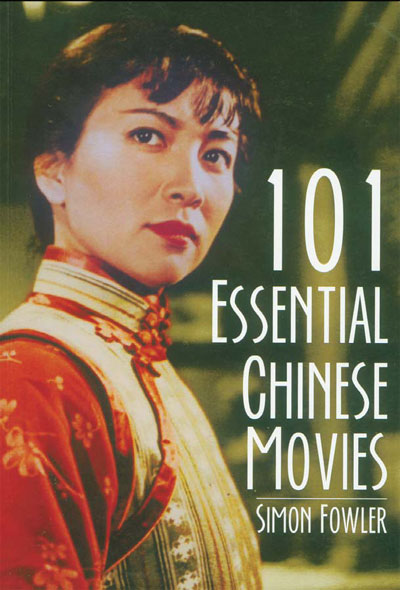
Early Spring in February, starring Xie Fang, (1963), is featured
in the guide. Provided to China Daily
A rare peek at the evolution of Chinese cinema over 105 years reveals more than a few classics. Chitralekha Basu reports
If you have ever wondered whether China has produced any cinema other than over-embellished period dramas, kungfu-style action flicks or soapy stories about who gets to hook the office stud, 101 Essential Chinese Movies might be a good place to start.
Published recently by the Shanghai-based Earnshaw Books and written by journalist-turned-film historian Simon Fowler, the book is both a handy guide for the uninitiated and a springboard to plunge right into China's incredibly multi-dimensional 105-year-old cinematic history. It, as Time's China correspondent Austin Ramzy states in his advance praise for the book, "provides the reader with deep insights into not only Chinese film, but also China itself".
Fowler, who has been strongly influenced by films since he was about 11, made a smooth transition from a film fanatic to being a "Chinese film fanatic" soon after moving to China from England in 2006.
As one who had been tutored meticulously into understanding the black-and-white classics by his eldest brother "Jem" - now a filmmaker based in London - the younger Fowler felt he badly needed a "context" to read Chinese films once he hit the shores of the Middle Kingdom. What started off as trying to establish a frame of reference to arrive at a better understanding of Chinese films has since evolved into 101 Essential Chinese Movies.
Interestingly, he left out the bulk of films made in Hong Kong and Taiwan - films which, in popular imagination, often represent the idea of "Chinese" to the rest of the world. Fowler focused on films from the Chinese mainland, the people who made them and the politics that, until recently, went into their making.
"The cinema of the mainland - for most of the past century - has been overtly political," Fowler comments. "Even before the communists came to power, films were mainly made by Leftist intellectuals in Shanghai and they weaved their messages into nearly every plot. What is most interesting about this is that they were still able to achieve a high stylistic and artistic level."
It is relatively recently that the Chinese mainland has begun to produce wuxia (martial arts)-dominated genre films, he says.
The winds of change are apparent as Zhang Yimou, arguably China's most influential film director, is now massively into period drama that come with a panoramic flourish, and often dazzling color-coordinated fight sequences. "It's getting harder to distinguish between the two (a Chinese mainland product and a Hong Kong sample)," Fowler points out.
In his opinion the 1930s define Chinese cinema's "golden age". Filmmaking in China began as early as 1905 (The Battle of Dingjunshan was the filmed version of a Peking Opera). But it was with the films made by the free-spirited, educated, urban directors, who produced their works in the concession areas of Shanghai, where the long arm of the Japanese forces who controlled most of coastal China could not reach them, that Chinese cinema came into its own.
"Silent films like Little Toys (1933), The Goddess (1934) and Street Angel (1937) - starring glamorous actresses like Ruan Lingyu and Zhou Xuan - extolled the exotic beauty of Shanghai (and its women)," Fowler writes in his book.
Ruan and Zhou, still the staple of kitsch art on Shanghai souvenirs, caved in under the often crude and asphyxiating public gaze. "The speculation and investigation that these women had to endure were massive. Ruan was tormented by press intrusion in her personal life and maybe because she was so used to playing the tragic figure on screen (she killed herself four times in the movies she made) she decided to take that way out," Fowler informs.
He gives the credit for successfully marrying the political message to evolved cinematic language for the first time to Xie Jin. The career of the man who made the racy sports drama, Woman Basketball Player No 5 (1957), shot in vivid tri-color - in which a corrupt basketball coach sells out to a team of thuggish foreign marines - peaked in the late 1950s and early 60s, before it took the inevitable plunge. With the onset of the "cultural revolution" (1966-1976), only films propagating the dominant political ideology could be released.
Chen Kaige, Tian Zhuangzhuang and Zhang Yimou - the class of 1982 at Beijing Film Academy - arrived on the scene in the mid-1980s, with a cloudburst of raw energy, striking visual imagination and radical themes. They made films that captured the sensibilities of a China trying to reconcile with the damages left by the tumultuous 70s even as it tried to make sense of the new realities of a society in transition.
"Yellow Earth (by Chen Kaige, 1984), One and Eight (Zhang Juzhao, 1983), The Horse Thief (Tian Zhuangzhuang, 1986) captured the world's attention, putting China on the cinematic map," Fowler writes.
For all his admiration of the "fifth-generation" directors, most of the films listed in the "essential" 101 are from the present decade.
Fowler is sold on the languorous, documentary-style features on human migration and displacement made by Jia Zhangke (Still Life, 2006, 24 City, 2008). He thoroughly digs the arrogant, flashy, fast-paced comedy thrillers like Ning Hao's Crazy Stone (2006) and Feng Xiaogang's A World Without Thieves (2004) as they reflect "the optimism of the moment".
A coming-of-age film set in cynical, stifling urban academic set-ups like Lu Yue's Thirteen Princess Trees (2006) stirs him for its "honest depiction of the realities facing China's youth". Wang Quan'an's Tuya's Marriage (2006), about a woman's struggle for survival in the hostile terrain of Inner Mongolia, which took the Golden Bear at the Berlin International Film Festival, appeals to him as "it shows how even the lives of those furthest away from China's industrial centers feel the effects of modernization".
"If you look at the scope of what has been produced in the last 10 years I think you can find a number of films that equally match the 'golden age' (1930s), but the difference is that nowadays it's less of a cohesive movement. Obviously money has become a huge factor and the commercialization of mainstream Chinese cinema has not seen a rise in overall quality," Fowler comments.
The audience's expectations from a film have changed too. In the 1930s and 40s people would go watch a film not so much to be entertained but to empathize and identify with the tough luck that stars like Shi Hui and Ruan Lingyuan struggled with. In the 1960s and 70s propaganda films were mandatory viewing. Now in the age of unlimited access to easy downloads and pirated DVDs, an audience needs stronger motivation to come to the theater.
"Most Chinese people will (still) pay a relatively large amount of money to see a spectacle," Fowler opines. "Look at the films that have made huge amounts of money in China - Aftershock, Red Cliff ... These are expensive films with amazing special effects."
Unfortunately, to watch most of the films listed in his book going online or buying pirated DVDs are the only options.
