Solar hot water - cost-effective solution for wineries(1)


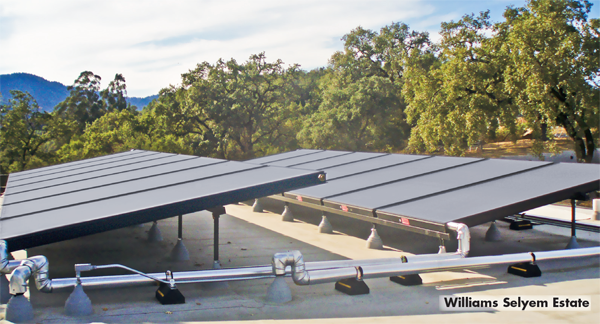
Solar hot water systems are a relatively low-cost way for wineries to use the power of the sun to reduce energy costs. Kunde Family Estate (Kenwood, CA) installed a solar thermal system in 2010, and Williams Selyem Estate Winery (Healdsburg, CA) built a new facility with barrel storage, a bottling line, and visitor center with a solar photovoltaic (PV) energygenerating system for electricity, and a solar thermal system for hot water generation.
Solar thermal systems
Solar photovoltaic (PV) panels (see PWV, January/February 2004, July/August 2005, January/ February 2008) collect energy from direct daylight ultraviolet rays and send it to an inverter, which converts the energy to DC current that powers winery and vineyard electrical needs. Collected energy is most often stored in the existing utility energy grid until it is needed.
Solar thermal collectors are different from solar PV collectors in that they do not generate electricity ? they transfer the sun energy into heated liquid (glycol) that is then used to heat water. Solar thermal collectors are much less costly to install (on residential systems, about half the cost of solar PV), and they are four to five times as efficient ?an 80% efficiency rating versus about 15% for photovoltaic.
The efficiency of solar thermal collectors varies using this equation:
Temperature of liquid in collector temperature of ambient air efficiency of the collector The greater the difference between the two temperatures, the lower the efficiency of the collector.
Flat-plate solar thermal collectors (such as the ones installed at Kunde and Williams Selyem) consist of: 1) a dark flat-plate absorber of solar energy, 2) a transparent cover that allows solar energy to pass through but reduces heat losses, 3) a heat-transport fluid (glycol) flowing through copper tubes to accept heat from the absorber, and 4) a heat insulating backing.
