Top 10 Hong Kong restaurant trends(2)


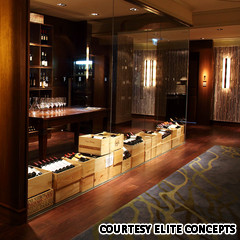
1. Wine, wine, wine
Caroline Chow, of Lan Kwai Fong Entertainments, which runs Kyoto Joe, Indochine, and several other Lan Kwai Fong establishments, notes that “wine has started to become a cultural habit for locals.” Think of it as a trickle-down phenomenon.
In 2009, Hong Kong overtook New York and London as the world’s largest wine market. Sotheby’s and Christie’s have each sold bottles of wine here for small fortunes. In May 2011, a buyer purchased a single bottle of 1961 Château Latour for US$216,000.
Hong Kong's new role as a literal funnel for fine wine owes everything to the government’s 2008 decision to eliminate duty on imported wines. Since then, nouveaux riches on both sides of the Shenzhen River have been eager to slurp down wine at an unprecedented clip.
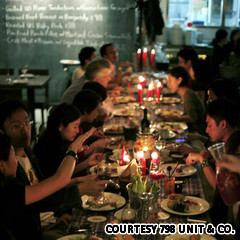
2. Everyone's a critic: the smartphone and social media effect
We’ve all seen them. They’re at the next table, taking photos of everything from the first amuse-bouche to the last dessert crumb. They’re on their smartphones the entire meal, liveblogging every bite. Even you may have engaged in this behavior from time to time.
Also read How the iPhone has ruined my lunch.
This is the new fact of dining out in Hong Kong: everyone’s a critic. And, for better or worse, there's a willing audience out there.
Openrice, Hong Kong's online home of user-generated restaurant reviews, packs more clout for most of the population than either Zagat or Michelin, offering in-depth reviews of everything from the decor to the service.
“We even see customers taking out smartphones to help them make menu choices,” says Bridget Chen, partner of 798 unit & co. and Just-a-Restaurant.
3. Westward Ho! The rise of Western District
As commercial rents in Central continue to spiral into the stratosphere, restaurateurs have looked west for relief. As a result, there has been a notable spillover effect in the neighborhoods of Sheung Wan, Sai Ying Pun, Shek Tong Tsui, and Kennedy Town.
“Due to the high levels of rent in SoHo and Central, we can definitely foresee a shift of the dining scene to the Sheung Wan and Kennedy Town neighborhoods,” says Robert Spina, founding partner and executive director of IHM, the company behind Posto Pubblico, Cantopop, and Homegrown Foods.
Also read Cantopop: Seeking a new definition of the cha chaan teng.
4. The kiss of death: high rent
This being Hong Kong, upward rent pressure features in two of our trends.
“High rent squeezes our ability to do anything very, very good,” says Paul Hsu, executive director of Elite Concepts, a restaurant group whose portfolio includes Michelin-starred restaurants yè shanghai and Nanhai No. 1.
“It marginalizes the quality of the operators and the restaurants because so much of your bill is paid on rent.”
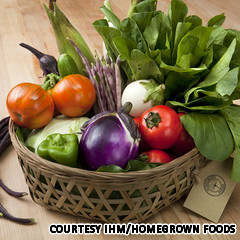
5. Responsible eating: Food origins
Hong Kong, due to its small size, is inherently incapable of growing enough food to feed all of its residents. China, the supplier of most of Hong Kong’s food, is certainly not a poster child for food safety, and disruptions to other sources, such as those in the wake of the recent earthquake in Japan, make clear how convoluted the food chain actually is.
Bridget Chen adds, “There are more people nowadays asking, ‘where is this from?’” Good question.
5. Pop-ups
What better way to indulge our fickle minds than with shops that appear and then disappear before we even have time to fully compute their worth?
Meet the pop-up shop. It’s been in vogue in retail for a few years, especially in London and New York. Hong Kong is no stranger to the phenomenon, with recent pop-ups ranging from American Apparel to Taschen Books. Applying the pop-up model to restaurants has been catching on, and it takes whimsical dining a step beyond the private kitchen.
“I think we will definitely be seeing a lot more pop-up concepts in Hong Kong,” says Alan Lo, co-founder of the Press Room Group, which owns several restaurants including The Pawn and Classified.
“With rising rents, a shortage of space and increasingly curious consumers, pop-up concepts will take flight. They are great ways to dip your toes in the market and test one’s product.”
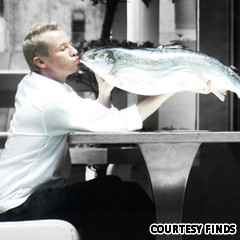
6. The clout of celebrity
In case you haven’t noticed, the pendulum of cultural influence has gradually swung farther and farther east. Take note of the aforementioned wine market as well as the burgeoning art market, and Hong Kong seems to be at the center of a cultural maelstrom.
Or, depending on your perspective, Hong Kong has commodified culture and now sells it to high bidders from the mainland.
Regardless of how it is viewed, this phenomenon is especially tangible within Hong Kong’s dining scene.
In recent years, brand name chefs have fallen over themselves to set up shop in Hong Kong -- Nobu Matsuhisa, Joël Robuchon, Alain Ducasse, Richard Ekkebus, and Pierre Gagnaire all hang their shingles here.
“People are becoming a little bit more brand conscious,” says Sandeep Sekhri, founder and managing director of restaurant group Dining Concepts. “I think people are wholeheartedly accepting the inflow of celebrity chefs into Hong Kong.”
The phenomenon is gaining steam and becoming ubiquitous across all classes and types of cuisine. Sekhri is well aware of this, having recently imported New York chef Michael White to open Al Molo, an Italian restaurant.
7. East meets West: fusion, redefined
The term “fusion cuisine” evokes visions of some neon-walled 1990s-era restaurant trying to be edgy by featuring stuff like wasabi-infused pesto. But if you think about it, all cuisines have overlapped with others in some way over the course of history, and all have lent or derived some semblance of influence.
Noticeable of late is a disproportionate flow of influence from East to West.
“There is obviously more use of Asian ingredients amongst European chefs,” says Margaret Xu, owner and chef at private kitchen Yin Yang and executive chef at Cantopop.
“I see that Western chefs in Hong Kong are getting prouder to use some popular Chinese flavors in their cooking and therefore contributing to Hong Kong establishing its own style of Western cuisine.”
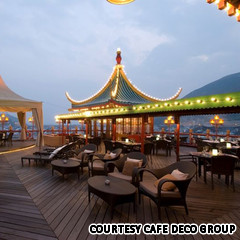
8. Out is in: al fresco dining
Anna Adasiewicz, managing director of FINDS, says, “The European culture of al fresco dining is slowly taking off.”
Although strong demand from the dining public exists, outdoor dining in Hong Kong is greatly restricted by an arcane set of licensing rules and regulations. The best many restaurants can do, especially in Central and Western districts where space is at a premium, is to offer seating at adjacent public space, without the option of table service.
Witness the roof deck of the IFC Mall, where wicker furniture and sweeping views are on offer outside, but where patrons of adjacent rooftop restaurants must serve themselves since the seating area is technically public. For restaurants and customers, it's a workaround, but it’s a bit inconvenient.
“It’s quasi-impossible to get licensed for al fresco dining almost anywhere in Hong Kong,” says Daniel Schneersohn, managing director of Chez Patrick. “It’s officially non-existent but tolerated.”
Also read 10 best outdoor Western brunches in Hong Kong.
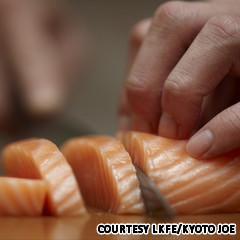
10. Simplify, simplify
The term “trend” implies something that’s fleeting or rooted in a specific temporal context. Trying to constantly create or follow trends can complicate the very essence of dining. Restaurateurs have taken this to heart.
“Things are a lot simpler,” says Linda Kwan, of the Café Deco Group. “Food can be very nice without having to be ostentatious.”
Calvin Ku, co-owner of Lily & Bloom, says, “I think right now we are at a point where there isn’t really a leading trend that’s too mind-blowing, so we fall back on the fundamentals of what makes food exciting in the first place: great ingredients, and sensible and simple preparation cooked by people who care.”
