Places to visit in Japan(1)


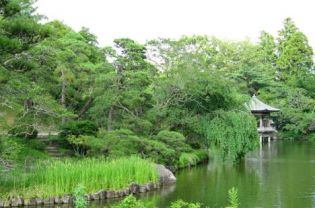
After a triple disaster, the country is working to show tourists that it’s safe to come back. (JG Photo/Arientha Primanita)
Since the March 11 disaster, Japan has struggled to attract visitors back to its shores.
Earlier this year, the world watched in horror as the country was hit by a 9.0-magnitude earthquake, followed by a devastating tsunami and a nuclear crisis, all in quick succession.
The disaster left almost 25,000 people dead or missing, while the crippled Fukushima Daiichi nuclear power plant plunged Japan into its worst crisis since World War II.
As horrifying as the images of these natural disasters were, what caught the attention of many people around the world was the resilience of the Japanese people, who showed courage and solidarity throughout.
It is this same spirit of perseverance that has led Japan to launch a campaign to invite visitors back to the country, just five months after the disaster.
The Asia Inbound Sightseeing Organization recently invited 25 journalists from eight countries to spend a week in Japan, to help spread the word that the country is back on its feet and ready to welcome guests.
Participants, including a representative from the Jakarta Globe, were shown a tourism video that was released in the middle of July to support the campaign, featuring Japan’s top boy band, Arashi.
In the 10-minute video, the boys from Arashi thank the world for its support through the disasters and invite people to visit Japan and see how the country has recovered thanks to their help.
The band members take viewers on a tour of the country’s temples, beaches, cities and mountains. The boys are shown carrying a Maneki Neko cat — the iconic Japanese cat statue with a raised paw, which is believed to attract guests and bring good fortune.
Japan’s tourism industry workers are certainly hoping that the beckoning cat will work its magic.
According to data from the Japan National Tourism Organization, the number of tourists visiting the country plunged by more than 50 percent in March from the same month last year, and by almost 63 percent in April from the same period a year earlier.
Figures increased slightly in May and June, but have yet to reach the usual levels for the summer period.
Wang Yat Nien, chairman of the AISO, said his own travel business had seen a 60 percent drop in clients after the disaster.
While visitors from South Korea, China, Taiwan, Hong Kong and Thailand, which traditionally account for the most tourists, were still making their presence felt, their numbers had drastically decreased, he said.
Micky Gan, a travel agent from the AISO, said the main thing keeping tourists away from the country was fear of radiation from the nuclear crisis at Fukushima in Japan’s northeast.
But Micky, a Chinese-Malaysian who has been working in Japan’s tourism sector for the past 20 years, said the government had been very proactive in handling the crisis.
He said regular checks for radiation contamination were still being carried out on food in every prefecture across the country, even those that are the farthest from Fukushima.
Nicole, an American traveler who was in Japan on a two-week tour with her family, said she was not concerned about radiation from the plant.
“I don’t think the radiation could be any worse than in New York City, so we’re not afraid coming here,” she said with a laugh.
Enjoying a trip through Tokyo, Nagano, Hakone, Kyoto and Hiroshima on the famous Shinkansen bullet train, Nicole said that experiencing Japan’s culture and landscapes had long been a dream for her and her family.
“My kids have been studying Japanese since they were in the first grade, so our family is very interested in Japanese culture,” she said.
For the journalists visiting at the invitation of AISO, Japan’s summer weather was as glorious as ever. Reaching temperatures of up to 35 degrees Celsius, the weather helped put the country’s landscapes and attractions in the best light.
The tour, conducted for visiting media, showed why the country’s tourism authorities had chosen the motto, “Japan, Endless Discovery.”
From ancient temples to luxury resorts, rural retreats and stunning natural landscapes, Japan has a wealth of hidden treasures for tourists to discover every time they visit.
The cities would certainly hold surprises for visitors coming from Jakarta, thanks to their clean roads and rivers, wide pedestrian walkways and efficient public transportation systems.
Public facilities in the cities are top-notch, including well-planned access to public transportation and infrastructure for the disabled.
But even in the highly developed metropolitan areas, Japan’s cities retain a sense of culture, successfully combining elements of modernity and tradition.
Tour guide Uruno Takao explained that everything is able to coexist in Japan.
“We don’t like conflict, we like peace,” Takao said. “We take everything [as it comes].”
With that kind of attitude, Japan is sure to get back on its feet soon — with a little help from its friends.
