Tequila taste buds in Asia(2)


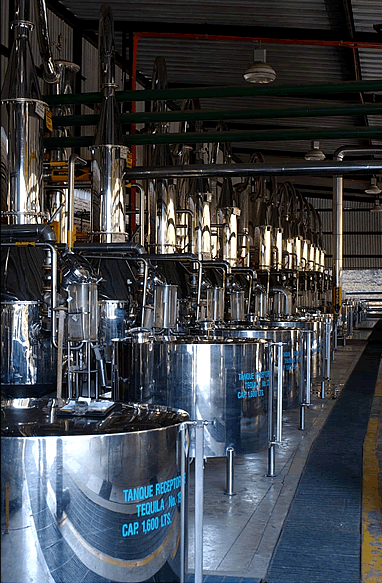
Tequila in the making.
People often confuse the agave, or maguey, with cactus since it has similar responses to an arid climate - storing fluid behind thick waxy green leaves with spikes. Some spirits-lovers used to scorn anejo, or aged, tequila since it might have only spent a year in oak - but even hot off the still the drink has at least eight years of history from the planting of the pod. The plants take at least eight and as many as 20 years to reach fruition, when they send up a tall flowering shoot, which can reach six meters or more. As soon as it appears, farmers cut it out, to stop it draining the sugars, and the pod is ready to harvest.
Roasting the agave converts the starches to sugar. For tequila, the pods are then ground in stone mill, the tahona, for the more artisanal brands or put through a mechanical mill to extract the juices. It is then fermented. Some brands, like Herradura, use the natural yeast in the air, while other use cultured varieties.
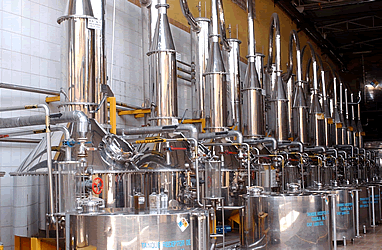
Tequila in the making.
Even the major internationally owned distilleries are careful to maintain their distinctive brand practices: whether they get the agave from the volcanic uplands or the valleys, how much they trim the leaves, how they grind it, how they ferment it. Many swear by their copper pot stills, even worrying about where the copper comes from. And then, in a flurry of inventiveness, the premium brands have been experimenting with the types of oak and barrels they use to age it and some, like Casa Noble, are matured for up to seven years.
The whole process is zealously monitored by the Tequila Regulatory Council, which enforces strict Mexican government norms on how and where the drink can be made. Every bottle carries the license number of the distillery.
While the older tequileros are consciously going up-market to meet those demands, some, like Patron or Casa Noble, began as avowed prestige brands, and have consciously emphasized their labor intensive processes, and indeed like all the brands, emphasize their greenness with recycling of glass and wastes. Casa Noble, for example, claims both the strictest organic certification and a kosher for passover rating. Patron's sales strategy is to penetrate the luxury hotel bars and restaurants frequented by its affluent American fans when they travel - and osmose into the local trends that way.
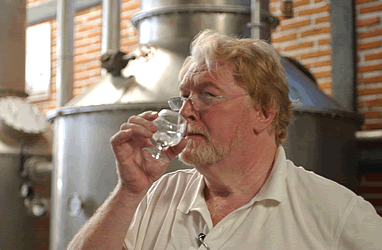
Olmeca's Jesus Hernandez comments, "It's about balancing the whole tequila body. You want some of the heads and tails - the beginning and end of the distillate - because that gives aromas and flavor. If you take too much of the tail out, it goes higher, and it would be unbalanced." Herradura is also wrestling hard with the problem, since they are reluctant to tinker with their premium brands' manufacture to meet the Chinese standard. But those aspirant thirsts of Asia beckon.
The tequila makers have an office in Shanghai to help importers and guide them through the bureaucracy. However, for once in Asia, they do not really have a major counterfeiting problem. In addition to bilateral treaties granting tequila its exclusive denomination the agave is protected by geography. It is very much a native of Mexico and its immediate neighbors. Expensive, exclusive, flavorsome and conspicuous to consume - how can it fail in the Asian market?
Ian Williams is the author of Deserter: Bush's War on Military Families, Veterans and His Past, Nation Books, New York.
