Port wine cherishes its past, looks for a future(1)


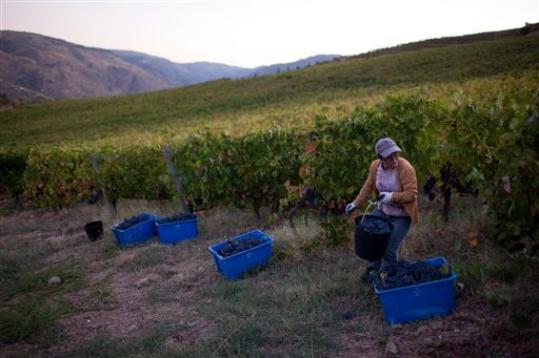
Maria Augusta, aged 46, unloads a bucket full of grapes while grape-picking at sunrise, Sept. 20 2011, near the village of Foz Coa, northern Portugal. Port wine sales have been falling steadily since the turn of the century, jeopardizing the livelihoods and way of life of thousands of people along the Douro Valley. Producers are trying to reverse the decline by finding new export markets, among other measures. (AP Photo/Armando Franca)
PINHAO, Portugal—When Dominic Symington looks out from his shady hillside garden across the vineyards of Portugal's majestic Douro Valley, he sees centuries of family and European history.
Tweet ShareThis British families like the Symingtons have been at the heart of this northern Portuguese region's port wine trade for generations. Dominic Symington, one of seven in the family wine business, has an ancestor -- Walter Maynard -- who shipped port to Britain in 1652.
Port, Symington says in an impeccable British accent, is a "way of life" for his family and tens of thousands of farmers along the River Douro.
The syrupy after-dinner drink has long been a hallmark European product, like Parma ham, Greek feta or French champagne. The business has withstood foreign and domestic wars, economic depressions and a 19th-century plant blight that wiped out many of the continent's vineyards.
The 21st century is no less challenging. Shifting consumer fashions and financial crises in places where port has always sold well have crunched earnings and cast a cloud over the trade's future. That is forcing producers to step outside their comfort zone and explore distant new markets.
After a decade of slow but steady decline, annual revenue last year was euro44 million lower than in 2000, at euro370 million, and 12 million fewer bottles were sold compared to that year, according to the Association of Port Wine Companies, an industry group.
"The trade is clearly going through a difficult time," said the 55-year-old Symington, who describes himself as Portuguese "born and bred."
Port producers are trying to put the brakes on their slide, and some 100 kilometers (60 miles) down river from Symington's riverside house at Pinhao there's a glimpse of where part of the solution could lie.
By the docks in Gaia, where the Douro meets the Atlantic and where sailing ships once departed heavy with wine barrels, two dozen middle-aged Brazilian tourists chatter delightedly at a port tasting. They have just been on a tour of a port "lodge" -- a warehouse containing thick 19th-century ledgers tidily kept with quill pens and where wine slowly matures in aged vats made of oak, mahogany and chestnut.
Aparecida Gilioli, a tour operator from Curitiba in Parana state, reckons the social aspirations of booming Brazil's swelling middle class will broaden the market there for top-drawer goods like port.
"It's a sophisticated drink. It's chic," she said.
Buckingham Palace usually serves port at state banquets, and it was on the menu when Queen Elizabeth II hosted President Barack Obama in May. That kind of patronage lends port distinction.
