Marin's wine industry tiny but growing(1)


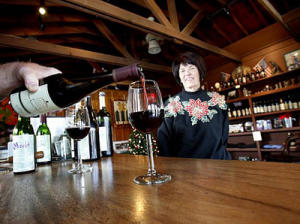
Marin's wineries, such as Point Reyes Vineyard, are producing wines well-suited for pairing with holiday meals. (Steve Doughty)
AS FAMILIES SIT DOWN to enjoy a Thanksgiving meal with loved ones this year, it's more likely than ever that a bottle of wine made right here in Marin will be on the table.
At 200 acres, Marin's wine industry is positively tiny compared with its behemoth neighbors, Napa (45,000 acres) and Sonoma (22,000 acres) counties, but it is growing as its wines gain recognition as comparable to those from Burgundy and the Sonoma coast.
It takes persistence, hard work and deep pockets to farm and process wine grapes in Marin. And Marin's been growing wine grapes since 1817, thanks to missionaries at the San Rafael Mission, according to Pey-Marin Vineyards of San Anselmo. By the end of the century, vines were planted as far south as Magnolia Avenue in Larkspur.
A long, Prohibition-induced hiccup saw the near fatality of Marin's wine industry, but a few families persevered and the industry experienced a slow but steady revival through the '70s and '80s.
It was, however, a "killer bottle of pinot" that really ignited interest in Marin vineyards, according Mark Pasternak of Devil's Gulch Ranch. The man behind that bottle was Dan Goldfield, winemaker for Dutton-Goldfield in Sebastopol, and the grapes in that bottle came from Pasternak's Nicasio ranch. Goldfield's Marin County Hartford Court bottling in 1997 "convinced the naysayers that great pinot could be successfully grown and produced in Marin," Pasternak says.
It didn't take long for others to take notice. "My phone started ringing off the hook," Pasternak says, who promptly planted the second half of Devil's Gulch with pinot noir and a smidge of gewürztraminer. After that, the wine industry in Marin blossomed.
Steve and Sharon Doughty, who own Point Reyes Vineyards Winery, started with cabernet sauvignon vines at warmer Quail Hill Vineyard in Terra Linda some 30-plus years ago and now harvest pinot noir and chardonnay in cooler Point Reyes Station. Pey-Marin won acclaim for its riesling grown in western Marin. Other growers planted merlot, pinot noir, syrah and other varietals; in fact, pinot noir is well-suited to Marin's unusual terroir — the geography, climate and soil conditions that contribute unique qualities to a crop.
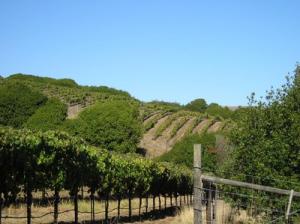
Grapes growing at Point Reyes Vineyards Steve Doughty
Stew Johnson of Kendric Winery grows 8½ acres of pinot noir and a half-acre of viognier at Cayetana Ranch to the west of Olompali State Historic Park. Johnson's site is east-facing, which means in summer, the grapes dry early in the day, but autumn is cooler, offering slow, gentle growth.
Many of the great vineyards of France's Burgundy region, with 20,000 acres, are similarly east-facing and have similarly challenging soil and growing conditions. Perhaps this is why industry insiders favorably compare Marin wines with those grown 5,700 miles from here, and why the majority of the acreage in Marin is planted in Burgundy's famous grape, the notoriously thin-skinned, finicky pinot noir.
"Marin terroir is about microclimates more than soil," says Stephan Schindler, owner of Easkoot Cellars. "Since there is no granite or limestone here like in Burgundy, the summer fog works to build acidity while the warm autumn builds ripeness. This is the essence of Marin."
