


6. Slamming organics and biodynamics
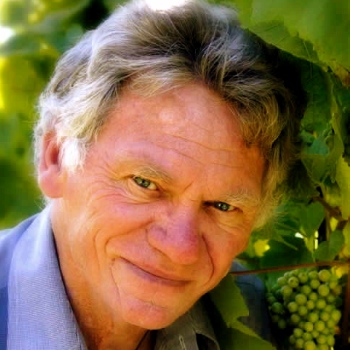
Dr Richard Smart (left) caused controversy when he labelled organic and biodynamic wines “a nonsense”.
The Australian viticulturalist and consultant on viticultural methods told the Wineries for Climate Protection conference in Barcelona in June: “Many of the concepts behind organics and biodynamics are nonsense. They’re not good for the environment.”
He added: ““When people buy food they don’t mind choosing products that have been grown on land treated with chemicals, so why should they care about how a wine has been treated?”
Smart spoke passionately about the need for winemakers to wake up to the fact that CO2 is a pollutant. “Oenologists are environmental vandals of the worst type. CO2 is the greatest pollutant and winemakers are releasing it back into the atmosphere, undoing all the good work in the vineyard.
“We need to figure out how to capture CO2 from fermenters, recover the volatiles, and put them back into the wine.”
To say his comments provoked a backlash would be something of an understatement.
“Not So Smart!” screamed Jem Gardner on our site. “What a well-reasoned case Richard Smart makes against organic wines (I am a specialist importer of these, just to be clear).
“I love the ‘logic’ behind ‘when people buy food they don’t mind choosing products that have been grown on land treated with chemicals, so why should they care about how a wine has been treated’. Err…what about the people who DO mind choosing food grown on land treated with chemicals? And in any case is it about what people ‘mind’ or about what is agriculturally sustainable?”
Roger Kerrison added: “I have always enjoyed Dr Smart’s provocative nature – but to say that winemakers are destroying all the good work of the vineyard by fermenting grapes is crazy.
“If those grapes were not taken into wineries by the environmental vandals (I’ve always preferred Yeast Technicians as the most derogatory term for my ilk) what would happen to them – yes that’s right they would rot on the vine and create the same amount of CO2 as winemaking (and consumption) from their decomposition.”
Smart then spoke out in defence of his stance, writing in the September edition of the drinks business: “I am as dedicated to preserving the environment and passing it on to the next generation as any of your readers.
“However, I remain to be convinced that organic and biodynamic methods of viticulture are better for the environment.”
Smart continued: “I can understand the angst this caused some readers. I mentioned in passing the use of chemical fertilisers on land for food production, and drew a parallel with permitted chemicals used in wine and food production.
“Interestingly, the recent poisonings in Europe due to mutated strains of E. coli were traced to an organic farm. E. coli is encouraged to mutate in animal guts, and so animal manure can be a source of these dangerous microbes.”
He was backed up by Paul Verdegaal, who wrote on our site: “Remember that before WWII everyone was organic, by definition.
“Life expectancy was less than 60 years and most people lived and worked on a farm for more than 8 hours a days. Organic can assuage the guilt; while Biodynamic serves as a form of religious pennance.”
Still the debate continued, with John Newton writing: “Smart’s statement ‘Interestingly, the recent poisonings in Europe due to mutated strains of E. coli were traced to an organic farm. E. coli is encouraged to mutate in animal guts, and so animal manure can be a source of these dangerous microbes’ is simply not true. This was refuted by government sources.
“And as for his sneering at biodyamics – how does he explain all the biodynamic winemakers – like the Carpenters at Lark Hill – who are scientists?
Jennifer Fluteau attempted to add some balance to the argument. “Why does one system have to be better than another?” she asked.
“Perhaps there are lessons to be learned on each side of the debate. My husband and I run a vineyard of nine hectares in Champagne, and the one thing you can be sure of when you work hands on in a vineyard is that there are always choices that need to be made, and each decision, reached after much debate, is more often than not a compromise.”
Speaking at an organic and biodynamic debate at the WSET in London in December, winemaker and writer Monty Waldin has admitted he still gets “ridiculed” for practising biodynamic farming.
He urged the trade to “sit up and take notice” of the biodynamic movement.
“Over 5% of the world’s vineyards are now organic and biodynamic, so the message seems to be getting across,” Waldin said.
He confessed he didn’t know how biodynamics works, but that it does seem to work. “It’s not a perfect system, but we’re moving in the right direction. The “voodoo” perception is lazy journalism. It’s easy to knock something weird.”
The debate over natural, organic and biodynamic wines is another that is sure to polarise opinion throughout 2012.
Our forthcoming Trends Report 2011 predicts that the natural wine movement will grind to a shuddering halt. Do you agree?

