5 Champagne Alternatives For Toasting 2012(1)


NEW YORK (MainStreet) -- New Year's Eve puts many Americans in the mood to pop some bubbly, but they don't need Champagne to fill their flutes.
Americans consumed 15.4 million cases of sparkling wine last year, according to The Wine Institute. That's only slightly more than the 15 million cases they were polishing off in 1990, but a vast improvement from the 11.6 million cases moved a decade ago.
Sparkling wine's recent effervescence is just as promising. Consumption was up 10% last year, which led The Wine Institute to suggest that more bubbly was making its way into everyday cocktails instead of being saved for special events. As a result, sparkling wine is now 4.6% of all wine sold in this country.
Much of that growth is coming from grapes not grown in France's Champagne region. Of those 15.4 million case of bubbly, more than half (8.1 million) come from LVMH's French-owned Domaine Chandon, Constellation Brands(STZ) labels such as Cook's California Champagne and Woodridge Sparkling as well as other California producers. That's actually down from the 9.2 million cases California produced in 1990 that was on par with sparkling wine production in all U.S. states last year.
Bubbly's biggest growth still comes from overseas. Champagne and its carbonated counterparts constituted only 4.3 million cases worth of U.S. consumption in 1990. By last year, bubbly from not only French producers such as Diageo's(DEO) Moet & Chandon and Dom Perignon, but from Australia, Italy, Austria and elsewhere helped bring 6.18 million foreign cases to these shores and spread new varieties of sparkling wine one New Year's Eve party at a time.
Unfortunately for U.S. bubbly drinkers, that demand and an increasing thirst for sparkling wine elsewhere is going to send Champagne prices soaring within the next year. The Champagne region only has so much vineyard space to go around, so even peak production tops out at 320 million bottles a year. Those little vineyards cost a lot more to buy these days as well, which means that those costs combined with rising grape prices and new Champagne markets are squeezing even more money out of each bottle.
"Champagne now faces growing scarcity, due mainly to growth in the BRIC markets," Moet Hennessy CEO Jim Clerkin told Shanken News Daily last month, referring to Brazil, Russia, India, and China, before predicting double-digit price hikes for certain Moet Hennessy sparklers.
In the interest of cutting costs and adding variety to holiday vino options, we've raided the wine racks and found five serviceable alternatives to Champagne:
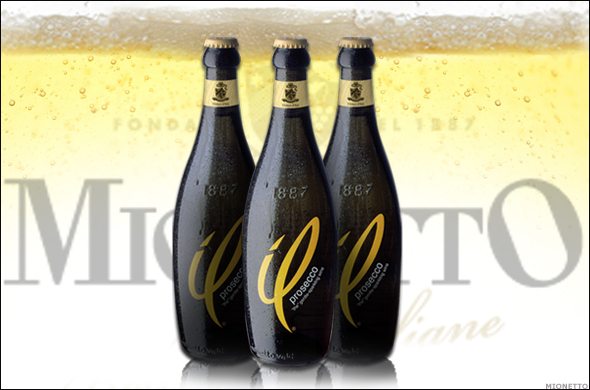
Prosecco
When it comes to Italian sparkling wines, there are as many different opinions as there are varieties. The World War II generation loved the Piedmont-grown Asti that the boys brought home from Europe and, later, the mass-produced oversweet Asti Spumante that fueled many a basement party.
During the 1970s and 1980s, tastes shifted to the rosy Lambrusco from the Emilia-Romagna and Normandy regions that Argentinian and Australian growers would clone into irrelevance. If New Year's revelers have had a decent Bellini in the past few years, however, then they've likely had the current pride of Italy's sparkling wines: Prosecco.
Grown in the Friuli-Venezia Giulia and Veneto regions of Italy and made slightly less sweet than other Italian sparkling wines, Prosecco is akin to Champagne only in bubbles and flavor. The methode champenois that produces Champagne requires it to ferment in the bottle for more than a year, while Prosecco's Chamat process only requires two months of fermentation and steel vats. That gives Prosecco only 9% to 10% alcohol by volume compared with 12% or more for the average Champagne.
Regardless of whether a buyer chooses semi-sparkling frizzante or fully sparkling spumante, bottles can be had for as little as $9 and seldom exceed $20. Low-priced Mionetto helped pour Prosecco into the mainstream and takes up the most Prosecco rack space, but varieties by Zardetto and Nino Franco are just as worthy of a New Year's toast.
